From Split you can get here by city bus line 22 to the Klis Megdan stop, from where it is a few minutes' walk to the entrance. There are small car parks by the fortress, which fill up quickly in season. The fortress is open every day from 9:00 to 17:00, in winter too. A ticket costs 12 euros, 4 euros for children up to 15, and also covers the interpretation centre on Trg Mejdan, the Stella Croatica park and the Olive Museum. The paths and steps are steep and stony, and the wind on the rock is often strong, so wear comfortable shoes. Allow about an hour and a half for your visit.
At home, open the place in Turi and tap “Save for offline”: the map, descriptions and photos will work without signal.
Visit the farthest points first, while you still have energy.
Tick things off as you go, and by the exit you’ll know what’s left.
Klis Fortress in the Turi app
Live position, a route from point to point, descriptions to read and listen to. Free, no account, in 12 languages.
The same map as in the app. Tap a point to see its photo and description; in Turi you’ll see yourselves on it too.
1recommended, in route orderother pointsWCtoilets, food, tickets
Something not right? Report it in the app at that point.
Worth seeing
Klis Fortress stands on a narrow rock in the pass between the Kozjak and Mosor mountains, about 360 metres above sea level and 12 kilometres from Split. For centuries it guarded the road from the coast to the interior, which is why it was called the key to Dalmatia. Petar Kružić and his Uskoks defended it against the Ottomans for more than 20 years, until it fell in 1537. The walls rise in three rings, and from the highest one you can see Split, Solin and the sea. In the series Game of Thrones the fortress played the city of Meereen.
Photo SchiDD, CC BY-SA 4.0, Wikimedia Commons1
Attraction
Main Gate and First Ring
The fortress stands on a narrow rock that is inaccessible from three sides, so the only approach is from the west. The walls of limestone blocks rise in three tiers on the limestone rock, which is why from a distance they are hard to tell apart from the slope. The present gate was built by the Austrians in the 1820s on the site of an older entrance from Venetian times. Klis is already mentioned in a charter of Duke Trpimir from 852, and in 1242 the fortress held out against the Tatars who were pursuing King Béla IV.
In the Middle Ages the second gate was the main entrance to the fortress. It was badly damaged during the siege of 1648, the Venetians rebuilt it, and the Austrians gave it its present appearance in the 1820s. Above it rises the round Oprah Tower, the most important medieval stronghold of the fortress, first mentioned in 1355. The Ottomans called it the Pasha's Tower and the Venetians Torretta, but the locals kept the old name. In the fourth season of Game of Thrones the fortress played Meereen, the city of Daenerys Targaryen.
Photo Bernard Gagnon, CC BY-SA 4.0, Wikimedia Commons3
Attraction
Cannon by the Artillery Barracks
One of the fortress's old cannons stands by the artillery barracks. The barracks, with a ramp of rammed earth, were built by the Austrians in the 1820s. The upper floor was demolished in 1931, and only the ground floor remains. Below lie the side fortifications, the largest of which, Mezzo, had a guardhouse, houses and its own entrance. The fortress had no springs or wells, so rainwater was collected in cisterns.
Photo SchiDD, CC BY-SA 4.0, Wikimedia Commons4
Attraction
View of the Lower Town
From the southern walls you can see Klis spread out at the foot of the fortress. The old lower town lay south-west of the rock and was surrounded by a double wall, behind which stood 100 to 200 houses. In Ottoman times it was a market town, and the names Varoš and Megdan have survived to this day. At the foot of the fortress the Ottoman Three Kings fountain still works, and it was vital during long sieges.
Photo Bernard Gagnon, CC BY-SA 4.0, Wikimedia Commons5
Attraction
Third Gate and Armoury
Wide steps lead to the third gate and the highest ring, the last line of defence. The gate dates back to the Middle Ages, and the Venetians rebuilt it several times, the last time in 1763. Just behind it, in the former armoury from the mid-18th century, there is an exhibition with replica Uskok uniforms, weapons and views of the fortress from different periods. The Uskoks were bands of Christian fighters who raided enemy territory and returned to their base, and their name comes from the Croatian word for jumping in. North of the armoury stands the Provveditore's House from the mid-17th century, where the Austrians placed the fortress command.
Photo SchiDD, CC BY-SA 4.0, Wikimedia Commons6
Attraction
Maggiore Position and Šperun Point
Maggiore is the second largest position of the fortress. In its corner the Austrians built a large powder magazine in the 1820s. Further east juts the Šperun point, with a view of Ozrna hill and the road into the interior below the rock. A medieval ducal tower stood here, badly damaged in the siege before the Venetians captured the fortress. From here you can clearly see that Klis has one window facing the sea and the other facing the Zagora hinterland.
Photo Bernard Gagnon, CC BY-SA 4.0, Wikimedia Commons7
Building / monument
Church of St Vitus
The Ottomans built this small square domed building after taking Klis in 1537 as a mosque for the garrison, on the site of an earlier small church. After 111 years of Ottoman rule, in 1648, the Venetians captured the fortress, pulled down the minaret and dedicated the building to St Vitus. At the base of the dome, oriental decorations called muqarnas have survived. A Latin inscription from 1743 above the entrance says that what piety built, piety preserved. It is one of the few surviving Ottoman mosques in Croatia.
Photo SchiDD, CC BY-SA 4.0, Wikimedia Commons8
Attraction
Bembo Bastion and View of Split
Bembo Bastion is the largest artillery position in the whole fortress. The Venetians built it in the mid-17th century on the site of Petar Kružić's tower. Kružić defended Klis against the Ottomans for more than 20 years. In March 1537 he left the fortress to meet a relief force, fell into Ottoman hands and was killed, and the defenders surrendered a few days later. From the bastion you can see Split, Solin and the sea.
All points (11)
Grouped as in the map legend. A star marks recommended points.
Attraction 7
Main Gate and First Ring ★The fortress stands on a narrow rock that is inaccessible from three sides, so the only approach is from the west. The walls of limestone blocks rise in three tiers on the limestone rock, which is why from a distance they are hard to tell apart from the slope. The present gate was built by the Austrians in the 1820s on the site of an older entrance from Venetian times. Klis is already mentioned in a charter of Duke Trpimir from 852, and in 1242 the fortress held out against the Tatars who were pursuing King Béla IV.
Second Gate and Oprah Tower ★In the Middle Ages the second gate was the main entrance to the fortress. It was badly damaged during the siege of 1648, the Venetians rebuilt it, and the Austrians gave it its present appearance in the 1820s. Above it rises the round Oprah Tower, the most important medieval stronghold of the fortress, first mentioned in 1355. The Ottomans called it the Pasha's Tower and the Venetians Torretta, but the locals kept the old name. In the fourth season of Game of Thrones the fortress played Meereen, the city of Daenerys Targaryen.
Cannon by the Artillery Barracks ★One of the fortress's old cannons stands by the artillery barracks. The barracks, with a ramp of rammed earth, were built by the Austrians in the 1820s. The upper floor was demolished in 1931, and only the ground floor remains. Below lie the side fortifications, the largest of which, Mezzo, had a guardhouse, houses and its own entrance. The fortress had no springs or wells, so rainwater was collected in cisterns.
View of the Lower Town ★From the southern walls you can see Klis spread out at the foot of the fortress. The old lower town lay south-west of the rock and was surrounded by a double wall, behind which stood 100 to 200 houses. In Ottoman times it was a market town, and the names Varoš and Megdan have survived to this day. At the foot of the fortress the Ottoman Three Kings fountain still works, and it was vital during long sieges.
Third Gate and Armoury ★Wide steps lead to the third gate and the highest ring, the last line of defence. The gate dates back to the Middle Ages, and the Venetians rebuilt it several times, the last time in 1763. Just behind it, in the former armoury from the mid-18th century, there is an exhibition with replica Uskok uniforms, weapons and views of the fortress from different periods. The Uskoks were bands of Christian fighters who raided enemy territory and returned to their base, and their name comes from the Croatian word for jumping in. North of the armoury stands the Provveditore's House from the mid-17th century, where the Austrians placed the fortress command.
Maggiore Position and Šperun Point ★Maggiore is the second largest position of the fortress. In its corner the Austrians built a large powder magazine in the 1820s. Further east juts the Šperun point, with a view of Ozrna hill and the road into the interior below the rock. A medieval ducal tower stood here, badly damaged in the siege before the Venetians captured the fortress. From here you can clearly see that Klis has one window facing the sea and the other facing the Zagora hinterland.
Bembo Bastion and View of Split ★Bembo Bastion is the largest artillery position in the whole fortress. The Venetians built it in the mid-17th century on the site of Petar Kružić's tower. Kružić defended Klis against the Ottomans for more than 20 years. In March 1537 he left the fortress to meet a relief force, fell into Ottoman hands and was killed, and the defenders surrendered a few days later. From the bastion you can see Split, Solin and the sea.
Building / monument 1
Church of St Vitus ★The Ottomans built this small square domed building after taking Klis in 1537 as a mosque for the garrison, on the site of an earlier small church. After 111 years of Ottoman rule, in 1648, the Venetians captured the fortress, pulled down the minaret and dedicated the building to St Vitus. At the base of the dome, oriental decorations called muqarnas have survived. A Latin inscription from 1743 above the entrance says that what piety built, piety preserved. It is one of the few surviving Ottoman mosques in Croatia.
Toilets / tickets / parking 3
Public toilet
Public toilet
Trg Mejdan below the fortressThe way into the fortress starts on Trg Mejdan. The name comes from Turkish, and in Ottoman times there were lazarettos, quarantine buildings and lodgings for travellers here. On the square there is an interpretation centre with 3D projections about the history of Klis, and the fortress ticket also covers it. From here, steps and a cobbled road lead you up to the main gate.

 Photo Bernard Gagnon, CC BY-SA 4.0, Wikimedia Commons

 Photo SchiDD, CC BY-SA 4.0, Wikimedia Commons1
 Photo Gardomir (polish wiki: [1] ), CC BY-SA 2.5, Wikimedia Commons
 Photo Bernard Gagnon, CC BY-SA 4.0, Wikimedia Commons
 Photo SchiDD, CC BY-SA 4.0, Wikimedia Commons
 Photo Bernard Gagnon, CC BY-SA 4.0, Wikimedia Commons
 Photo SchiDD, CC BY-SA 4.0, Wikimedia Commons
 Photo Bernard Gagnon, CC BY-SA 4.0, Wikimedia Commons
 Photo SchiDD, CC BY-SA 4.0, Wikimedia Commons
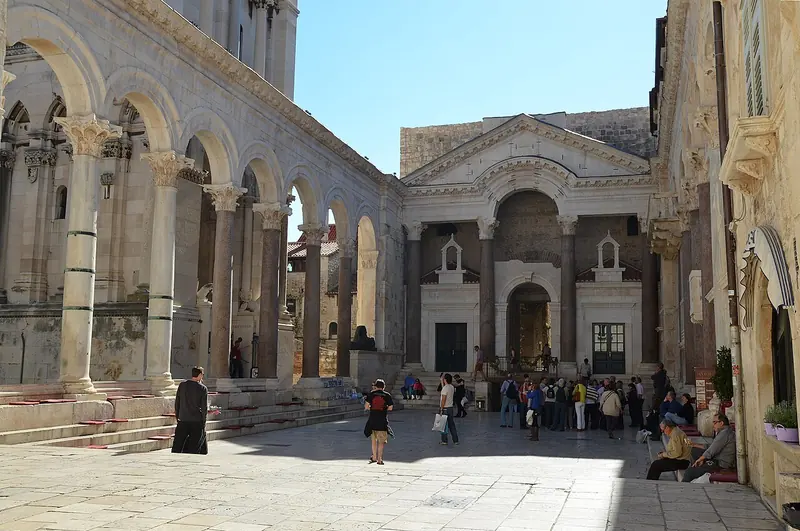 Photo Carole Raddato from FRANKFURT, Germany, CC BY-SA 2.0, Wikimedia Commons
 Photo Helmlechner, CC0, Wikimedia Commons
 Photo Bernard Gagnon, CC BY-SA 4.0, Wikimedia Commons