You can get to Trsteno from Dubrovnik by Libertas suburban bus from the bus station in Gruž, heading towards Slano or Orašac, in about 30 minutes, or by car along the Adriatic Highway (D8). The walk starts on the square with the two plane trees by the Trsteno bus stop; from there you go down the steps and the lane called Potok to the entrance. The route follows the main avenue to the aqueduct and the Neptune Fountain, goes through the Renaissance garden by the summer residence to the viewing pavilion, and then along a road through the woods west to the New Park, from where you return to the exit the same way in about 15 minutes. If you are already in the arboretum, Turi will guide you from the nearest point. From November to April the arboretum is open from 8 to 16, and from May to October from 7 to 19. A ticket costs 10 euros, 7 euros for children and students, and residents of Dubrovnik get in free. The paths are gravel and stone, and the New Park has steep stone steps, so wear comfortable shoes. There is a free toilet at the information centre, between the old garden and the New Park. For up-to-date information see pvdp.hr or call +385 20 751 019. Allow about two hours.
At home, open the place in Turi and tap “Save for offline”: the map, descriptions and photos will work without signal.
Visit the farthest points first, while you still have energy.
Tick things off as you go, and by the exit you’ll know what’s left.
Trsteno: Arboretum in the Turi app
Live position, a route from point to point, descriptions to read and listen to. Free, no account, in 12 languages.
The same map as in the app. Tap a point to see its photo and description; in Turi you’ll see yourselves on it too.
1recommended, in route orderother pointsWCtoilets, food, tickets
Something not right? Report it in the app at that point.
Worth seeing
Trsteno Arboretum, 25 kilometres west of Dubrovnik, is the only Dubrovnik garden that has kept growing without a break for five centuries. It began as the park around the summer residence of the noble Gučetić (Gozze) family, laid out in 1494-1502, and in the 16th century it was a centre of Dubrovnik's intellectual life. In 1736 a Baroque fountain with Neptune was built at the end of the aqueduct, and from 1905 the romantic New Park on Drvarica took shape to the west. In 1948 the estate was declared an arboretum, and since 1951 it has been looked after by the Croatian Academy of Sciences and Arts; it covers about 28 hectares of gardens, old olive groves and woodland right by the sea. The arboretum played the gardens of the Red Keep in King's Landing in seasons 3 and 4 of Game of Thrones.
Photo Marijana Miljas Đuračić, CC BY-SA 4.0, Wikimedia Commons1
przyroda
Trsteno Plane Trees
The two oriental plane trees on the square in Trsteno are more than 500 years old and are the symbol of the village. According to local tradition, a ship's captain brought the sapling from Constantinople and planted it by a spring. In 2018 one of them, named the massive plane tree, the symbol of Trsteno, came seventh in the European Tree of the Year contest. Both trees came through the shelling of the village in 1991 and the great fire of 2000 unharmed. Stand under the crowns and look up at the spreading boughs.
Photo Fridolin freudenfett, CC BY-SA 4.0, Wikimedia Commons2
przyroda
Main Avenue
A wide avenue leads from the entrance into the arboretum, towards the old garden of the summer residence. The arboretum covers about 28 hectares: besides the gardens there are old olive groves and natural vegetation. In 2018, 317 taxa of trees and shrubs were counted here, including 84 native species, and the tallest cypresses and Aleppo pines are about 35 metres high. Along the way you will see palms, citrus trees, yuccas, aloes, cacti and bamboo. The estate was declared an arboretum in 1948, and since 1951 it has been managed by the Croatian Academy of Sciences and Arts.
Photo Modzzak, Public domain, Wikimedia Commons3
Attraction
Aqueduct
The stone aqueduct on arches, about 70 metres long, carries water from a stream on the eastern side of the estate to the Neptune Fountain. It runs along the main axis of the garden, set out in the very first building phase, which continues through the fountain and the summer residence all the way to the pavilion above the sea. Thanks to it, the garden in Trsteno was the only one around Dubrovnik where running water could be used freely. The aqueduct still works today.
Photo Fridolin freudenfett, CC BY-SA 4.0, Wikimedia Commons4
Attraction
Neptune Fountain
The Baroque fountain of 1736 is the arboretum's best-known sight and the only structure of its kind in the former Republic of Dubrovnik and on the whole Croatian coast. Above a shallow pool with water lilies rises an artificial grotto with stone sculptures: Neptune with his trident stands in the middle, with nymphs beside him. The water comes here through the aqueduct from the previous stop. The fountain is hidden among dense greenery, and the poplars in the background were planted around 1870.
Photo Fridolin freudenfett, CC BY-SA 4.0, Wikimedia Commons5
Building / monument
St Jerome's Chapel
This small, rectangular vaulted chapel stands right next to the summer residence. It was built in the 16th century and dedicated to Saint Jerome, and the stucco work of the altar and side walls dates from the mid-18th century. An old postcard from 1931 shows a mighty downy oak next to the chapel, which was more than 500 years old. The tree fell in a storm in 1956.
Photo Fridolin freudenfett, CC BY-SA 4.0, Wikimedia Commons6
Building / monument
Gučetić Summer Residence
The residence was built by the Dubrovnik noble family Gučetić (Gozze), and a Latin inscription of 1502 on the façade commemorates its construction. The original Gothic-Renaissance house was destroyed by the earthquake of 1667, and a new one with a central hall and four side rooms was built in its place. In the second half of the 16th century the garden was a centre of Dubrovnik's intellectual life: the philosopher Nikola Vitov Gučetić set his dialogues on love and beauty here, and one of the speakers in them is Cvijeta Zuzorić, the most famous woman of the Dubrovnik Renaissance. A pergola covered with climbers stands by the house, and until 1945 the Bassegli-Gozze family lived here. During the war in 1991 the residence was partly damaged.
Photo Thierry Chevallier, CC BY-SA 4.0, Wikimedia Commons7
widok
Viewing Pavilion
At the end of the main promenade, south of the residence, stands the glorijet, a viewing pavilion with corner pillars, octagonal columns and a hipped wooden roof. The pavilion closes the main axis of the garden, which begins at the aqueduct. From here there is a view of the sea and the Elaphiti Islands. On a postcard from the 1930s the pavilion was glazed.
Photo Modzzak, Public domain, Wikimedia Commons8
widok
View of Trsteno Harbour
From here you look down at the small Trsteno harbour and beyond to the Elaphiti Islands. The slope from the arboretum to the sea is very steep and rocky. Before the fire of 2000, woodland covered about three quarters of the arboretum: Aleppo pines and cypresses grew in the west, and woodland dominated by laurel in the east. The fire then destroyed about two thirds of the arboretum, and today the most common forest here is of holm oak and manna ash.
Photo VynedJ, CC BY 4.0, Wikimedia Commons9
widok
New Park on Drvarica
Work on the New Park began in 1905 on Drvarica, partly on the site of an old olive grove and partly on wild maquis. Following late Romantic models, a Mediterranean landscape park was created here with exotic and native plants, stone terraces, viewpoints and steps leading down to the rocks by the sea. It was laid out by Vito Bassegli-Gozze, who also built a stone path to the sea and a small harbour decorated with statues. The park was damaged by fires in 1992 and 2000. From the viewpoint you can look out over the coast, Trsteno and the harbour.
Photo VynedJ, CC BY 4.0, Wikimedia Commons10
Attraction
Steps and Ruins in the New Park
In the western part of the New Park, wide stone steps lead up to a terrace with a structure in the form of a ruin with arches. Stone terraces and steps are the hallmark of this part of the arboretum, laid out in the early 20th century in the spirit of Romantic gardens. Agaves and cypresses grow by the steps. This is the end of the route: you return to the exit the same way in about 15 minutes.
All points (13)
Grouped as in the map legend. A star marks recommended points.
przyroda 2
Trsteno Plane Trees ★The two oriental plane trees on the square in Trsteno are more than 500 years old and are the symbol of the village. According to local tradition, a ship's captain brought the sapling from Constantinople and planted it by a spring. In 2018 one of them, named the massive plane tree, the symbol of Trsteno, came seventh in the European Tree of the Year contest. Both trees came through the shelling of the village in 1991 and the great fire of 2000 unharmed. Stand under the crowns and look up at the spreading boughs.
Main Avenue ★A wide avenue leads from the entrance into the arboretum, towards the old garden of the summer residence. The arboretum covers about 28 hectares: besides the gardens there are old olive groves and natural vegetation. In 2018, 317 taxa of trees and shrubs were counted here, including 84 native species, and the tallest cypresses and Aleppo pines are about 35 metres high. Along the way you will see palms, citrus trees, yuccas, aloes, cacti and bamboo. The estate was declared an arboretum in 1948, and since 1951 it has been managed by the Croatian Academy of Sciences and Arts.
Attraction 3
Aqueduct ★The stone aqueduct on arches, about 70 metres long, carries water from a stream on the eastern side of the estate to the Neptune Fountain. It runs along the main axis of the garden, set out in the very first building phase, which continues through the fountain and the summer residence all the way to the pavilion above the sea. Thanks to it, the garden in Trsteno was the only one around Dubrovnik where running water could be used freely. The aqueduct still works today.
Neptune Fountain ★The Baroque fountain of 1736 is the arboretum's best-known sight and the only structure of its kind in the former Republic of Dubrovnik and on the whole Croatian coast. Above a shallow pool with water lilies rises an artificial grotto with stone sculptures: Neptune with his trident stands in the middle, with nymphs beside him. The water comes here through the aqueduct from the previous stop. The fountain is hidden among dense greenery, and the poplars in the background were planted around 1870.
Steps and Ruins in the New Park ★In the western part of the New Park, wide stone steps lead up to a terrace with a structure in the form of a ruin with arches. Stone terraces and steps are the hallmark of this part of the arboretum, laid out in the early 20th century in the spirit of Romantic gardens. Agaves and cypresses grow by the steps. This is the end of the route: you return to the exit the same way in about 15 minutes.
Building / monument 2
St Jerome's Chapel ★This small, rectangular vaulted chapel stands right next to the summer residence. It was built in the 16th century and dedicated to Saint Jerome, and the stucco work of the altar and side walls dates from the mid-18th century. An old postcard from 1931 shows a mighty downy oak next to the chapel, which was more than 500 years old. The tree fell in a storm in 1956.
Gučetić Summer Residence ★The residence was built by the Dubrovnik noble family Gučetić (Gozze), and a Latin inscription of 1502 on the façade commemorates its construction. The original Gothic-Renaissance house was destroyed by the earthquake of 1667, and a new one with a central hall and four side rooms was built in its place. In the second half of the 16th century the garden was a centre of Dubrovnik's intellectual life: the philosopher Nikola Vitov Gučetić set his dialogues on love and beauty here, and one of the speakers in them is Cvijeta Zuzorić, the most famous woman of the Dubrovnik Renaissance. A pergola covered with climbers stands by the house, and until 1945 the Bassegli-Gozze family lived here. During the war in 1991 the residence was partly damaged.
widok 3
Viewing Pavilion ★At the end of the main promenade, south of the residence, stands the glorijet, a viewing pavilion with corner pillars, octagonal columns and a hipped wooden roof. The pavilion closes the main axis of the garden, which begins at the aqueduct. From here there is a view of the sea and the Elaphiti Islands. On a postcard from the 1930s the pavilion was glazed.
View of Trsteno Harbour ★From here you look down at the small Trsteno harbour and beyond to the Elaphiti Islands. The slope from the arboretum to the sea is very steep and rocky. Before the fire of 2000, woodland covered about three quarters of the arboretum: Aleppo pines and cypresses grew in the west, and woodland dominated by laurel in the east. The fire then destroyed about two thirds of the arboretum, and today the most common forest here is of holm oak and manna ash.
New Park on Drvarica ★Work on the New Park began in 1905 on Drvarica, partly on the site of an old olive grove and partly on wild maquis. Following late Romantic models, a Mediterranean landscape park was created here with exotic and native plants, stone terraces, viewpoints and steps leading down to the rocks by the sea. It was laid out by Vito Bassegli-Gozze, who also built a stone path to the sea and a small harbour decorated with statues. The park was damaged by fires in 1992 and 2000. From the viewpoint you can look out over the coast, Trsteno and the harbour.
Toilets / tickets / parking 3
Information CentreOn the border between the old garden of the residence and the New Park stands the information centre building with a coffee and drinks machine. Next to it there is a free toilet, accessible to wheelchair users too. It is a good place for a short rest before you carry on west to the New Park.
Trsteno Bus StopThe walk starts on the square by the Trsteno bus stop on the Adriatic Highway, where Libertas suburban buses from Dubrovnik stop. Two huge plane trees grow on the square, and there are benches and a drinking water tap. From here you go down the steps and the cobbled lane called Potok, downhill towards the sea, to the arboretum entrance in about 5 minutes. You buy your ticket at the entrance.

 Photo Fridolin freudenfett, CC BY-SA 4.0, Wikimedia Commons

 Photo Marijana Miljas Đuračić, CC BY-SA 4.0, Wikimedia Commons1
 Photo Fridolin freudenfett, CC BY-SA 4.0, Wikimedia Commons
 Photo Modzzak, Public domain, Wikimedia Commons
 Photo Fridolin freudenfett, CC BY-SA 4.0, Wikimedia Commons
 Photo Fridolin freudenfett, CC BY-SA 4.0, Wikimedia Commons
 Photo Thierry Chevallier, CC BY-SA 4.0, Wikimedia Commons
 Photo Modzzak, Public domain, Wikimedia Commons
 Photo VynedJ, CC BY 4.0, Wikimedia Commons
 Photo VynedJ, CC BY 4.0, Wikimedia Commons
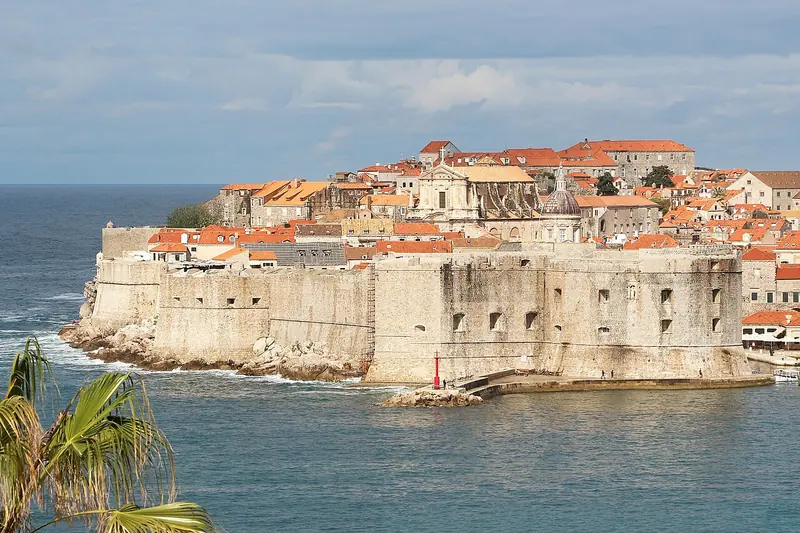 Photo Bernard Gagnon, CC BY-SA 4.0, Wikimedia Commons
 Photo Dennis G. Jarvis, CC BY-SA 2.0, Wikimedia Commons
 Photo PetrS., CC BY-SA 4.0, Wikimedia Commons