Photo Dennis G. Jarvis, CC BY-SA 2.0, Wikimedia Commons
Old townSton, Dubrovnik-Neretva County, Croatia
Ston: town walls, saltworks and Mali Ston: what to see, map and route
Ston: town walls, saltworks and Mali Ston. In the Turi app, the same map shows your position, guides you from point to point and lets you tick off the places you’ve visited.
free entrymuseums and towers have separate tickets
The walk starts at the bus stop and tourist information in Ston, where there are also car parks and toilets. Ston is about 55 kilometres from Dubrovnik; you can get here by car or by bus towards Pelješac, but there are fewer buses out of season, so check the timetable. You get onto the walls through the ticket offices at the entrances in Ston (by the Franciscan monastery, by the Barabanata tower and by Veliki Kaštio) or in Mali Ston by the Koruna fortress; the ticket also covers the Veliki Kaštio fortress and is valid for one walk. The walls are open every day except 25 December: from November to March from 9:00 to 15:00, and from April to October from 8:00 (in April, May and August until 18:30, in June and July until 19:30, in September and October until 17:30); the closing time means last entry. In the winter months the ticket is cheaper (according to the 2024 price list an adult paid 5 euros in January, February, November and December and 10 euros from March to October, with less for young people and students); check the current price at citywallsdubrovnik.hr. The Great Wall between Ston and Mali Ston is steep, high and uneven stone steps up and down, with almost no shade, so wear good shoes, take water and in hot weather go in the morning; the route is not suitable for wheelchairs or pushchairs. Walking the walls to Mali Ston takes about 40-45 minutes, and you can walk back along the path beside the road in about 15 minutes; allow about 3 hours for the whole walk with the saltworks and Mali Ston.
At home, open the place in Turi and tap “Save for offline”: the map, descriptions and photos will work without signal.
Visit the farthest points first, while you still have energy.
Tick things off as you go, and by the exit you’ll know what’s left.
Ston: town walls in the Turi app
Live position, a route from point to point, descriptions to read and listen to. Free, no account, in 12 languages.
The same map as in the app. Tap a point to see its photo and description; in Turi you’ll see yourselves on it too.
1recommended, in route orderother pointsWCtoilets, food, tickets
Something not right? Report it in the app at that point.
Worth seeing
Ston lies at the base of the Pelješac peninsula, at its narrowest point, where the walls cut the peninsula off from the mainland. The Republic of Dubrovnik bought Pelješac in 1333 mainly for its salt and built two planned towns here from scratch, Ston and Mali Ston, linked by walls running over the hill. The system was originally about 7 kilometres long, with about 40 towers and 5 forts, and about 5.5 kilometres of walls survive today, among the longest preserved fortifications in Europe. The walk leads from the saltworks and the Veliki Kaštio fortress through the streets of Ston onto the walls, then along the steep Great Wall over the hill to the Koruna fortress and the harbour of Mali Ston, famous for its oysters.
Photo Andrzej Harassek, CC BY-SA 3.0, Wikimedia Commons1
Attraction
Solana Ston
Just outside the town lie the salt pans of Solana Ston, considered among the oldest still working in Europe. Salt was produced here as early as Roman times, and the Republic of Dubrovnik bought the Pelješac peninsula in 1333 above all for this salt, which brought it huge revenues. The saltworks cover about 40 hectares, and seawater flows through a series of pools until the salt crystallises in the last row of nine pools. Eight of them are named after saints, and the ninth is called Mundo, meaning world, and its salt was once given to the poor. Salt is harvested by hand in the warm part of the year, mostly in summer, and there is a salt shop by the saltworks.
Photo Argo Navis, CC BY-SA 4.0, Wikimedia Commons2
Building / monument
Veliki Kaštio fortress
Veliki Kaštio is the largest fortress in Ston, guarding the harbour and the saltworks at the end of the walls. The decision to build it was taken in 1347, work began in 1351, and the fortress got most of its present shape by 1613. On the west, south and east the town was surrounded by a water-filled moat, part of which you can see by the fortress. The walls ticket also includes entry to Kaštio, where you can see the courtyard and the upper galleries with cannons. There is also a ticket office here.
Photo Carsten Steger, CC BY-SA 4.0, Wikimedia Commons3
Attraction
Placa, the main street of Ston
Placa is the main street of Ston, lined with cafés, shops and restaurants. The town was built from scratch to a plan approved by the Dubrovnik authorities in 1335 and amended in 1370, which is why the streets here cross at right angles. Ston is considered one of the best planned medieval towns in Europe. It was the second most important town of the Republic of Dubrovnik, and it was home to people who worked in the saltworks and guarded the border of the peninsula.
Photo JERRYE AND ROY KLOTZ MD, CC BY-SA 3.0, Wikimedia Commons4
Building / monument
Franciscan monastery and Church of St Nicholas
The Franciscan monastery with the Church of St Nicholas was founded in 1347, and its construction was completed at the end of the 15th century. It stands by the western town wall, a few steps from one of the entrances to the walls. From outside you will see the stone walls of the monastery among the tightly packed buildings of old Ston. Opening hours for the interior could not be confirmed, so be prepared to see the monastery only from outside.
Photo Jules Verne Times Two, CC BY-SA 4.0, Wikimedia Commons5
Attraction
Entrance to the walls and the western towers of Ston
At this entrance with a ticket office the walk around the walls of Ston begins. The walls were begun in the 14th century, when Dubrovnik took over Pelješac, and among those who worked on them were the Florentine Michelozzo, Bernardino of Parma and Juraj Dalmatinac, creator of Šibenik Cathedral. The whole system was originally about 7 kilometres long, with about 40 towers and 5 forts, and about 5.5 kilometres of walls survive today. On the western side of the town you pass the Arcimun, Sokolić and Minčeta towers. The ticket is valid for one walk and you cannot re-enter the walls.
Photo Quahadi Añtó 10:31, 1 October 2014 (UTC), CC BY-SA 3.0, Wikimedia Commons6
widok
Stoviš tower above Ston
Steep steps along the wall lead up to the Stoviš tower, the highest corner of the walls around Ston. From above you will see the grid of the little town's streets, the rectangles of the saltworks and the bay on the Ston side. The walls around the town form a pentagon, and walking around them takes about 20 minutes. The steps are high and uneven, and there is almost no shade on the walls, so go slowly and keep water with you.
Photo Jules Verne Times Two, CC BY-SA 4.0, Wikimedia Commons7
widok
View from the Great Wall over Ston and the saltworks
From here the Great Wall climbs straight up the slope on high stone steps, in full sun all the way. This is the most tiring section of the route: the climb is steep, the steps are uneven, and the descent on the other side is also on steps. Halfway up it is worth stopping, because behind you lie the whole of Ston, the saltworks and the bay. In hot weather go in the morning or late afternoon, wear comfortable shoes and take water. The route is not suitable for wheelchairs or for people who have difficulty with steps.
Photo Falk2, CC BY-SA 4.0, Wikimedia Commons8
widok
Dobri tower on the ridge of the hill
At the Dobri tower the walls fork: a section runs west towards Podzvizd hill (224 m), where the highest fort of the whole system stands, and the route starts to go down to Mali Ston. The main section of the Great Wall, about 1200 metres long, was built in the 15th century, and according to the chronicles the work took 18 months and cost 12,000 ducats. From this section you can already see Mali Ston Bay with its oyster farms.
Photo Anto ( talk ) 07:47, 1 October 2009 (UTC), CC BY-SA 3.0, Wikimedia Commons9
widok
Dolina tower and view of Mali Ston
On the way down to Mali Ston you pass the Dolina tower. Ahead of you opens a view of the roofs of Mali Ston, the Koruna fortress and the bay with its oyster and mussel farms. The descent is also on steep steps, so tread carefully, especially when the stone is wet. Ston and the saltworks stay behind on the other side of the hill.
Photo JERRYE AND ROY KLOTZ MD, CC BY-SA 3.0, Wikimedia Commons10
Building / monument
Koruna fortress
The Koruna fortress from 1347 closes the Great Wall above Mali Ston, and its five towers face the sea. The name comes from the word kruna, meaning crown, because the towers look like a crown. Here is the exit from the walls and a ticket office, so you can also walk the walls in the opposite direction, from Mali Ston to Ston.
Photo rene boulay, CC BY-SA 3.0, Wikimedia Commons11
Attraction
Harbour in Mali Ston
Dubrovnik founded Mali Ston in 1334 as the northern neighbour of Ston, and its harbour was completed in 1490. The little town was also surrounded by walls, but they were pulled down in the 19th century in the name of fighting malaria, and today only fragments remain. By the water stands the round Toljevac tower, one of the remains of the old fortifications. Mali Ston Bay is famous for its oysters, whose value Dubrovnik appreciated as early as the 14th century, so it is worth trying them in one of the restaurants by the water. You can walk back to Ston along the path beside the road in about 15 minutes.
All points (16)
Grouped as in the map legend. A star marks recommended points.
Attraction 4
Solana Ston ★Just outside the town lie the salt pans of Solana Ston, considered among the oldest still working in Europe. Salt was produced here as early as Roman times, and the Republic of Dubrovnik bought the Pelješac peninsula in 1333 above all for this salt, which brought it huge revenues. The saltworks cover about 40 hectares, and seawater flows through a series of pools until the salt crystallises in the last row of nine pools. Eight of them are named after saints, and the ninth is called Mundo, meaning world, and its salt was once given to the poor. Salt is harvested by hand in the warm part of the year, mostly in summer, and there is a salt shop by the saltworks.
Placa, the main street of Ston ★Placa is the main street of Ston, lined with cafés, shops and restaurants. The town was built from scratch to a plan approved by the Dubrovnik authorities in 1335 and amended in 1370, which is why the streets here cross at right angles. Ston is considered one of the best planned medieval towns in Europe. It was the second most important town of the Republic of Dubrovnik, and it was home to people who worked in the saltworks and guarded the border of the peninsula.
Entrance to the walls and the western towers of Ston ★At this entrance with a ticket office the walk around the walls of Ston begins. The walls were begun in the 14th century, when Dubrovnik took over Pelješac, and among those who worked on them were the Florentine Michelozzo, Bernardino of Parma and Juraj Dalmatinac, creator of Šibenik Cathedral. The whole system was originally about 7 kilometres long, with about 40 towers and 5 forts, and about 5.5 kilometres of walls survive today. On the western side of the town you pass the Arcimun, Sokolić and Minčeta towers. The ticket is valid for one walk and you cannot re-enter the walls.
Harbour in Mali Ston ★Dubrovnik founded Mali Ston in 1334 as the northern neighbour of Ston, and its harbour was completed in 1490. The little town was also surrounded by walls, but they were pulled down in the 19th century in the name of fighting malaria, and today only fragments remain. By the water stands the round Toljevac tower, one of the remains of the old fortifications. Mali Ston Bay is famous for its oysters, whose value Dubrovnik appreciated as early as the 14th century, so it is worth trying them in one of the restaurants by the water. You can walk back to Ston along the path beside the road in about 15 minutes.
Building / monument 4
Veliki Kaštio fortress ★Veliki Kaštio is the largest fortress in Ston, guarding the harbour and the saltworks at the end of the walls. The decision to build it was taken in 1347, work began in 1351, and the fortress got most of its present shape by 1613. On the west, south and east the town was surrounded by a water-filled moat, part of which you can see by the fortress. The walls ticket also includes entry to Kaštio, where you can see the courtyard and the upper galleries with cannons. There is also a ticket office here.
Franciscan monastery and Church of St Nicholas ★The Franciscan monastery with the Church of St Nicholas was founded in 1347, and its construction was completed at the end of the 15th century. It stands by the western town wall, a few steps from one of the entrances to the walls. From outside you will see the stone walls of the monastery among the tightly packed buildings of old Ston. Opening hours for the interior could not be confirmed, so be prepared to see the monastery only from outside.
Koruna fortress ★The Koruna fortress from 1347 closes the Great Wall above Mali Ston, and its five towers face the sea. The name comes from the word kruna, meaning crown, because the towers look like a crown. Here is the exit from the walls and a ticket office, so you can also walk the walls in the opposite direction, from Mali Ston to Ston.
Church of St BlaiseThe parish church of St Blaise (sv. Vlaho), patron saint of Dubrovnik, was built in 1875 to a design by the engineer Ferdinand Mayer. It stands next to the former Rector's Palace (Knežev dvor), the seat of the official who governed Ston on behalf of Dubrovnik. The magnitude 6.0 earthquake of 5 September 1996 badly damaged this church and many houses in Ston, and cracks up to 10 centimetres wide appeared in the walls. Rebuilding the little town took about ten years.
widok 4
Stoviš tower above Ston ★Steep steps along the wall lead up to the Stoviš tower, the highest corner of the walls around Ston. From above you will see the grid of the little town's streets, the rectangles of the saltworks and the bay on the Ston side. The walls around the town form a pentagon, and walking around them takes about 20 minutes. The steps are high and uneven, and there is almost no shade on the walls, so go slowly and keep water with you.
View from the Great Wall over Ston and the saltworks ★From here the Great Wall climbs straight up the slope on high stone steps, in full sun all the way. This is the most tiring section of the route: the climb is steep, the steps are uneven, and the descent on the other side is also on steps. Halfway up it is worth stopping, because behind you lie the whole of Ston, the saltworks and the bay. In hot weather go in the morning or late afternoon, wear comfortable shoes and take water. The route is not suitable for wheelchairs or for people who have difficulty with steps.
Dobri tower on the ridge of the hill ★At the Dobri tower the walls fork: a section runs west towards Podzvizd hill (224 m), where the highest fort of the whole system stands, and the route starts to go down to Mali Ston. The main section of the Great Wall, about 1200 metres long, was built in the 15th century, and according to the chronicles the work took 18 months and cost 12,000 ducats. From this section you can already see Mali Ston Bay with its oyster farms.
Dolina tower and view of Mali Ston ★On the way down to Mali Ston you pass the Dolina tower. Ahead of you opens a view of the roofs of Mali Ston, the Koruna fortress and the bay with its oyster and mussel farms. The descent is also on steep steps, so tread carefully, especially when the stone is wet. Ston and the saltworks stay behind on the other side of the hill.
Toilets / tickets / parking 4
Barabanata tower and eastern entranceFrom Stoviš you go down the steps of the eastern wall to the Barabanata tower. Here is the second entrance with a ticket office, opposite the car park, where many people start their climb onto the Great Wall. From here the route leads steeply uphill towards Mali Ston, and this is the hardest section of the whole walk.
Bus stop and tourist information in StonThe walk starts at the bus stop on the edge of old Ston, next to the tourist information office. Nearby there are car parks, shops and toilets. The route first leads to the saltworks and the Veliki Kaštio fortress, then through the straight streets of the little town to the western entrance to the walls. After walking the walls around Ston, you climb the Great Wall over the hill and come down to Mali Ston by the bay. From Mali Ston you can walk back to Ston along the path beside the road in about 15 minutes.

 Photo Dennis G. Jarvis, CC BY-SA 2.0, Wikimedia Commons

 Photo Andrzej Harassek, CC BY-SA 3.0, Wikimedia Commons1
 Photo Argo Navis, CC BY-SA 4.0, Wikimedia Commons
 Photo Carsten Steger, CC BY-SA 4.0, Wikimedia Commons
 Photo JERRYE AND ROY KLOTZ MD, CC BY-SA 3.0, Wikimedia Commons
 Photo Jules Verne Times Two, CC BY-SA 4.0, Wikimedia Commons
 Photo Quahadi Añtó 10:31, 1 October 2014 (UTC), CC BY-SA 3.0, Wikimedia Commons
 Photo Jules Verne Times Two, CC BY-SA 4.0, Wikimedia Commons
 Photo Falk2, CC BY-SA 4.0, Wikimedia Commons
 Photo Anto ( talk ) 07:47, 1 October 2009 (UTC), CC BY-SA 3.0, Wikimedia Commons
 Photo JERRYE AND ROY KLOTZ MD, CC BY-SA 3.0, Wikimedia Commons
 Photo rene boulay, CC BY-SA 3.0, Wikimedia Commons
 Photo Fridolin freudenfett, CC BY-SA 4.0, Wikimedia Commons
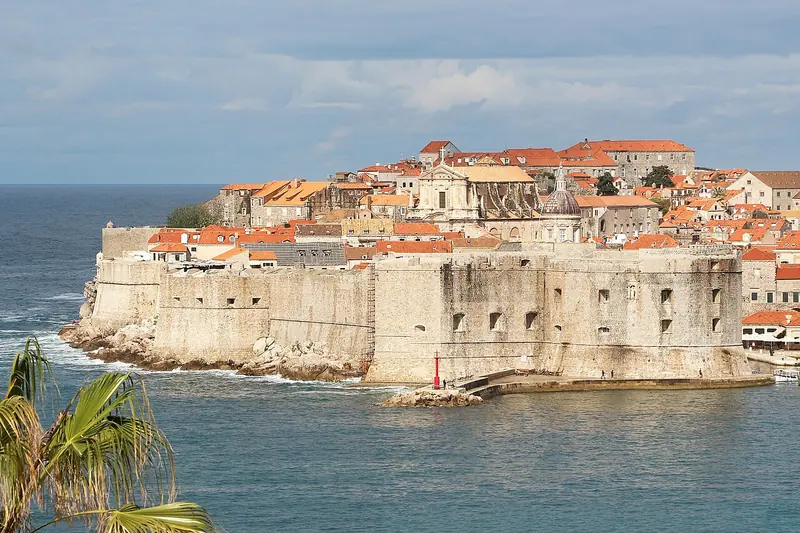 Photo Bernard Gagnon, CC BY-SA 4.0, Wikimedia Commons
 Photo PetrS., CC BY-SA 4.0, Wikimedia Commons