Barbican ★This round red-brick fortress guarded the main entrance to the city. It was built in 1498 and 1499 under King John Albert, for fear of an invasion from the east. The walls are more than 3 metres thick and seven turrets rise above them. The Barbican was once linked to St Florian's Gate by a walled passage called the neck, and a moat ran around it. Locals call it the Saucepan. Can you guess why?
St Florian's Gate ★The only one of medieval Kraków's eight gates still standing. Records mention it as early as 1307, and with its spire it is 34.5 metres tall. Kings entered the city here and set off along the Royal Route to Wawel. On the park side you will see an eagle designed by Jan Matejko, and on the city side St Florian, patron saint of firefighters. Paintings have been hung for sale along the walls for years.
St Mary's Church ★A Gothic basilica with two unequal towers. The taller one, the Bugle Tower, is 82 metres high and the lower one 69. Every hour a trumpeter plays the bugle call from the taller tower to the four points of the compass, and the tune breaks off suddenly. Legend says a Tatar arrow cut it short in just this way. Inside stands the altarpiece by Veit Stoss, carved between 1477 and 1489 and about 13 metres across. Listen to the bugle call and wave to the trumpeter: he usually waves back.
Cloth Hall ★The long hall in the middle of the Main Square was once the centre of the cloth trade. The first stone stalls stood here when the city was founded in 1257. After a fire in 1555 the hall was rebuilt in Renaissance style and topped with a parapet of mascarons, carved faces. Look for the funniest ones. Inside there are still souvenir stalls, upstairs a gallery of paintings, and beneath the square an underground museum.
Town Hall Tower ★This 70-metre Gothic tower is all that remains of Kraków's town hall. The hall itself was pulled down in 1820. The entrance is guarded by two stone lions brought here from the palace in Pławowice. In season you can climb the stairs to the top and look down on the Main Square. The cellars once held a prison and a beer hall.
Collegium Maius ★The oldest building of the Jagiellonian University. Its story begins in 1400, when King Władysław Jagiełło bought a house here with money bequeathed by Queen Jadwiga. Nicolaus Copernicus studied at this university from 1491 to 1495. Step into the arcaded courtyard and look for the clock. At 9, 11, 1, 3 and 5 o'clock it plays a tune and a procession of figures comes out.
Church of Saints Peter and Paul ★The first Baroque building in Kraków. King Sigismund III Vasa founded the church for the Jesuits, and it was built from 1597 to 1619. Twelve apostles stand on the fence in front of the entrance. Count them and look for the one with the keys: that is St Peter. Inside hangs the longest Foucault pendulum in Poland, and its demonstrations prove that the Earth rotates.
Wawel Cathedral ★Poland's kings were crowned and buried here. Seventeen rulers rest in the cathedral and its crypts, alongside poets and heroes. Huge bones hang on chains by the entrance. Legend says they belonged to the dragon, but they are really the bones of prehistoric animals. In the tower hangs the Sigismund Bell, cast in 1520. It weighs more than 12 tonnes and rings only on the greatest occasions.
Wawel Royal Castle ★For centuries the kings of Poland lived here. Step into the courtyard with its three tiers of arcades: Italian masters built it in the early 16th century for King Sigismund the Old. In the chambers hang the arrases, huge woven pictures commissioned by Sigismund Augustus. You can enter the hill and the courtyard without a ticket; tickets are needed for the chambers and exhibitions.
Juliusz Słowacki TheatreOne of the most beautiful theatres in Poland opened in 1893. It was designed by Jan Zawiejski and stands on the site of the demolished Church of the Holy Spirit. Since 1909 it has been named after the poet Juliusz Słowacki. Look up at the top of the façade: the figures there represent Poetry, Drama and Comedy, among others.
Jan Matejko HouseJan Matejko, painter of great scenes from Polish history such as the Battle of Grunwald, was born in this house at 41 Floriańska Street in 1838 and died here in 1893. The house was bought for a museum in 1895, and the museum has been a branch of the National Museum since 1904. You are on Floriańska Street, the main stretch of the Royal Route. At its end you can already see the towers of St Mary's Church.
St Adalbert's ChurchThe little church in the corner of the Main Square is older than the square itself. Its Romanesque walls date from the late 11th century, and the Baroque dome was added in the early 17th century. Tradition says St Adalbert preached on this spot. Notice the entrance: it lies clearly below the square, because the ground level rose over the centuries.
Collegium NovumThe red-brick main building of the Jagiellonian University looks medieval, but construction only began in 1883. It stands by the Planty, the park that rings the whole Old Town where the city walls once stood. Next to the building you will find a monument to Nicolaus Copernicus as a young student. The Planty are a good place for a moment in the shade.
Franciscan BasilicaThe Franciscan church has stood here since the 13th century, but it is best known for what was created around 1900. Stanisław Wyspiański covered the walls with colourful flowers and designed the stained-glass windows. The most famous one, God the Father, has been above the entrance since 1904. Look inside on a sunny day, when the windows glow most brightly. Entry is free outside service times.
St Andrew's ChurchOne of the oldest churches in Kraków, built between 1079 and 1098. Its thick stone walls and narrow windows make it look like a small fortress, and it served as one. The chronicler Jan Długosz wrote that in 1241 the townspeople defended themselves here against the Mongols. Look at the two towers: the lower part is Romanesque and the spires are Baroque, several hundred years younger.

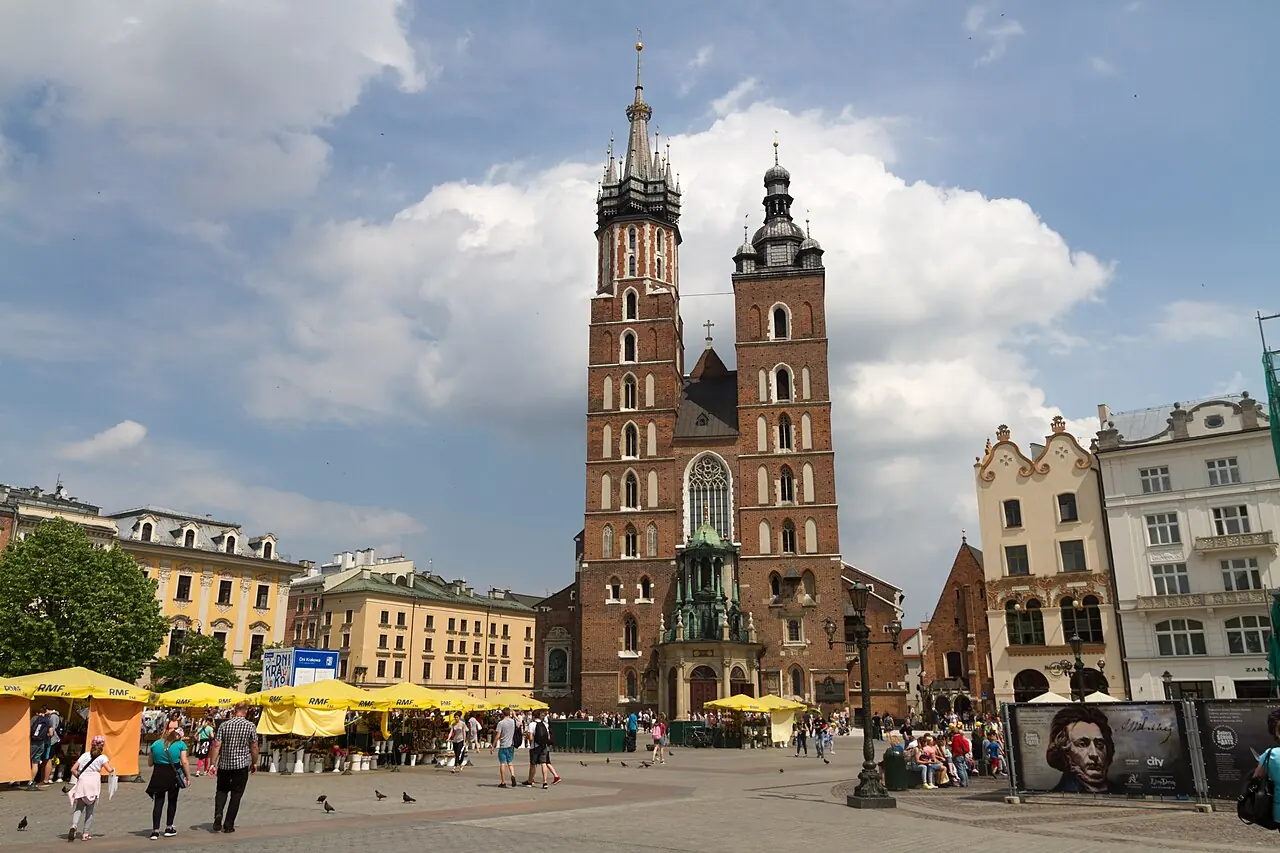 Photo Maksym Kozlenko, CC BY-SA 4.0, Wikimedia Commons

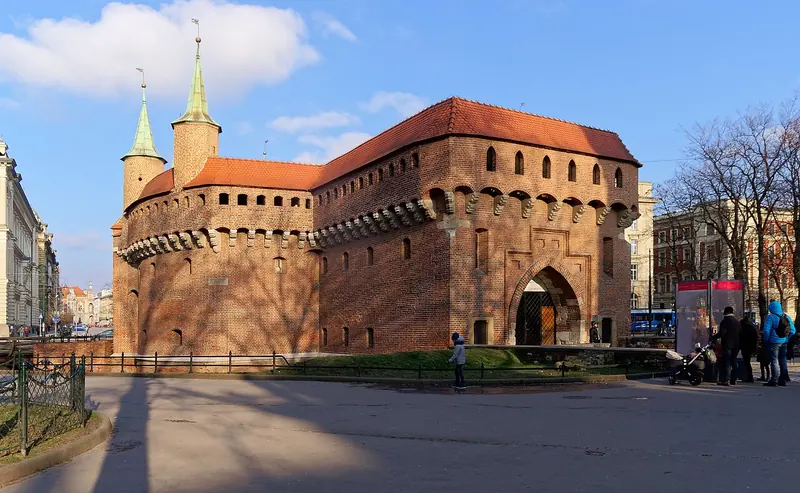 Photo Jakub Hałun, CC BY-SA 4.0, Wikimedia Commons1
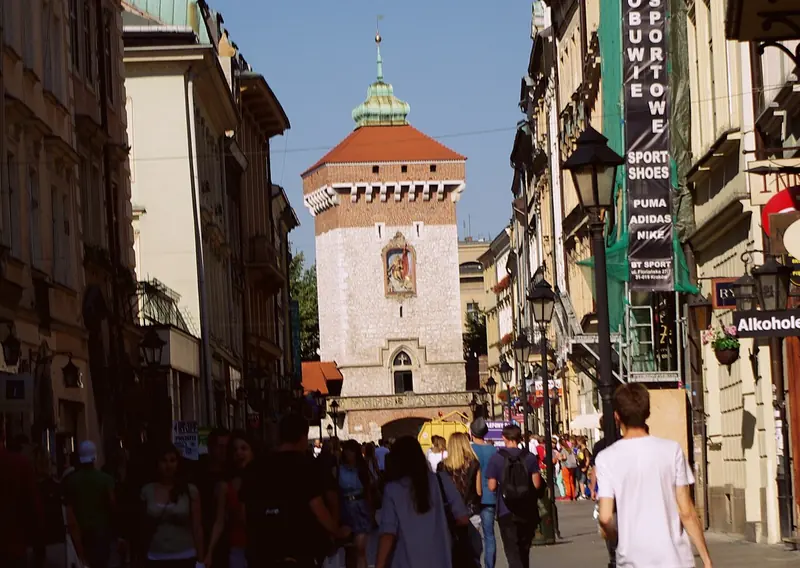 Photo Tonący rekin, CC BY-SA 3.0 pl, Wikimedia Commons
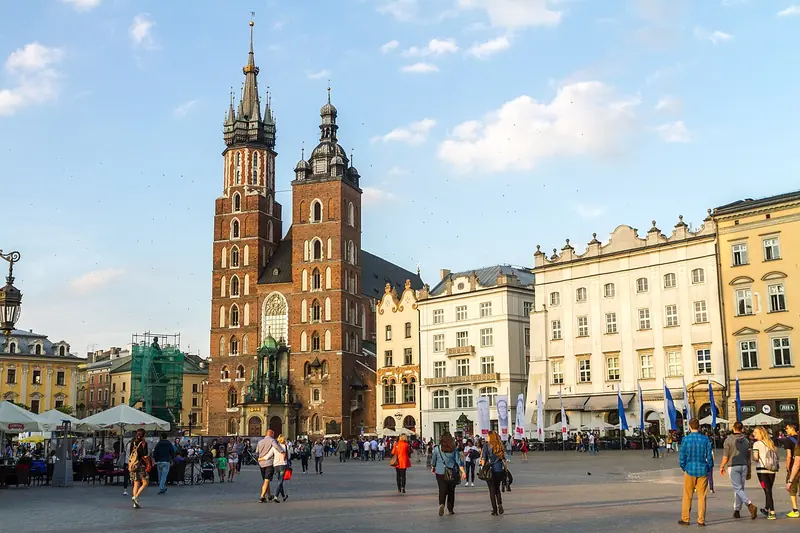 Photo Maksym Kozlenko, CC BY-SA 4.0, Wikimedia Commons
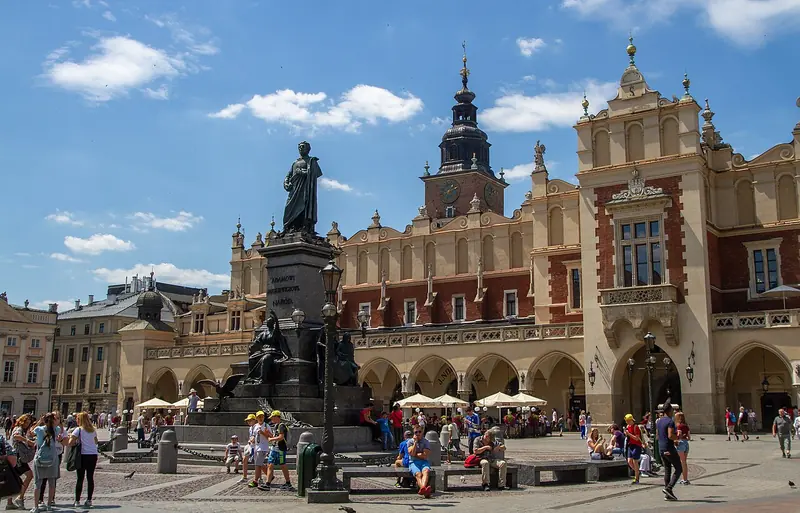 Photo Maksym Kozlenko, CC BY-SA 4.0, Wikimedia Commons
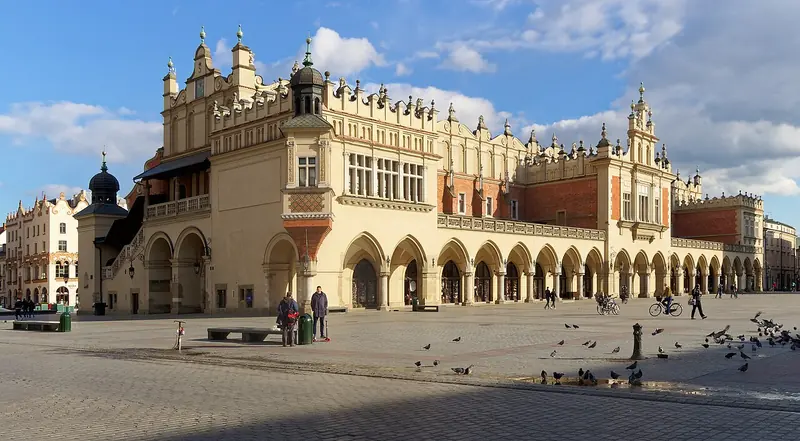 Photo Jakub Hałun, CC BY-SA 4.0, Wikimedia Commons
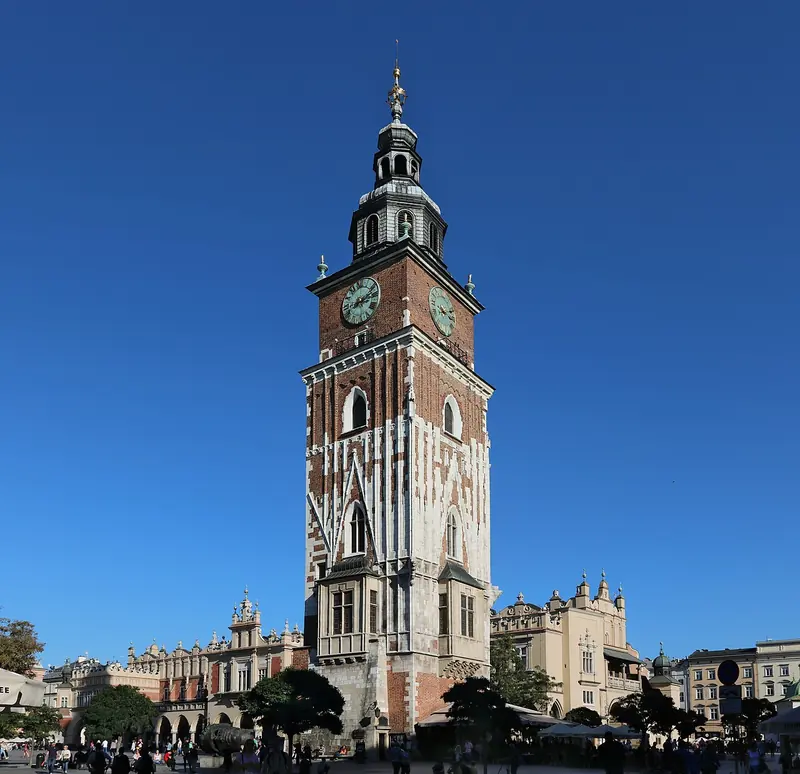 Photo Ingo Mehling, CC BY-SA 4.0, Wikimedia Commons
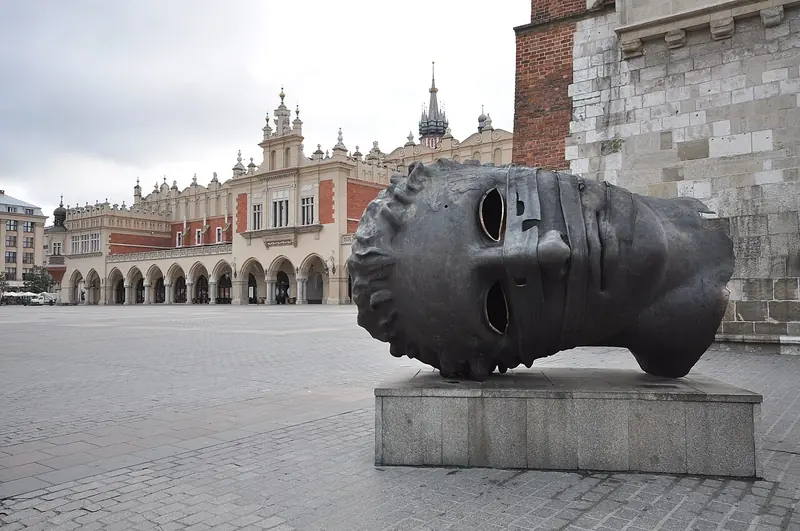 Photo Jorge Láscar from Australia, CC BY 2.0, Wikimedia Commons
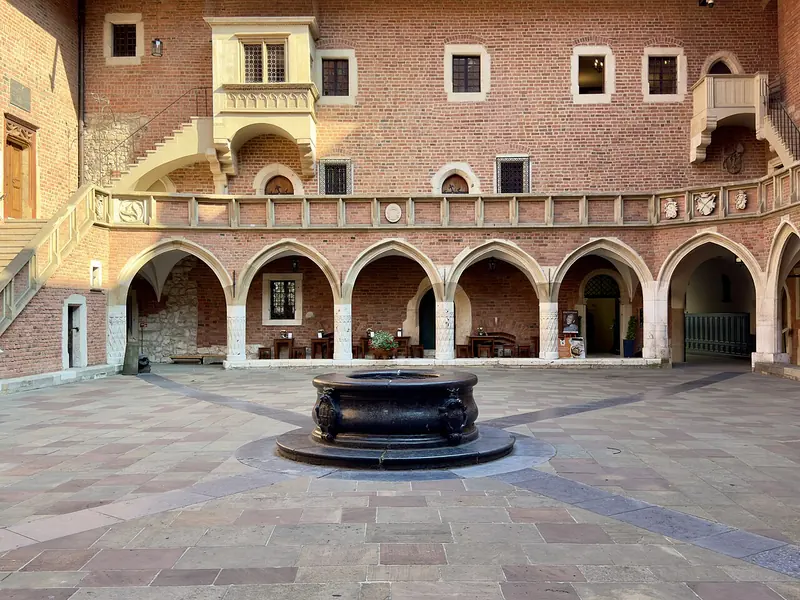 Photo Chris Olszewski, CC BY-SA 4.0, Wikimedia Commons
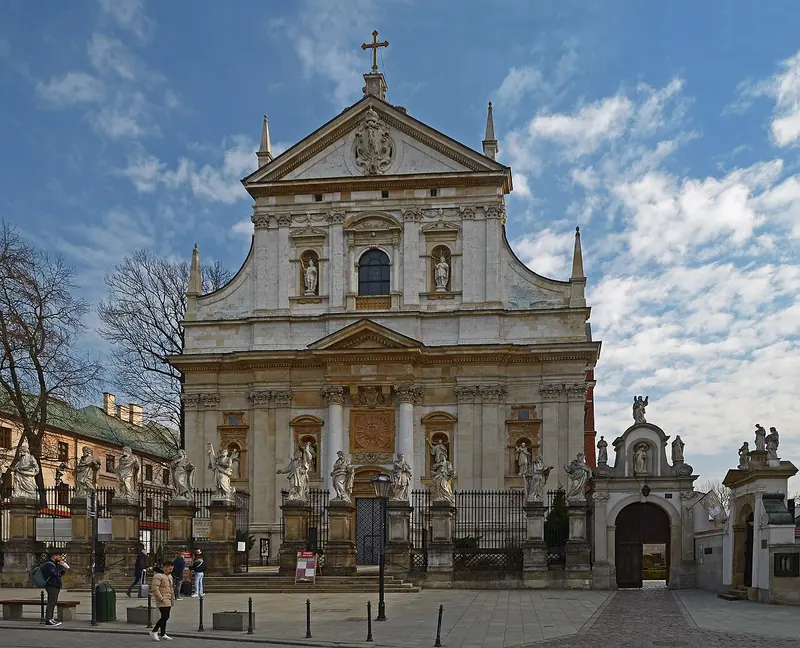 Photo Ввласенко, CC BY-SA 3.0, Wikimedia Commons
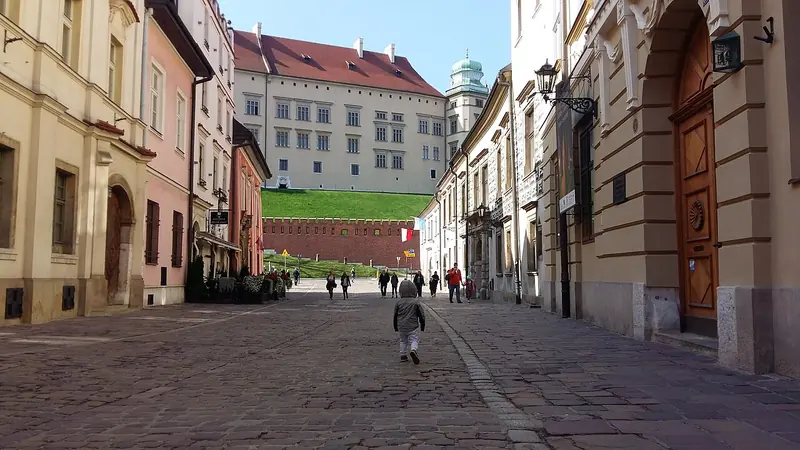 Photo Radosław Botev, CC BY 3.0 pl, Wikimedia Commons
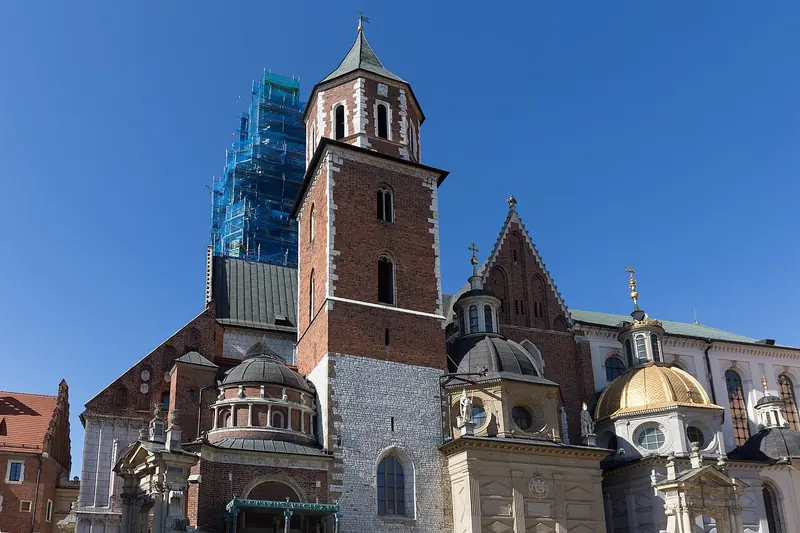 Photo Pymouss, CC BY-SA 4.0, Wikimedia Commons
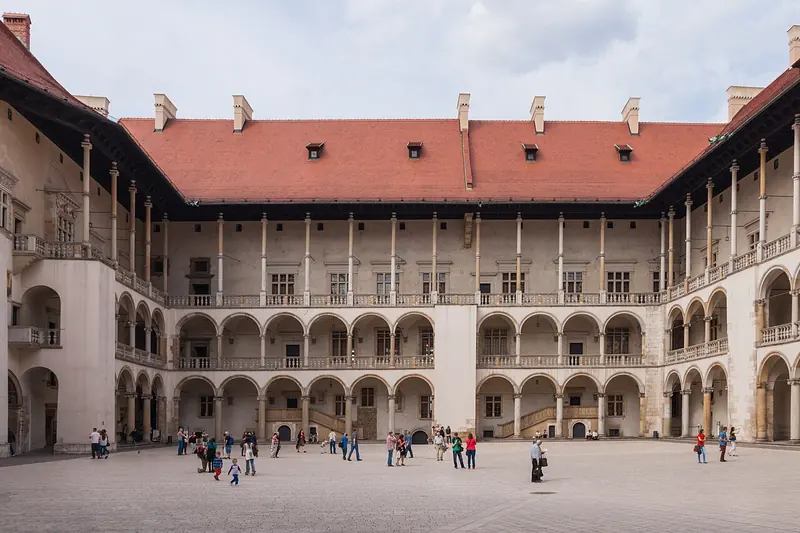 Photo Marcin Konsek, CC BY-SA 4.0, Wikimedia Commons
 Photo Dawid Galus, CC BY-SA 3.0 pl, Wikimedia Commons
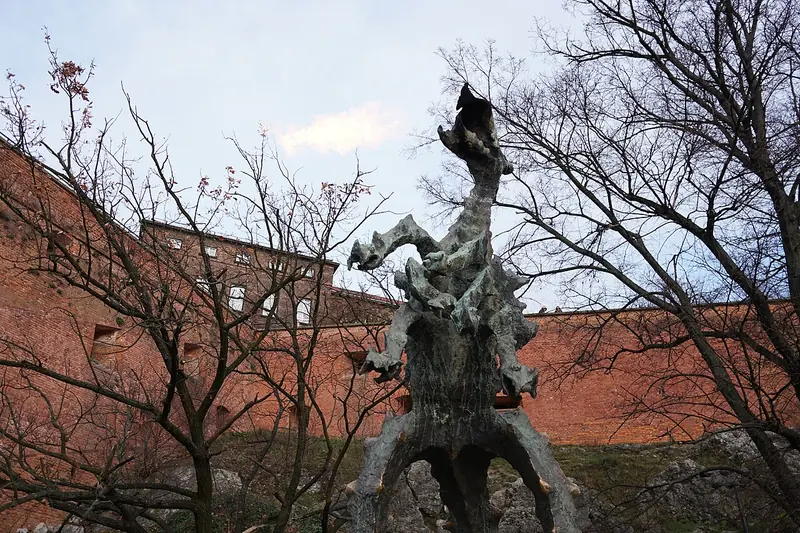 Photo Lasitti, CC BY-SA 4.0, Wikimedia Commons
 Photo Igor123121, CC BY 4.0, Wikimedia Commons
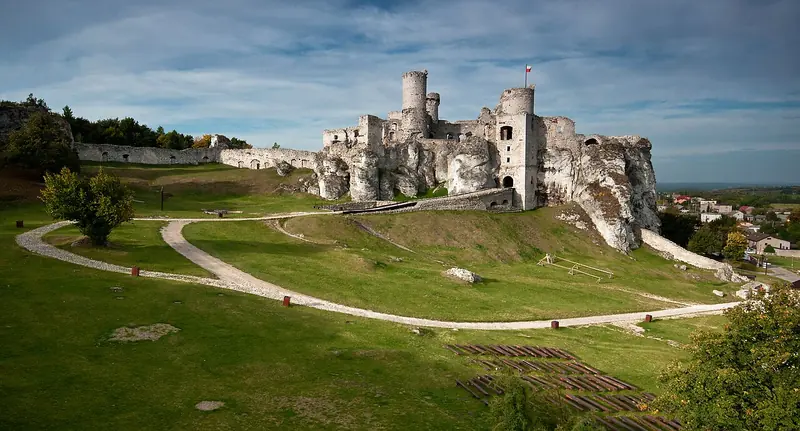 Photo Łukasz Śmigasiewicz, CC BY-SA 3.0 pl, Wikimedia Commons
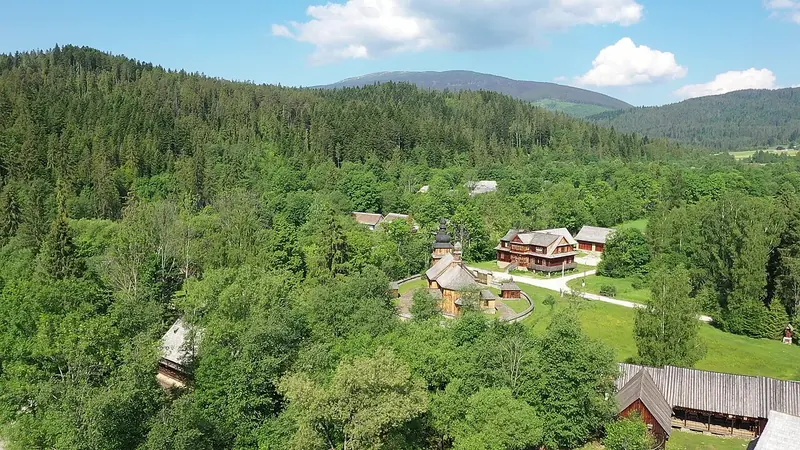 Photo Zontarlj, CC BY-SA 4.0, Wikimedia Commons