Photo August Dominus, CC BY-SA 4.0, Wikimedia Commons
ParkLjubljana, Central Slovenia Region, Slovenia
Tivoli Park in Ljubljana: what to see, map and route
Tivoli Park in Ljubljana. In the Turi app, the same map shows your position, guides you from point to point and lets you tick off the places you’ve visited.
The walk starts at the park entrance at the end of Cankarjeva Street, beyond the underpass beneath Bleiweisova Street; from Prešernov trg, Prešeren Square, you can walk here along Čopova and Cankarjeva streets in about 10 minutes. It ends at Tivoli Hall in the northern part of the park, from where you can get back to the entrance along the Jakopičev drevored avenue in about 10 minutes. If you are already in the park, Turi will guide you from the nearest point. The park is open all year round, winter included, and entry is free. Tivoli Castle and Švicarija, with the exhibitions of the International Centre of Graphic Arts, are open Tuesday to Sunday from 10:00 to 18:00 and closed on Mondays; an adult ticket costs 8 euros, children up to 12 go free, and you can visit the castle ground floor with its café, as well as the shop and bistro in Švicarija, without a ticket. During the Biennial of Graphic Arts prices may differ. The Museum of Contemporary History in Cekin Mansion is open from 10:00 to 18:00 and closed on Mondays and public holidays. The glasshouse by the pond is free to enter but is sometimes temporarily closed, and the roses bloom in summer, so from November to March the rose garden has no flowers. The park paths are flat and wide; you only go uphill if you choose the forest hike to Rožnik. Toilets are in Tivoli Castle, in the basement by the cloakroom, and in the bistro in Švicarija. Allow about two hours, not counting the exhibitions.
At home, open the place in Turi and tap “Save for offline”: the map, descriptions and photos will work without signal.
Visit the farthest points first, while you still have energy.
Tick things off as you go, and by the exit you’ll know what’s left.
Ljubljana: Tivoli Park in the Turi app
Live position, a route from point to point, descriptions to read and listen to. Free, no account, in 12 languages.
The same map as in the app. Tap a point to see its photo and description; in Turi you’ll see yourselves on it too.
1recommended, in route orderother pointsWCtoilets, food, tickets
Something not right? Report it in the app at that point.
Worth seeing
Tivoli is the largest park in Ljubljana: a green wedge that, together with the forests of the Rožnik and Šišenski hrib hills, reaches almost to the city centre. It was laid out in 1813 by the French engineer Jean Blanchard, when Ljubljana was the capital of the Illyrian Provinces: he joined two existing parks and linked them to the town. In 1921-1939 the park was redesigned by Jože Plečnik, who laid out the broad Jakopič Promenade leading to Tivoli Castle. Since 1984 Tivoli has been part of the protected Tivoli, Rožnik and Šišenski hrib Landscape Park, which covers 459 hectares. The walk follows the promenade with its photo exhibitions to the castle with the International Centre of Graphic Arts, past Švicarija and along the pond, and ends at the baroque Cekin Mansion and Tivoli Hall.
Photo Victor van Werkhooven from Groningen, Netherlands, CC BY 2.0, Wikimedia Commons1
Attraction
Jakopič Promenade and open-air gallery
The broad, sand-covered promenade was designed by Jože Plečnik, who redesigned the park in 1921-1939; it was meant to link Tivoli with the city centre. It is named after the impressionist painter Rihard Jakopič, and in 2009 it was declared a cultural monument of national importance. Along the promenade stands an open-air gallery: large-format photographs and prints on panels, with exhibitions that change from time to time. You can see them free of charge, at any time of day and in any weather. At the end of the promenade you can already see the stairs and the facade of Tivoli Castle.
Photo juanma from Barcelona, Spain, CC BY 2.0, Wikimedia Commons2
Attraction
Stairs with four dogs
Beyond the fountain, stairs lead up to the terrace in front of the castle, and beside them sit four cast-iron dogs from 1864, attributed to the sculptor Anton Dominik Fernkorn. A legend says that the dogs have no tongues and that the sculptor took his own life because of it. That is not true: look into the dogs' mouths and check for yourself. From the stairs you can see the whole Jakopič Promenade, laid out by Plečnik on the axis of the castle.
Photo Guy Fawkes, CC BY-SA 2.0, Wikimedia Commons3
Building / monument
Tivoli Castle
The mansion known as Tivoli Castle was built in the 17th century on the ruins of a Renaissance castle; its old name, Pod turnom, means below the tower, because a defensive tower once stood in the woods above it. It first belonged to the Jesuits, after the order was suppressed in 1773 it was the summer residence of the bishops of Ljubljana, and in 1852 Emperor Franz Joseph I gave it to Marshal Joseph Radetzky, who rebuilt it in the neoclassical style. Later the city bought it, and since 1986 it has housed the International Centre of Graphic Arts, which organises the Ljubljana Biennial of Graphic Arts, held without interruption since 1955. You can visit the ground floor with a temporary exhibition, a shop and a café without a ticket. Behind the castle, on the axis of the promenade, is the open-air auditorium that Plečnik designed in 1933; rebuilt, it opened in September 2023 and hosts cultural events.
Photo Renardo la vulpo, CC BY-SA 4.0, Wikimedia Commons4
Building / monument
Švicarija
In 1835 the Ljubljana Casino Society built an inn with a café here, and because of its look the locals called it Švicarija, after Switzerland. Later the building served as the Hotel Tivoli. The city renovated it for 5.7 million euros and on 8 May 2017 reopened it as a contemporary art centre with 11 studios for sculptors and painters, 2 studios for young artists and 4 residences for artists from abroad. It is run by the International Centre of Graphic Arts: there are exhibitions, a shop and a bistro you can enter without a ticket. The Fran Jesenko forest nature trail passes nearby.
Photo Mister No, CC BY 3.0, Wikimedia Commons5
przyroda
Jesenko Trail and the way to Rožnik
Beyond Švicarija begins the forest, which belongs to the Tivoli, Rožnik and Šišenski hrib Landscape Park, protected since 1984 and covering 459 hectares. Through the forest runs a nature trail named after the botanist Fran Jesenko, who lived from 1875 to 1932: it is about 3 kilometres long and passes about 30 species of trees and shrubs. It was laid out in 1986, on the occasion of a forestry congress in Ljubljana. If you have more time, forest paths lead uphill from here to Cankarjev vrh, the summit of Rožnik at 394 metres, with the Church of the Visitation of the Virgin Mary and the inn where the writer Ivan Cankar lived from 1910 to 1917. Ljubljana Zoo lies on the southern slope of the hill.
Photo DancingPhilosopher, CC BY-SA 3.0, Wikimedia Commons6
Attraction
Tivoli Pond
The shallow, rectangular pond was dug in 1880, and by the end of the 19th century people went boating here in summer and skating in winter. For a long time the pond was leased by a German association, which Slovenians resented, until the Germans finally handed it over to them. In 2011 the pond was thoroughly renovated, and where the boathouse was rebuilt after the Second World War there is now a café with a view of the park. By the northern shore stands the bronze Little Shepherd, a boy with a pipe, sculpted by Zdenko Kalin in 1942 and placed in the park on 1 May 1946. West of the pond you will see the sculpture Sožitje, meaning Coexistence: in 2000 Slobodan Pejić carved it from a fallen, 300-year-old oak.
Photo jad99 from Graz, Austria, CC BY-SA 2.0, Wikimedia Commons7
Plants
Glasshouse and rose garden
By the western shore of the pond stands the Tivoli glasshouse, looked after by the Botanic Garden of the University of Ljubljana; it holds Mediterranean plants and cacti, some of them more than 50 years old. The first half of the glasshouse was renovated in 2021; entry is free, but the glasshouse is sometimes temporarily closed. Next to it lies the rose garden, created in 1993-1994 and renovated in 2007; in 2010 more than 160 rose varieties were planted here, including Prešeren, the first Slovenian variety. Every rose has a label with its name, and the garden is at its best in June, when the roses are in bloom.
Photo DancingPhilosopher, CC BY-SA 3.0, Wikimedia Commons8
Attraction
Fish and the Kocbek monument
At the southern end of the pond lies the stone sculpture Fish, made by France Kralj in 1935 and placed here in 1994. By the southern shore the bronze poet Edvard Kocbek sits on a bench: the statue by Boštjan Drinovec was unveiled in September 2004, 100 years after the poet's birth. Nearby there is also a monument to the writer Boris Pahor. In the warm season an open-air library runs by the pond, and in winter the books move into the glasshouse.
Photo jad99 from Graz, Austria, CC BY-SA 2.0, Wikimedia Commons9
Building / monument
Cekin Mansion, Museum of Contemporary History
The baroque mansion, called Leopoldsruhe in German, was built in 1752-1755 for Count Leopold Karl Lamberg. In 1787 it passed to Ivana Lamberg, wife of Laurenz Szőgyény, and the townspeople turned his surname into Cekin, which gave the mansion its Slovenian name, Cekinov grad. Until the Second World War it was a private home, and since 1951 it has housed the National Museum of Contemporary History of Slovenia, with the permanent exhibition Slovenians in the 20th Century. In 1991 the architect Jurij Kobe redesigned the interiors, of which hardly any baroque decoration had survived. The museum is open from 10:00 to 18:00 and closed on Mondays and public holidays.
Photo No machine-readable author provided. Žiga assumed (based…, Public domain, Wikimedia Commons10
Building / monument
Tivoli Hall
The sports hall was built in 1963-1965 to a design by Marjan Božič and Stanko Bloudek and opened in April 1965. The large hall with the ice rink holds 6,800 spectators, and the small basketball hall 4,500. Tivoli Hall has hosted the Ice Hockey World Championships many times, the final round of the Basketball World Championship in 1970 and EuroBasket games in 2013; the ice hockey club HK Olimpija plays here. This is where the route ends: you can get back to the park entrance along the Jakopičev drevored avenue, which runs south along the eastern edge of the park.
All points (13)
Grouped as in the map legend. A star marks recommended points.
Attraction 5
Jakopič Promenade and open-air gallery ★The broad, sand-covered promenade was designed by Jože Plečnik, who redesigned the park in 1921-1939; it was meant to link Tivoli with the city centre. It is named after the impressionist painter Rihard Jakopič, and in 2009 it was declared a cultural monument of national importance. Along the promenade stands an open-air gallery: large-format photographs and prints on panels, with exhibitions that change from time to time. You can see them free of charge, at any time of day and in any weather. At the end of the promenade you can already see the stairs and the facade of Tivoli Castle.
Stairs with four dogs ★Beyond the fountain, stairs lead up to the terrace in front of the castle, and beside them sit four cast-iron dogs from 1864, attributed to the sculptor Anton Dominik Fernkorn. A legend says that the dogs have no tongues and that the sculptor took his own life because of it. That is not true: look into the dogs' mouths and check for yourself. From the stairs you can see the whole Jakopič Promenade, laid out by Plečnik on the axis of the castle.
Tivoli Pond ★The shallow, rectangular pond was dug in 1880, and by the end of the 19th century people went boating here in summer and skating in winter. For a long time the pond was leased by a German association, which Slovenians resented, until the Germans finally handed it over to them. In 2011 the pond was thoroughly renovated, and where the boathouse was rebuilt after the Second World War there is now a café with a view of the park. By the northern shore stands the bronze Little Shepherd, a boy with a pipe, sculpted by Zdenko Kalin in 1942 and placed in the park on 1 May 1946. West of the pond you will see the sculpture Sožitje, meaning Coexistence: in 2000 Slobodan Pejić carved it from a fallen, 300-year-old oak.
Fish and the Kocbek monument ★At the southern end of the pond lies the stone sculpture Fish, made by France Kralj in 1935 and placed here in 1994. By the southern shore the bronze poet Edvard Kocbek sits on a bench: the statue by Boštjan Drinovec was unveiled in September 2004, 100 years after the poet's birth. Nearby there is also a monument to the writer Boris Pahor. In the warm season an open-air library runs by the pond, and in winter the books move into the glasshouse.
Boy with a Fish fountainAt the foot of the stairs leading up to the castle stands a round fountain with a seated boy holding a fish. It is a baroque fountain listed in the register of Slovenia's cultural heritage, and the bronze figure of the boy is a copy cast in 1989. From here you have a good view of the castle at the top of the stairs and, in the other direction, of the whole Jakopič Promenade.
Building / monument 4
Tivoli Castle ★The mansion known as Tivoli Castle was built in the 17th century on the ruins of a Renaissance castle; its old name, Pod turnom, means below the tower, because a defensive tower once stood in the woods above it. It first belonged to the Jesuits, after the order was suppressed in 1773 it was the summer residence of the bishops of Ljubljana, and in 1852 Emperor Franz Joseph I gave it to Marshal Joseph Radetzky, who rebuilt it in the neoclassical style. Later the city bought it, and since 1986 it has housed the International Centre of Graphic Arts, which organises the Ljubljana Biennial of Graphic Arts, held without interruption since 1955. You can visit the ground floor with a temporary exhibition, a shop and a café without a ticket. Behind the castle, on the axis of the promenade, is the open-air auditorium that Plečnik designed in 1933; rebuilt, it opened in September 2023 and hosts cultural events.
Švicarija ★In 1835 the Ljubljana Casino Society built an inn with a café here, and because of its look the locals called it Švicarija, after Switzerland. Later the building served as the Hotel Tivoli. The city renovated it for 5.7 million euros and on 8 May 2017 reopened it as a contemporary art centre with 11 studios for sculptors and painters, 2 studios for young artists and 4 residences for artists from abroad. It is run by the International Centre of Graphic Arts: there are exhibitions, a shop and a bistro you can enter without a ticket. The Fran Jesenko forest nature trail passes nearby.
Cekin Mansion, Museum of Contemporary History ★The baroque mansion, called Leopoldsruhe in German, was built in 1752-1755 for Count Leopold Karl Lamberg. In 1787 it passed to Ivana Lamberg, wife of Laurenz Szőgyény, and the townspeople turned his surname into Cekin, which gave the mansion its Slovenian name, Cekinov grad. Until the Second World War it was a private home, and since 1951 it has housed the National Museum of Contemporary History of Slovenia, with the permanent exhibition Slovenians in the 20th Century. In 1991 the architect Jurij Kobe redesigned the interiors, of which hardly any baroque decoration had survived. The museum is open from 10:00 to 18:00 and closed on Mondays and public holidays.
Tivoli Hall ★The sports hall was built in 1963-1965 to a design by Marjan Božič and Stanko Bloudek and opened in April 1965. The large hall with the ice rink holds 6,800 spectators, and the small basketball hall 4,500. Tivoli Hall has hosted the Ice Hockey World Championships many times, the final round of the Basketball World Championship in 1970 and EuroBasket games in 2013; the ice hockey club HK Olimpija plays here. This is where the route ends: you can get back to the park entrance along the Jakopičev drevored avenue, which runs south along the eastern edge of the park.
przyroda 1
Jesenko Trail and the way to Rožnik ★Beyond Švicarija begins the forest, which belongs to the Tivoli, Rožnik and Šišenski hrib Landscape Park, protected since 1984 and covering 459 hectares. Through the forest runs a nature trail named after the botanist Fran Jesenko, who lived from 1875 to 1932: it is about 3 kilometres long and passes about 30 species of trees and shrubs. It was laid out in 1986, on the occasion of a forestry congress in Ljubljana. If you have more time, forest paths lead uphill from here to Cankarjev vrh, the summit of Rožnik at 394 metres, with the Church of the Visitation of the Virgin Mary and the inn where the writer Ivan Cankar lived from 1910 to 1917. Ljubljana Zoo lies on the southern slope of the hill.
Plants 1
Glasshouse and rose garden ★By the western shore of the pond stands the Tivoli glasshouse, looked after by the Botanic Garden of the University of Ljubljana; it holds Mediterranean plants and cacti, some of them more than 50 years old. The first half of the glasshouse was renovated in 2021; entry is free, but the glasshouse is sometimes temporarily closed. Next to it lies the rose garden, created in 1993-1994 and renovated in 2007; in 2010 more than 160 rose varieties were planted here, including Prešeren, the first Slovenian variety. Every rose has a label with its name, and the garden is at its best in June, when the roses are in bloom.
Toilets / tickets / parking 2
Public toilet
Park entrance from Cankarjeva StreetThe walk starts where Cankarjeva Street passes under Bleiweisova Street and opens straight into the park. Tivoli was laid out in 1813 by the French engineer Jean Blanchard, when Ljubljana was the capital of the Illyrian Provinces: he joined two existing parks and linked them to the city centre. Today it is the largest park in Ljubljana, and beyond it begin the forests of the Rožnik and Šišenski hrib hills. The route follows the Jakopič Promenade to Tivoli Castle, then goes to the pond and north to Cekin Mansion.

 Photo August Dominus, CC BY-SA 4.0, Wikimedia Commons

 Photo Victor van Werkhooven from Groningen, Netherlands, CC BY 2.0, Wikimedia Commons1
 Photo juanma from Barcelona, Spain, CC BY 2.0, Wikimedia Commons
 Photo Guy Fawkes, CC BY-SA 2.0, Wikimedia Commons
 Photo Renardo la vulpo, CC BY-SA 4.0, Wikimedia Commons
 Photo Mister No, CC BY 3.0, Wikimedia Commons
 Photo DancingPhilosopher, CC BY-SA 3.0, Wikimedia Commons
 Photo jad99 from Graz, Austria, CC BY-SA 2.0, Wikimedia Commons
 Photo DancingPhilosopher, CC BY-SA 3.0, Wikimedia Commons
 Photo jad99 from Graz, Austria, CC BY-SA 2.0, Wikimedia Commons
 Photo No machine-readable author provided. Žiga assumed (based…, Public domain, Wikimedia Commons
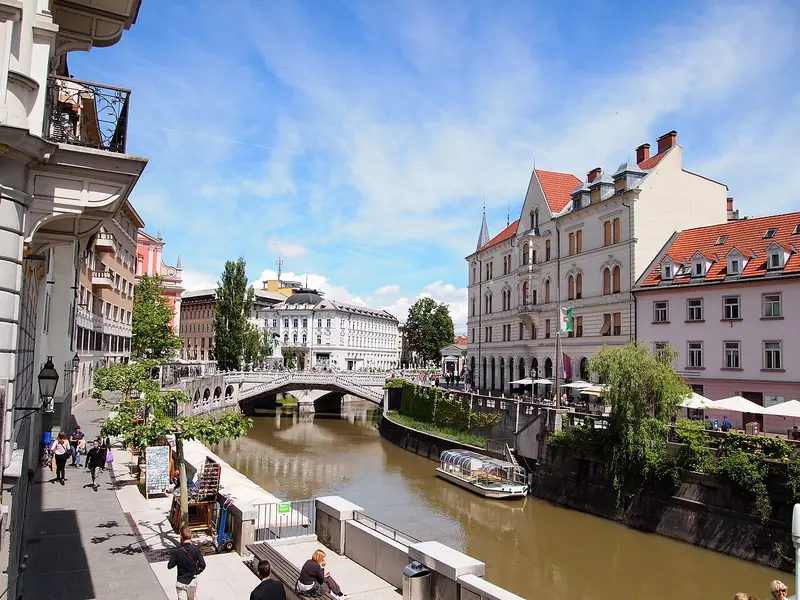 Photo Tiia Monto, CC BY-SA 3.0, Wikimedia Commons
 Photo Tiia Monto, CC BY-SA 3.0, Wikimedia Commons
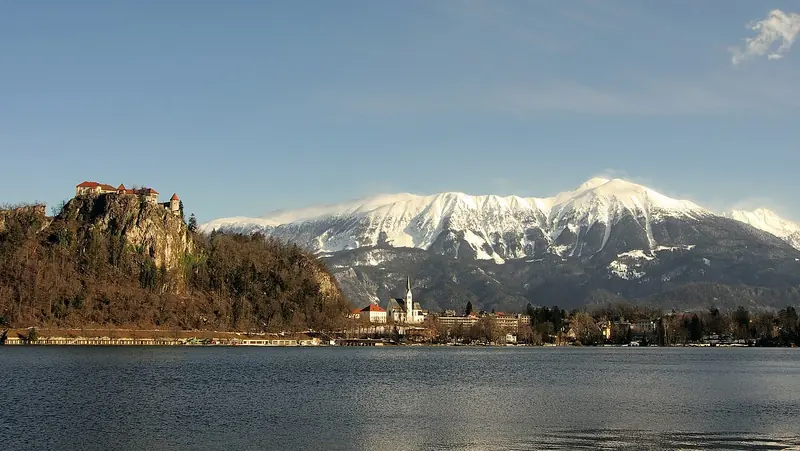 Photo Simon Wa, CC BY 2.0, Wikimedia Commons