Kalle the sea lion ★The pool near the entrance is home to Kalle, a California sea lion born in 2002. He came from Cologne Zoo in 2006, when the old sea lion pool was renovated. Since September 2026 he has been here alone, because his companion Jip had to be put to sleep due to illness. Twice a day, at feeding time, Kalle dives for fish, leaps out of the water and shows with his keeper what sea lions can do; he eats 5 to 9 kilograms of fish a day. Nearby you will see alpacas, a farmyard and an old farmhouse, and right by the entrance squirrel monkeys and mute swans.
Maned wolves and capybaras ★The former cheetah enclosure is now home to two female maned wolves. The maned wolf is the tallest wild canid in the world: it stands up to 100 centimetres at the shoulder, and its long legs let it see over the tall grass of South America. Despite its name it is not a close relative of the wolf, and more than 70 percent of its diet is fruit and plants. The enclosure is full of trees, shrubs and tall grass, and the wolves also have access to a pond. In this enclosure you will also see capybaras, and just in front of it black-necked swans.
Brown bears and wolves ★Brown bears were the zoo's first residents in 1949 and are its symbol. Today two sisters live here, Čupa, born in 2005, and Pombi, born in 2010, daughters of the famous pair Jaka and Meta. Three times a week you can watch them being fed, and the keepers hide food around the enclosure and wedge it high up in the climbing structures. Next door live Canadian wolves, one of the largest subspecies of wolf; wolves have lived in the zoo since it was founded. The bear enclosure is the oldest in the zoo and is to be replaced by a new one, and a large new enclosure for the wolves is being built in the upper part of the zoo.
Chimpanzees ★This pavilion is home to a group of western chimpanzees. Chimpanzees were the first animals other than humans observed making and using tools, and different populations have their own tools, which the young learn from the older ones. Several times a week you can watch a feeding: the keepers hide vegetables in a barrel with holes, and the chimpanzees have to work out how to get them out. They get three meals a day, mainly vegetables, because our fruit has too much sugar for them. Do not knock on the glass.
Siberian tigers ★The Siberian tiger is the largest tiger subspecies and the largest wild cat in the world: males are on average 3.25 metres long. The modern enclosure was built in 2013, with raised platforms for resting, trees and a pond, because tigers like to bathe. A pair lives here: the cautious female Arisa, born in 2022 at Zamość Zoo in Poland, and the calm male Ussuri, born in 2021 at Kristiansand Zoo in Norway. The keepers sometimes pull a lure through the enclosure so that the tigers can stalk, run and jump as if hunting.
Ganga the elephant ★Ganga, an Asian elephant, came to Ljubljana from India in 1977 as a two-year-old and turned 50 in 2025; the zoo's management calls her the first lady of the zoo. She weighs about 3,300 kilograms and trains with her keepers every day: she opens her mouth for dental checks and lets them rub a cream into her skin to soften it. She loves a shower and afterwards rolls in the sand, which protects her skin from the sun and insects. A Visayan hornbill lives by the entrance to her house. Next door the Persian leopard enclosure is being rebuilt, so access to the leopards and to Ganga is currently restricted.
Red pandas ★This is home to the red pandas Magu and Pyara. Magu was born in 2012 at Madrid Zoo and has been in Ljubljana since 2013, while the younger panda Pyara was born in 2025 in France and arrived in September 2026. Their main food is bamboo, which they always have at hand, and for dessert they get a little fruit. The keepers usually bring their food in the early afternoon, and that is the best time to see them. Red pandas are an endangered species, and the zoo supports the Red Panda Network, which protects them in the wild.
Wallabies and emus ★The Australia enclosure is home to red-necked wallabies, swamp wallabies and emus. When moving slowly, wallabies support themselves on their front paws and strong tail, and for longer hops they push off with their powerful hind legs, whose elastic tendons work like springs. They like gentle sounds, so the keepers give them a ball with little bells to play with. You may not enter this enclosure with a dog. Next door, in the South American enclosure, you will see guanacos, rheas and Patagonian maras.
Yellow-cheeked gibbons ★A family of yellow-cheeked gibbons lives on the island. The female Liling, born around 1986 and most likely caught in the wild, came in the summer of 1991 from Osijek Zoo as a war refugee, when the war in the former Yugoslavia reached Croatia. With the male Liping, who has been here since 1998, she had eight young between 2000 and 2015. Gibbons sing every day: for up to 10 minutes the male and female announce to others that they are a pair and where their territory is. Next door, on the pond, great white pelicans and black swans swim.
Giraffes and zebras ★On the savanna the giraffes live together with ostriches and guineafowl. The male Rastko was born in 2006 at Olomouc Zoo and has been in Ljubljana since 2008, and in 2026 the giraffe Pietruška, born in 2024, arrived from Warsaw Zoo. Giraffes can tell colours apart, so each one has its own training target of a different colour and shape; thanks to training they can be weighed and vaccinated without stress. In the neighbouring enclosure Chapman's zebras graze, among them Srečka and her daughter Sanaa, born here in 2020; the stripe pattern of every zebra is as unique as a fingerprint. Nearby is the Pr' levčku café with a toilet.
Asiatic lions ★The Asiatic lions have a new enclosure of 1,020 square metres on Večna pot. Male Asiatic lions have a smaller and shorter mane than African lions, so their ears are easier to see, and both males and females have a fold of skin on the belly that is rare in African lions. In the enclosure there is a small hill from which the lions watch the neighbouring enclosure of lechwe antelopes, and in front of the visitors' window there is a heated, roofed platform where they like to lie. In winter, when it is too cold for them outside, the lions stay in a heated indoor room.
Meerkats ★Meerkats came to the zoo in 2011, for the first time in its history, and quickly became some of the visitors' favourite animals. They live in groups, post guards that warn the rest of danger, and are constantly digging in the sand of their enclosure. Next to them live dwarf zebus and Indian crested porcupines. From here it is only a few steps to the exit, where there are a toilet, the Medvedji rob gift shop and a snack bar.
Bactrian camelsThe Bactrian camels in this zoo are domesticated animals; fewer than a thousand wild Bactrian camels remain in the world, and they are critically endangered. The female Salima and her young Hasan were brought here in 2015 from a private animal park in Germany, and there is also a third camel in the herd, Batu. At the end of the year the camels star in the show Božična zgodba, a Christmas story: they walk in colourful blankets next to keepers dressed as the three kings.

 Photo Tiia Monto, CC BY-SA 3.0, Wikimedia Commons

 Photo b_k_k_b, CC0, Wikimedia Commons1
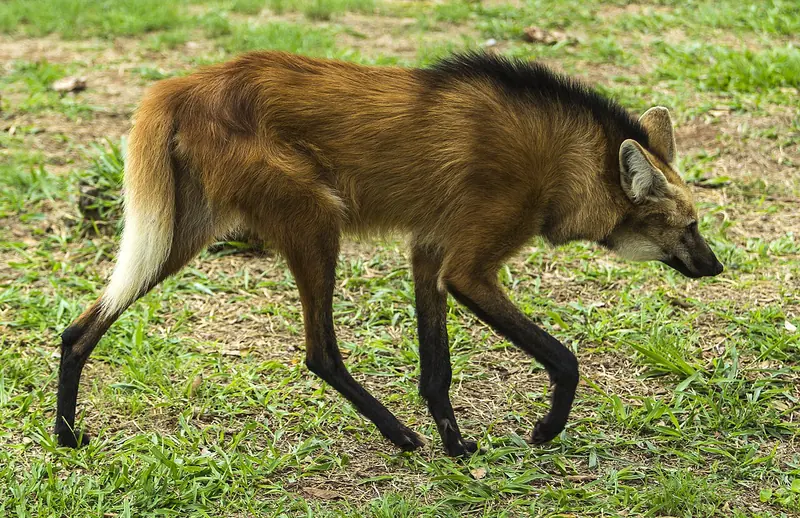 Photo Jonathan Wilkins, CC BY-SA 3.0, Wikimedia Commons
 Photo Damir Kovacec from Maribor, Slovenia, CC BY 2.0, Wikimedia Commons
 Photo antonio, CC BY 2.0, Wikimedia Commons
 Photo antonio, CC BY 2.0, Wikimedia Commons
 Photo Damir Kovacec from Maribor, Slovenia, CC BY 2.0, Wikimedia Commons
 Photo antonio, CC BY 2.0, Wikimedia Commons
 Photo Antimuonium, CC BY-SA 4.0, Wikimedia Commons
 Photo antonio, CC BY 2.0, Wikimedia Commons
 Photo Damir Kovacec from Maribor, Slovenia, CC BY 2.0, Wikimedia Commons
 Photo GinaFranchi, CC BY-SA 4.0, Wikimedia Commons
 Photo Damir Kovacec from Maribor, Slovenia, CC BY 2.0, Wikimedia Commons
 Photo August Dominus, CC BY-SA 4.0, Wikimedia Commons
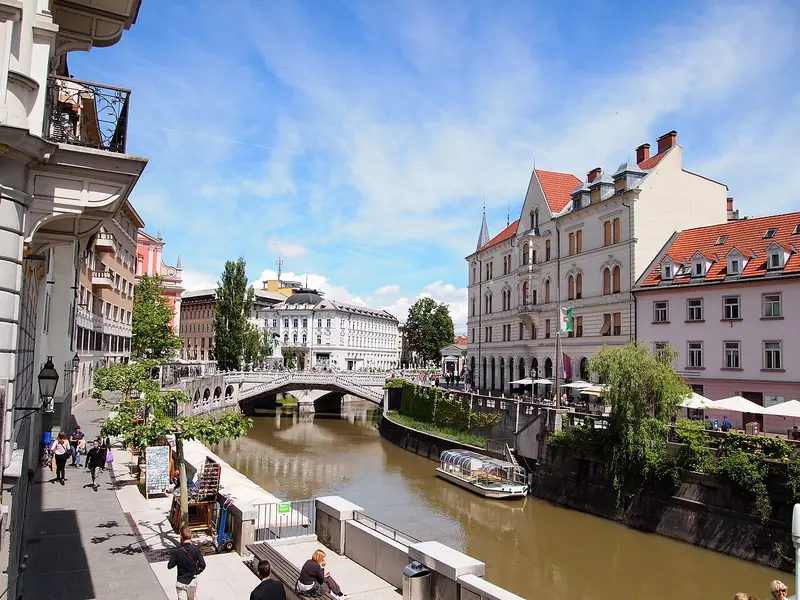 Photo Tiia Monto, CC BY-SA 3.0, Wikimedia Commons
 Photo Simon Wa, CC BY 2.0, Wikimedia Commons