Old Town and Castle in Sanok. In the Turi app, the same map shows your position, guides you from point to point and lets you tick off the places you’ve visited.
free entrymuseums and towers have separate tickets
The walk starts at the tourist information on the Market Square, and the recommended route ends at Švejk’s bench, a few minutes’ walk from the start. If you are already in the centre, Turi will guide you from the nearest point. The old town is on a hill, with climbs up to the castle and Park Hill. Walking around the town is free; tickets are needed for the Historical Museum in the castle with the Beksiński Gallery. Public toilets are on St Michael’s Square next to the parish church.
At home, open the place in Turi and tap “Save for offline”: the map, descriptions and photos will work without signal.
Visit the farthest points first, while you still have energy.
Tick things off as you go, and by the exit you’ll know what’s left.
Sanok Old Town in the Turi app
Live position, a route from point to point, descriptions to read and listen to. Free, no account, in 12 languages.
The same map as in the app. Tap a point to see its photo and description; in Turi you’ll see yourselves on it too.
1recommended, in route orderother pointsWCtoilets, food, tickets
Map: OpenStreetMap (ODbL). Descriptions and photos: Turi and Wikimedia Commons. Something not right? Report it in the app at that point.
Worth seeing
Sanok is a town on the San river at the edge of the Bieszczady mountains, with a castle on the escarpment and a market square where Zdzisław Beksiński stands. The walk goes round the square with the Franciscan church, leads to a little square with a view of the San valley, to the castle with its icons and the world’s largest collection of Beksiński’s works, to the Orthodox church and the site of the Great Synagogue, and ends at the parish church and the bench of the good soldier Švejk. The Sanok open-air museum is on Biała Góra hill above the San, a few minutes’ drive from the square.
Photo Lowdown, CC BY-SA 3.0, Wikimedia Commons1
Attraction
Market Square and Zdzisław Beksiński statue
Sanok received town rights in 1339, and the medieval market square measured 81 by 81 metres. The houses around it date from the late 18th and early 19th century, when they held inns and coaching houses. Since 2012 a statue of the painter Zdzisław Beksiński has stood on the square. He was born in Sanok in 1929 into a family tied to the town for generations: his grandfather was the town architect. The sculpture is by Adam Przybysz.
Photo Tomasz Kobiela, CC BY-SA 4.0, Wikimedia Commons2
Building / monument
Franciscan church and monastery
Duke Władysław of Opole brought the Franciscans to Sanok in 1377. The first wooden church stood outside the walls, and in 1384 Elizabeth, sister of King Casimir the Great, allowed the monastery to move into town, to a corner of the old stronghold. The entrance to today’s neo-Romanesque church is in a corner of the market square. Since 2005 the church has been the Sanctuary of Our Lady of Consolation, Lady of the Sanok Land.
Photo Silar, CC BY-SA 3.0, Wikimedia Commons3
Attraction
St John’s Square and the view of the San valley
The little square between the market and Zamkowa Street ends in an escarpment with a view of the Błonie district, the San valley and the surrounding hills. In 1902 a monument to Tadeusz Kościuszko was unveiled here, and from then on the square was a place of patriotic gatherings of young people, until the German occupiers destroyed the monument in 1941. On the square stands a shrine of St John of Nepomuk.
Photo Maciek Zabierowski, CC BY-SA 4.0, Wikimedia Commons4
Building / monument
Royal Castle and Beksiński Gallery
A Ruthenian chronicle already mentions a stronghold on this hill above the San under the year 1150. At the castle on 2 May 1417 King Władysław Jagiełło held his wedding feast with Elżbieta Granowska, and Queen Sophia lived here until her death in 1461. Today the castle houses the Historical Museum: it has over 200 Carpathian icons from the 16th to the 20th century and the world’s largest collection of works by Zdzisław Beksiński, shown in the south wing rebuilt in 2010-2011.
Photo Lowdown, CC BY-SA 3.0, Wikimedia Commons5
Building / monument
Holy Trinity Orthodox Church
This classicist church from 1784-1789 stands right by the castle, next to remains of the town walls. Until 1947 it was a Greek Catholic cathedral, and since 1957 it has been Orthodox. Inside there is a full iconostasis with a 17th-century icon of the Virgin and Child, and two side altars that recall vanished churches of Sanok, including the one that once stood in the castle square.
Photo Lowdown, CC BY-SA 3.0, Wikimedia Commons6
Attraction
Site of the Great Synagogue
A brick synagogue was built here in 1720 in place of a wooden prayer house, under a privilege of King Augustus II. Until the war Jews made up a large part of Sanok’s population, and many houses on the market square belonged to them. On the night of 16 to 17 September 1939 German soldiers burnt this and two other synagogues in the town. Today a stone with a plaque marks the site.
Photo Lowdown, CC BY-SA 3.0, Wikimedia Commons7
Attraction
Gregory of Sanok monument
Gregory of Sanok, son of a Sanok townsman, ran away from home at the age of twelve and wandered around Europe for ten years. He became a professor at the Kraków Academy and, from 1451, Archbishop of Lviv. He is regarded as the first Renaissance humanist in Poland. The monument from 1986 stands in front of the library named after him, and the open book carries his words that the fate of the country and the world depends on people themselves.
Photo Lowdown, CC BY-SA 3.0, Wikimedia Commons8
Building / monument
Parish church of the Transfiguration
The neo-Romanesque parish church from 1874-1886 stands on St Michael’s Square, where there used to be a Gothic church that burnt down in 1782 and was never rebuilt. Parish priest Franciszek Czaszyński saved for years to build the new church, the imperial court also gave money, and the design was by Józef Braunseis. In front of the church stands a statue of St Michael, patron of the old church.
Photo Silar, CC BY-SA 3.0, Wikimedia Commons9
Attraction
Švejk’s bench
In Jaroslav Hašek’s novel, the good soldier Švejk comes to Sanok in 1915 and looks for Lieutenant Dub here. His bench was unveiled in June 2003 as the first in Poland. The sculptor Adam Przybysz modelled the figure on Rudolf Hrušínský, the most famous Švejk on film. The seat next to him is free, so you can sit down for a photo, and in the first week of September fans of old Austria-Hungary meet here.
All points (12)
Grouped as in the map legend. A star marks recommended points.
Attraction 6
Market Square and Zdzisław Beksiński statue ★Sanok received town rights in 1339, and the medieval market square measured 81 by 81 metres. The houses around it date from the late 18th and early 19th century, when they held inns and coaching houses. Since 2012 a statue of the painter Zdzisław Beksiński has stood on the square. He was born in Sanok in 1929 into a family tied to the town for generations: his grandfather was the town architect. The sculpture is by Adam Przybysz.
St John’s Square and the view of the San valley ★The little square between the market and Zamkowa Street ends in an escarpment with a view of the Błonie district, the San valley and the surrounding hills. In 1902 a monument to Tadeusz Kościuszko was unveiled here, and from then on the square was a place of patriotic gatherings of young people, until the German occupiers destroyed the monument in 1941. On the square stands a shrine of St John of Nepomuk.
Site of the Great Synagogue ★A brick synagogue was built here in 1720 in place of a wooden prayer house, under a privilege of King Augustus II. Until the war Jews made up a large part of Sanok’s population, and many houses on the market square belonged to them. On the night of 16 to 17 September 1939 German soldiers burnt this and two other synagogues in the town. Today a stone with a plaque marks the site.
Gregory of Sanok monument ★Gregory of Sanok, son of a Sanok townsman, ran away from home at the age of twelve and wandered around Europe for ten years. He became a professor at the Kraków Academy and, from 1451, Archbishop of Lviv. He is regarded as the first Renaissance humanist in Poland. The monument from 1986 stands in front of the library named after him, and the open book carries his words that the fate of the country and the world depends on people themselves.
Švejk’s bench ★In Jaroslav Hašek’s novel, the good soldier Švejk comes to Sanok in 1915 and looks for Lieutenant Dub here. His bench was unveiled in June 2003 as the first in Poland. The sculptor Adam Przybysz modelled the figure on Rudolf Hrušínský, the most famous Švejk on film. The seat next to him is free, so you can sit down for a photo, and in the first week of September fans of old Austria-Hungary meet here.
Park Hill and the Mickiewicz MoundA hill in the middle of the town, once called Stróżnia, because a watch was posted on top to warn the castle of enemies. In 1898, for the centenary of the birth of the poet Adam Mickiewicz, people began heaping up a mound on the summit and laid out a town park on the slopes. The mound was built mainly by secondary school pupils, and the work was finished in 1912. From the top you can see the old town and the San valley.
Building / monument 4
Franciscan church and monastery ★Duke Władysław of Opole brought the Franciscans to Sanok in 1377. The first wooden church stood outside the walls, and in 1384 Elizabeth, sister of King Casimir the Great, allowed the monastery to move into town, to a corner of the old stronghold. The entrance to today’s neo-Romanesque church is in a corner of the market square. Since 2005 the church has been the Sanctuary of Our Lady of Consolation, Lady of the Sanok Land.
Royal Castle and Beksiński Gallery ★A Ruthenian chronicle already mentions a stronghold on this hill above the San under the year 1150. At the castle on 2 May 1417 King Władysław Jagiełło held his wedding feast with Elżbieta Granowska, and Queen Sophia lived here until her death in 1461. Today the castle houses the Historical Museum: it has over 200 Carpathian icons from the 16th to the 20th century and the world’s largest collection of works by Zdzisław Beksiński, shown in the south wing rebuilt in 2010-2011.
Holy Trinity Orthodox Church ★This classicist church from 1784-1789 stands right by the castle, next to remains of the town walls. Until 1947 it was a Greek Catholic cathedral, and since 1957 it has been Orthodox. Inside there is a full iconostasis with a 17th-century icon of the Virgin and Child, and two side altars that recall vanished churches of Sanok, including the one that once stood in the castle square.
Parish church of the Transfiguration ★The neo-Romanesque parish church from 1874-1886 stands on St Michael’s Square, where there used to be a Gothic church that burnt down in 1782 and was never rebuilt. Parish priest Franciszek Czaszyński saved for years to build the new church, the imperial court also gave money, and the design was by Józef Braunseis. In front of the church stands a statue of St Michael, patron of the old church.
Toilets / tickets / parking 2
Tourist information on the Market SquareThe walk starts at the tourist information on the Market Square. The route goes round the square with the Franciscan church, comes out onto the escarpment above the San valley, leads to the castle with the Beksiński Gallery and to the Orthodox church, and then through the former Jewish quarter to the parish church and Švejk’s bench.

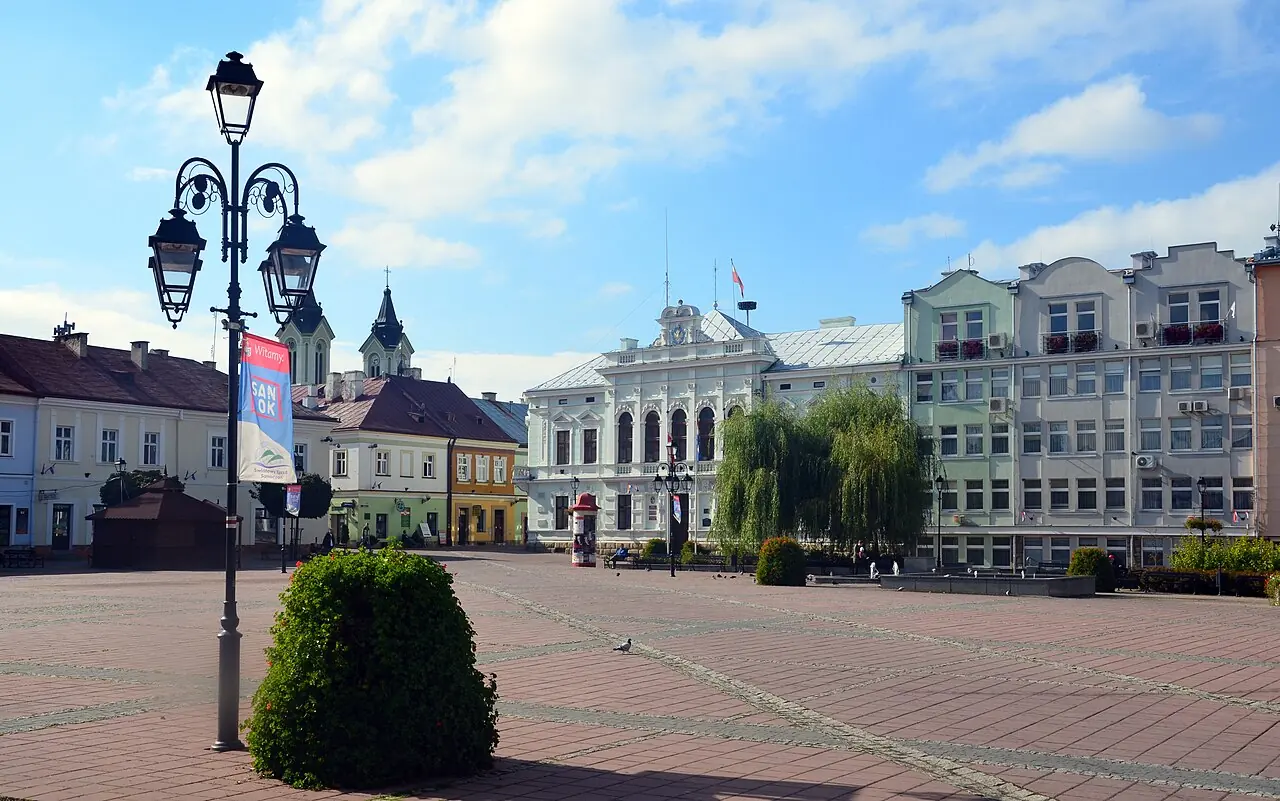 Photo Silar, CC BY-SA 4.0, Wikimedia Commons

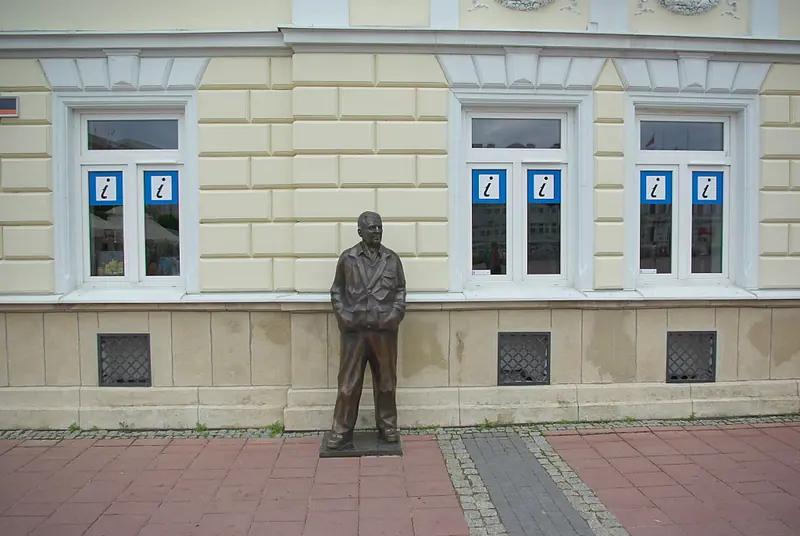 Photo Lowdown, CC BY-SA 3.0, Wikimedia Commons1
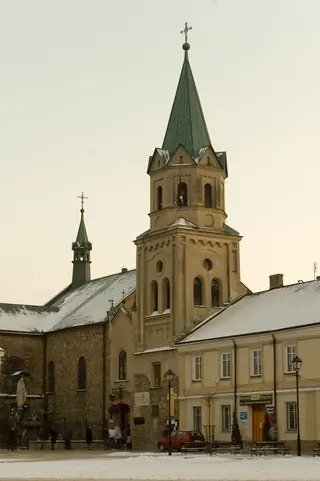 Photo Tomasz Kobiela, CC BY-SA 4.0, Wikimedia Commons
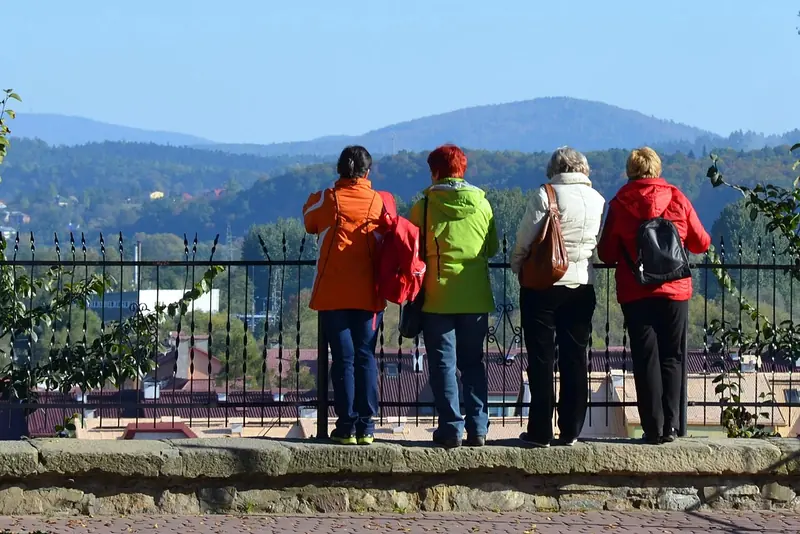 Photo Silar, CC BY-SA 3.0, Wikimedia Commons
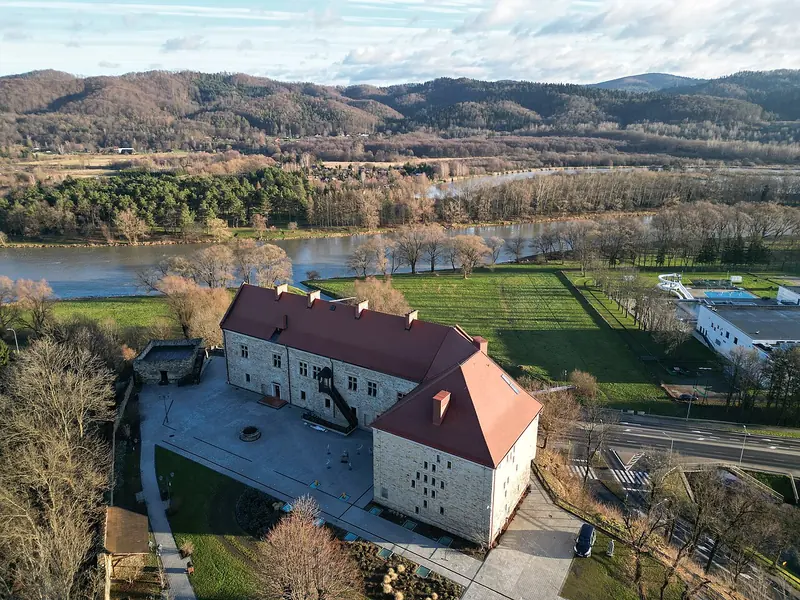 Photo Maciek Zabierowski, CC BY-SA 4.0, Wikimedia Commons
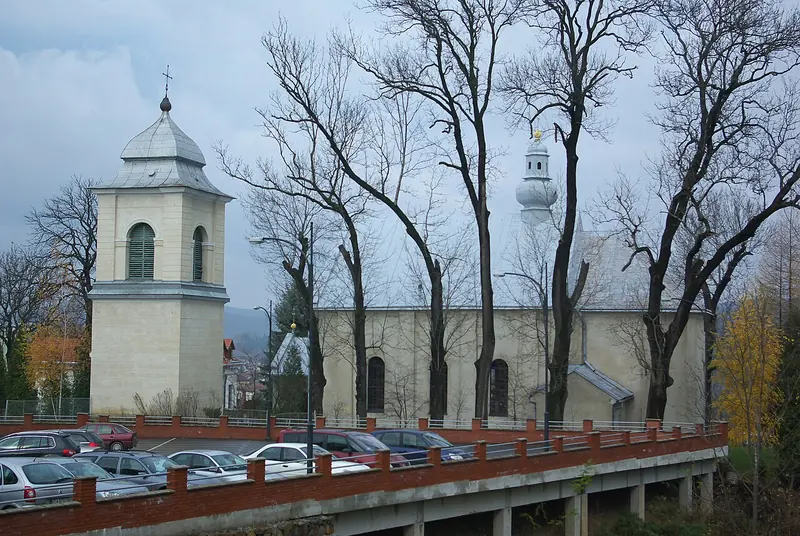 Photo Lowdown, CC BY-SA 3.0, Wikimedia Commons
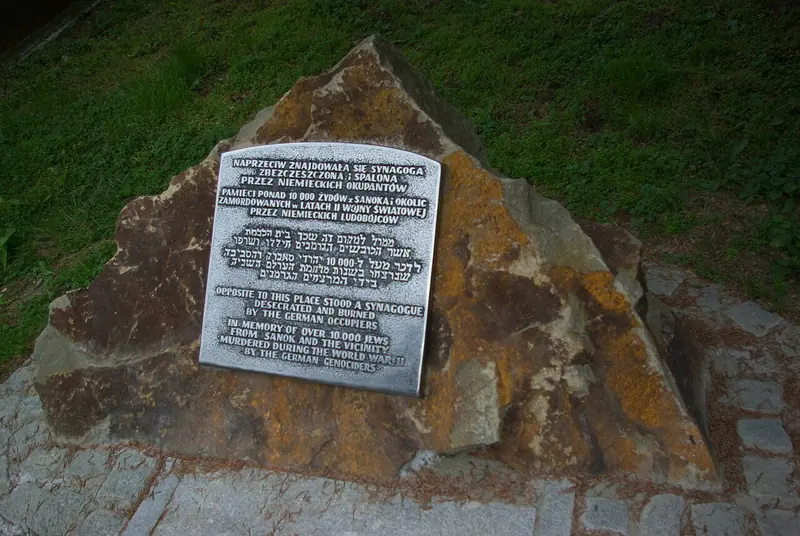 Photo Lowdown, CC BY-SA 3.0, Wikimedia Commons
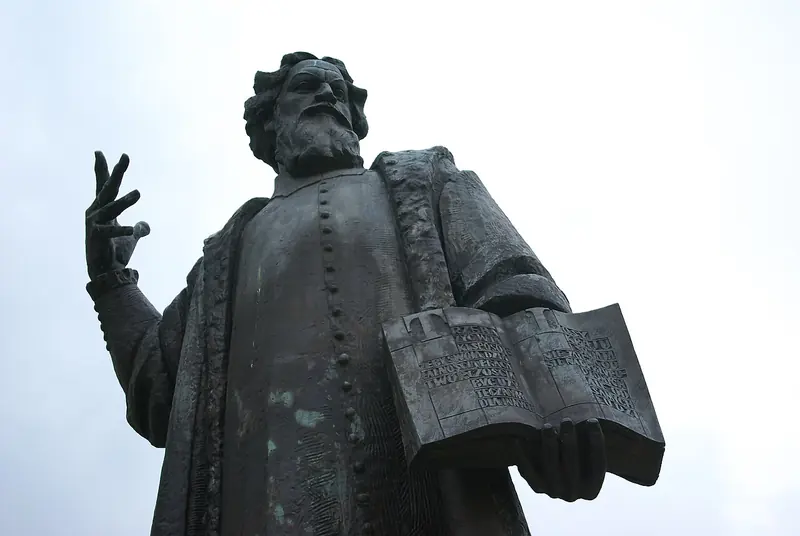 Photo Lowdown, CC BY-SA 3.0, Wikimedia Commons
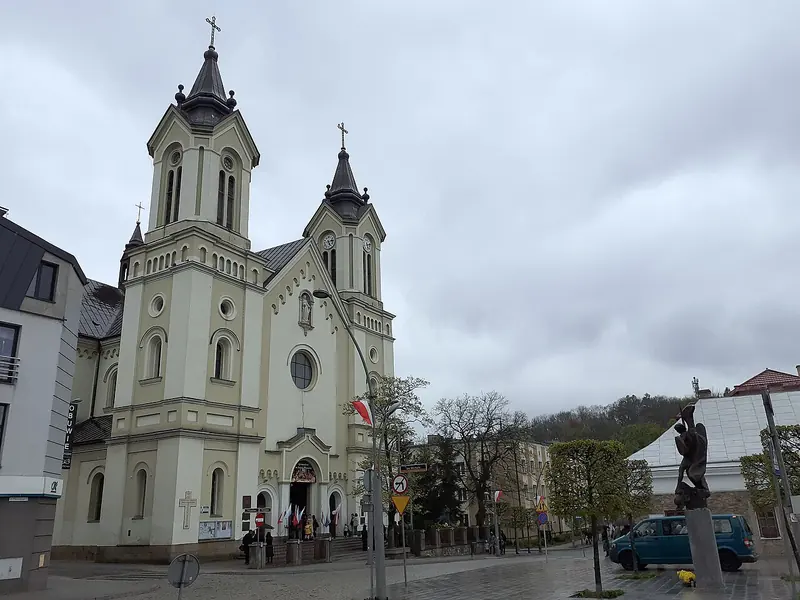 Photo Lowdown, CC BY-SA 3.0, Wikimedia Commons
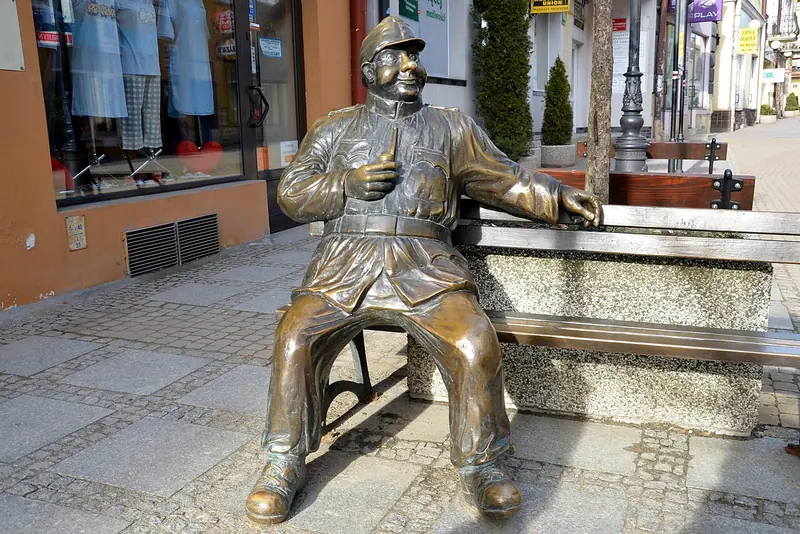 Photo Silar, CC BY-SA 3.0, Wikimedia Commons
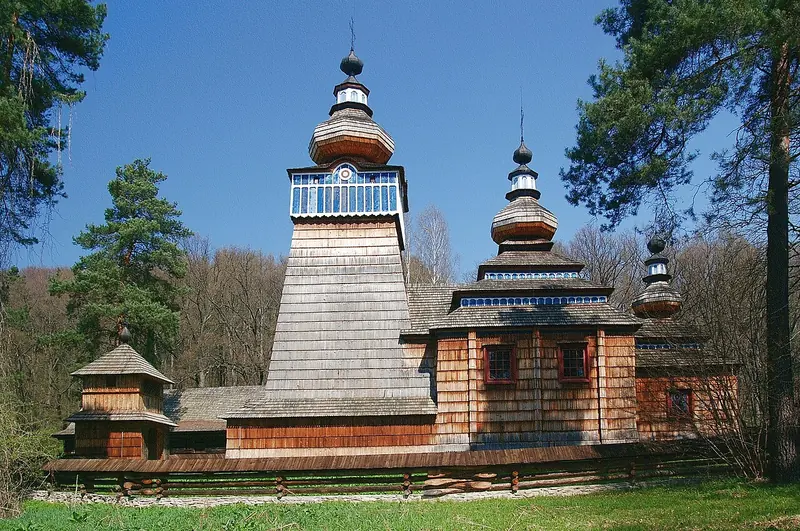 Photo Henryk Bielamowicz, CC BY-SA 4.0, Wikimedia Commons
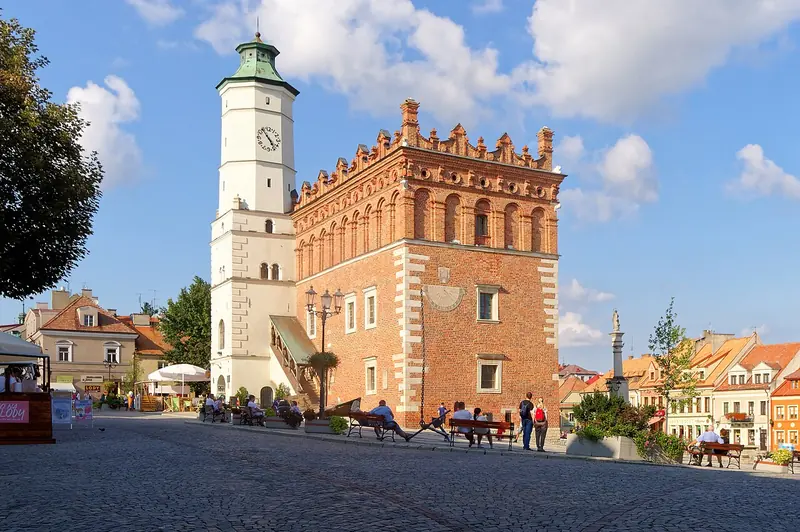 Photo Jakub Hałun, CC BY-SA 4.0, Wikimedia Commons
 Photo Danutar, CC BY-SA 3.0 pl, Wikimedia Commons