Photo Ivar Leidus, CC BY-SA 3.0 ee, Wikimedia Commons
Old townTartu, Tartu County, Estonia
Tartu: Old Town and Toomemägi: what to see, map and route
Tartu: Old Town and Toomemägi. In the Turi app, the same map shows your position, guides you from point to point and lets you tick off the places you’ve visited.
free entrymuseums and towers have separate tickets
The walk starts at the Tourist Information Centre in the town hall and ends at St John's Church, a few minutes from the square. The bus station at Turu 2 is a 5-10 minute walk from the main square, and from the railway station it is about 20 minutes on foot to Town Hall Square. If you are already in the Old Town, Turi will guide you from the nearest point. Walking around the square, Toomemägi and the little streets is free, while tickets are needed for the museums and the cathedral towers. In winter (November-March) things work like this: the Tourist Information Centre in the town hall is open on Mondays 9-18 and Tuesday to Friday 9-17, and it is closed on Saturdays and Sundays (it opens on Saturdays only in summer, from 1 June to 31 August, and Saturday hours differ between sources, so check before your visit). From October to April the University Museum in the cathedral is open Wednesday to Sunday 11-17, with an adult ticket at 10 €, a reduced ticket at 8 € and a family ticket at 25 €, and the cathedral towers are open only from May to the end of September. In winter (October-April) the UT Art Museum in the main building is open Wednesday to Sunday 11-17, with a ticket at 5 €, reduced 3 € and family 10 €. From October to April the Old Observatory is open on Saturdays and Sundays 11-17 and may be closed on public holidays. A combined ticket for three museums (the University Museum, the Old Observatory and the UT Art Museum) costs 18 €, family 34 €, and is valid for a month. The Leaning House is open on Wednesdays and from Friday to Sunday 11-18, and on Thursdays 11-20. From 1 September to 31 December St John's Church is open Tuesday to Saturday 11-17, and from January to May it is also open Tuesday to Saturday, usually 11-17 (according to some sources only from 12), so check before your visit. Museum hours are sometimes changed, so check them on the museums' websites. The Tourist Information Centre is closed on public holidays, and according to Visit Tartu in 2026 also on 23 February, 22 June and 23, 26 and 31 December, so check the hours before your visit over Christmas and New Year.
At home, open the place in Turi and tap “Save for offline”: the map, descriptions and photos will work without signal.
Visit the farthest points first, while you still have energy.
Tick things off as you go, and by the exit you’ll know what’s left.
Tartu: Old Town in the Turi app
Live position, a route from point to point, descriptions to read and listen to. Free, no account, in 12 languages.
The same map as in the app. Tap a point to see its photo and description; in Turi you’ll see yourselves on it too.
1recommended, in route orderother pointsWCtoilets, food, tickets
Something not right? Report it in the app at that point.
Worth seeing
Tartu's Old Town is centred on Town Hall Square, and the houses around it were built after the great fire of 1775. Tartu is the second-largest city in Estonia, and the university was founded here in 1632. Above the square rises Toomemägi hill, with the cathedral ruins, the Old Observatory, monuments to scholars and two bridges: the Angel's Bridge and the Devil's Bridge. The walk begins at the Kissing Students fountain and the Leaning House, leads through Toomemägi to the university's main building and ends at St John's Church with its terracotta figures.
Photo Ivar Leidus, CC BY-SA 3.0 ee, Wikimedia Commons1
Building / monument
Town Hall Square and the town hall
The pink town hall closes off the square on the Toomemägi side, and in the lower part, by the river, stands the Leaning House. The present building is the third town hall on this spot. It was built after the great fire, in 1782-1789, to a design by Johann Heinrich Bartholomäus Walther, and the late Baroque clock tower was finished in 1784. This place has served as a marketplace since the 13th century, and all the surrounding buildings date from after the fire of 1775. The south side, destroyed in World War II, has Stalinist-era buildings whose plaster still shows hammers and sickles. Look for them on the facades.
Photo Adam Jones, CC BY-SA 2.0, Wikimedia Commons2
Attraction
Oscar Wilde and Eduard Vilde
On the bench sit the Irish writer Oscar Wilde (1854-1900) and the Estonian writer Eduard Vilde (1856-1933). They were contemporaries but never met, so the sculpture is a playful fantasy. The sculptor, Tiiu Kirsipuu, had in mind the year 1890, when the two Wildes could really have met. The sculpture was placed in 1999 in front of the former Mattiesen printing house, which is now home to the restaurant Vilde ja Vine. In 2004 a copy was given to the Irish city of Galway.
Photo Flying Saucer, Public domain, Wikimedia Commons3
muzeum
The Old Observatory and the Struve monument
The observatory was built in 1808-1810 to a design by Johann Wilhelm Krause on the site of the medieval bishop's castle. In front of it stands the 1969 monument to Friedrich Georg Wilhelm Struve. Struve was the first to measure the distance from Earth to a star, in 1835, and in 1824 he brought to Tartu the largest refractor of its time, a Fraunhofer instrument. As one of Struve's measuring points, the observatory is on the UNESCO list, and its balcony offers a view over the city centre. Admission to the interior is paid.
Photo Лорд Бъмбъри, CC BY-SA 4.0, Wikimedia Commons4
Attraction
The Angel's Bridge (Inglisild)
The first wooden footbridge on this spot was designed by Johann Wilhelm Krause and built in 1814-1816, and a rebuilt and enlarged version was completed in 1836. The name most likely comes from a corruption of the German Englische Brücke, meaning English Bridge. On the bridge there is a portrait of Georg Friedrich Parrot, the first rector of the university after its reopening in 1802. According to belief, if you cross the bridge for the first time holding your breath and making a wish, it will come true. In 2012 arsonists damaged the wooden parts of the bridge, but it was repaired soon afterwards.
Photo Visem, CC BY-SA 4.0, Wikimedia Commons5
Attraction
The Devil's Bridge (Kuradisild)
The dark concrete bridge rests on two arches. It was built for the 300th anniversary of the Romanov dynasty to a design by the city architect Arved Eichhorn. From the hill side you can see the numbers 1613 and 1913, and from the valley side a bronze relief of Emperor Alexander I with the Latin inscription Alexandro Primo. The origin of the name is unclear: it may come from the dark colour, which contrasts with the light Angel's Bridge, or from the name of the construction supervisor, Professor Werner Zoege von Manteuffel (Teufel is German for devil). The first bridge on this spot, a neo-Gothic wooden one, was built in 1809.
Photo Flying Saucer, Public domain, Wikimedia Commons6
przyroda
The romantic corner: the Sighing Bridge and the sacrificial stone
The romantic corner of the park lies to the left of the Baer monument. It consists of a mound known as Kissing Hill, to whose top a groom must carry his wife, the low Sighing Bridge with its worn concrete bench, and the sacrificial stone, where lovers can leave a prayer to the old gods. The sacrificial stone is considered the oldest exhibit on Toomemägi, and in 1998 it was entered in the register of archaeological monuments. The place is quiet and good for a short break.
Photo Cathrine Longland, CC BY-SA 4.0, Wikimedia Commons7
muzeum
The cathedral ruins and the University Museum
Toomemägi is where Tartu began, and in the Middle Ages the bishop's castle stood here. The cathedral was built from the 13th to the 16th century and was the main church of the Tartu bishopric. The University Museum is housed in the renovated choir of the cathedral, where the university library used to be, and in the rest of the ruins you can stroll among the columns. Over seven floors the museum tells the story of science and the university from the 17th century to today, as well as the history of the cathedral, and for children it has a mad scientist's study. From May to September the same ticket also covers the viewing towers.
Photo blind.willow from Warszawa, Polska, CC BY 2.0, Wikimedia Commons8
Building / monument
The Main Building of the University of Tartu
The classicist building was built in 1804-1809 to a design by the university architect, Professor Johann Wilhelm Krause, and the official opening took place on 31 July 1809. It stands at the foot of Toomemägi, on the site of St Mary's Church, which was destroyed in the war, and the six columns at the entrance have become a symbol of the university and of Tartu. In the left wing, the UT Art Museum has been operating since 1868, with Estonia's only permanent exhibition of ancient art and real mummies. With the 8 € ticket (with a guide) you can also see the assembly hall and the former student lock-up in the attic, where students drew and carved poems and monograms on the walls, ceiling and doors.
Photo stephane martin, CC BY-SA 2.0, Wikimedia Commons9
Building / monument
St John's Church with its terracotta figures
The Gothic St John's Church dates from the 14th century and is one of the oldest churches in Estonia. It is famous for its unique terracotta sculptures, rare in all of Europe: there used to be more than a thousand, and about 200 have survived. Each one is different, which gives rise to speculation that they depict former residents of Tartu or other important people. The church was heavily bombed in World War II and rebuilt. About 200 figures have survived and they are high up, so binoculars will come in handy.
All points (17)
Grouped as in the map legend. A star marks recommended points.
Building / monument 3
Town Hall Square and the town hall ★The pink town hall closes off the square on the Toomemägi side, and in the lower part, by the river, stands the Leaning House. The present building is the third town hall on this spot. It was built after the great fire, in 1782-1789, to a design by Johann Heinrich Bartholomäus Walther, and the late Baroque clock tower was finished in 1784. This place has served as a marketplace since the 13th century, and all the surrounding buildings date from after the fire of 1775. The south side, destroyed in World War II, has Stalinist-era buildings whose plaster still shows hammers and sickles. Look for them on the facades.
The Main Building of the University of Tartu ★The classicist building was built in 1804-1809 to a design by the university architect, Professor Johann Wilhelm Krause, and the official opening took place on 31 July 1809. It stands at the foot of Toomemägi, on the site of St Mary's Church, which was destroyed in the war, and the six columns at the entrance have become a symbol of the university and of Tartu. In the left wing, the UT Art Museum has been operating since 1868, with Estonia's only permanent exhibition of ancient art and real mummies. With the 8 € ticket (with a guide) you can also see the assembly hall and the former student lock-up in the attic, where students drew and carved poems and monograms on the walls, ceiling and doors.
St John's Church with its terracotta figures ★The Gothic St John's Church dates from the 14th century and is one of the oldest churches in Estonia. It is famous for its unique terracotta sculptures, rare in all of Europe: there used to be more than a thousand, and about 200 have survived. Each one is different, which gives rise to speculation that they depict former residents of Tartu or other important people. The church was heavily bombed in World War II and rebuilt. About 200 figures have survived and they are high up, so binoculars will come in handy.
Attraction 6
Oscar Wilde and Eduard Vilde ★On the bench sit the Irish writer Oscar Wilde (1854-1900) and the Estonian writer Eduard Vilde (1856-1933). They were contemporaries but never met, so the sculpture is a playful fantasy. The sculptor, Tiiu Kirsipuu, had in mind the year 1890, when the two Wildes could really have met. The sculpture was placed in 1999 in front of the former Mattiesen printing house, which is now home to the restaurant Vilde ja Vine. In 2004 a copy was given to the Irish city of Galway.
The Angel's Bridge (Inglisild) ★The first wooden footbridge on this spot was designed by Johann Wilhelm Krause and built in 1814-1816, and a rebuilt and enlarged version was completed in 1836. The name most likely comes from a corruption of the German Englische Brücke, meaning English Bridge. On the bridge there is a portrait of Georg Friedrich Parrot, the first rector of the university after its reopening in 1802. According to belief, if you cross the bridge for the first time holding your breath and making a wish, it will come true. In 2012 arsonists damaged the wooden parts of the bridge, but it was repaired soon afterwards.
The Devil's Bridge (Kuradisild) ★The dark concrete bridge rests on two arches. It was built for the 300th anniversary of the Romanov dynasty to a design by the city architect Arved Eichhorn. From the hill side you can see the numbers 1613 and 1913, and from the valley side a bronze relief of Emperor Alexander I with the Latin inscription Alexandro Primo. The origin of the name is unclear: it may come from the dark colour, which contrasts with the light Angel's Bridge, or from the name of the construction supervisor, Professor Werner Zoege von Manteuffel (Teufel is German for devil). The first bridge on this spot, a neo-Gothic wooden one, was built in 1809.
The "Father and Son" sculptureThe bronze sculpture by Ülo Õun (d. 1988) was unveiled on Children's Day, 1 June 2004, on Küüni Street. It shows the sculptor himself with his son Kristjan, who was one and a half years old. The man and the boy are carved at the same size and in the same proportions, which looks unusual. The work is meant to show the changing relationship between generations as children gradually grow away from their parents.
The Barclay de Tolly monumentMichael Andreas Barclay de Tolly (1761-1818) was a Russian commander and field marshal, and the neoclassical monument was unveiled in 1849. It is a bronze bust on a red granite pedestal, surrounded by bronze weapons, flags, drums and other military equipment. The money for the monument was collected by Barclay's officers. The commander himself is buried in the family tomb at Jõgeveste, and in the early 19th century this spot, behind the medieval town wall, was a promenade.
The Karl Ernst von Baer monumentKarl Ernst von Baer (1792-1876) was the greatest naturalist of Tartu. In spring, biology students traditionally wash Baer's pensive head with champagne. The park also has monuments to Kristjan Jaak Peterson, the first Estonian poet, the Russian doctor Nikolay Pirogov and Friedrich Robert Faehlmann, the initiator of the epic Kalevipoeg. Now head down towards the university building.
muzeum 2
The Old Observatory and the Struve monument ★The observatory was built in 1808-1810 to a design by Johann Wilhelm Krause on the site of the medieval bishop's castle. In front of it stands the 1969 monument to Friedrich Georg Wilhelm Struve. Struve was the first to measure the distance from Earth to a star, in 1835, and in 1824 he brought to Tartu the largest refractor of its time, a Fraunhofer instrument. As one of Struve's measuring points, the observatory is on the UNESCO list, and its balcony offers a view over the city centre. Admission to the interior is paid.
The cathedral ruins and the University Museum ★Toomemägi is where Tartu began, and in the Middle Ages the bishop's castle stood here. The cathedral was built from the 13th to the 16th century and was the main church of the Tartu bishopric. The University Museum is housed in the renovated choir of the cathedral, where the university library used to be, and in the rest of the ruins you can stroll among the columns. Over seven floors the museum tells the story of science and the university from the 17th century to today, as well as the history of the cathedral, and for children it has a mad scientist's study. From May to September the same ticket also covers the viewing towers.
przyroda 1
The romantic corner: the Sighing Bridge and the sacrificial stone ★The romantic corner of the park lies to the left of the Baer monument. It consists of a mound known as Kissing Hill, to whose top a groom must carry his wife, the low Sighing Bridge with its worn concrete bench, and the sacrificial stone, where lovers can leave a prayer to the old gods. The sacrificial stone is considered the oldest exhibit on Toomemägi, and in 1998 it was entered in the register of archaeological monuments. The place is quiet and good for a short break.
Toilets / tickets / parking 5
Start at the Information Centre in the town hallThe walk begins on Town Hall Square, at the Tourist Information Centre in the town hall building (Raekoja plats 1a). The centre is open on Mondays 9-18 and Tuesday to Friday 9-17, and on Saturdays only in summer, from 1 June to 31 August. The route crosses the square, then heads south to the Barclay de Tolly monument and up Toomemägi hill with its two bridges, and returns through the university building and St John's Church.


 Photo Ivar Leidus, CC BY-SA 3.0 ee, Wikimedia Commons1
 Photo Adam Jones, CC BY-SA 2.0, Wikimedia Commons
 Photo Flying Saucer, Public domain, Wikimedia Commons
 Photo Лорд Бъмбъри, CC BY-SA 4.0, Wikimedia Commons
 Photo Visem, CC BY-SA 4.0, Wikimedia Commons
 Photo Flying Saucer, Public domain, Wikimedia Commons
 Photo Cathrine Longland, CC BY-SA 4.0, Wikimedia Commons
 Photo blind.willow from Warszawa, Polska, CC BY 2.0, Wikimedia Commons
 Photo stephane martin, CC BY-SA 2.0, Wikimedia Commons
 Photo A.Palu, CC BY-SA 3.0 ee, Wikimedia Commons
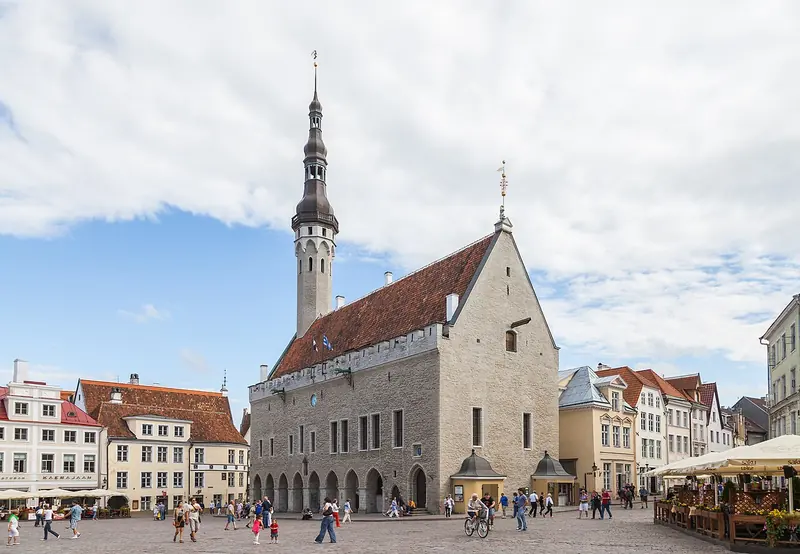 Photo Diego Delso, CC BY-SA 3.0, Wikimedia Commons
 Photo Fry72, Karel Frydrýšek, CC BY-SA 4.0, Wikimedia Commons