The walk starts and ends at the main entrance on Pfaffendorfer Straße, which is also where the exit is. From Leipzig Hauptbahnhof, the main station, you can walk there in about 10 minutes, or you can take tram line 12 to the Wilhelm-Liebknecht-Platz or Goerdelerring stop, leaving about 600 metres to go. Admission is charged, and the ticket includes Gondwanaland and Feuerland; you pay separately for the boat trip in Gondwanaland, the Gorilla Trek in Pongoland, the Safari-Train and gold panning. From 1 November to 20 March the zoo is open from 9:00 to 17:00, and on 24 and 31 December until 15:00; tickets are cheaper then, gold panning is closed, and some animals, for example on the Kiwara Savannah, at Kiwara-Kopje and in the Amazonia aviary, may only be visible at times. In summer the zoo is open from 9:00 to 18:00, and from May to September until 19:00. There are toilets at the main entrance, by the Palmensaal restaurant in the Gründer-Garten, by the Patakan restaurant next to the Gondwanaland entrance, in Pongoland, by the Bärenburg playground, by the Kiwara-Lodge, by the Hacienda Las Casas and in Feuerland by the Rock Grandstand. You cannot take a pushchair onto the Penguin Coast or into the tunnel. There are lifts at the entrance to the tunnel and at its exit, and dogs are not allowed in the zoo. Feeding show times may change; the information points have the current ones. If you are already in the zoo, Turi will guide you from the nearest point. Allow about 5 hours, or a whole day if you want to explore Gondwanaland properly.
At home, open the place in Turi and tap “Save for offline”: the map, descriptions and photos will work without signal.
Visit the farthest points first, while you still have energy.
Tick things off as you go, and by the exit you’ll know what’s left.
Leipzig Zoo in the Turi app
Live position, a route from point to point, descriptions to read and listen to. Free, no account, in 12 languages.
The same map as in the app. Tap a point to see its photo and description; in Turi you’ll see yourselves on it too.
1recommended, in route orderother pointsWCtoilets, food, tickets
Something not right? Report it in the app at that point.
Worth seeing
Leipzig Zoo was opened on 9 June 1878 by the restaurateur Ernst Pinkert, and it was the 23rd zoo in Europe. Since 2000 the zoo has been rebuilt according to the "Zoo of the Future" plan, and today it is divided into 6 worlds: the historic Gründer-Garten, Asia, Gondwanaland, Pongoland, Africa and South America. Around 650 animal species live here, and the biggest attractions are the Gondwanaland tropical hall, Pongoland with 4 species of great apes, and Feuerland with penguins and sea lions, opened on 1 September 2026.
Photo Aagnverglaser, CC BY-SA 4.0, Wikimedia Commons1
Building / monument
Aquarium and Terrarium
The Art Nouveau aquarium building was built in 1909-1910, and the terrarium was added in 1913. After the rebuilding in 2019-2021, you will see coral reefs in the round hall, and upstairs a round 360-degree tank with rays. In the historic part, the curved glass of a huge tank, 11 metres long, runs above your head. The terrarium is home to snakes, turtles, alligators and the rare Jamaican iguana. Keepers talk about the animals here at 10:30, 11:30 and 15:30, among other times, and at 13:30 in the terrarium.
Photo Dguendel, CC BY 3.0, Wikimedia Commons2
Animals
Koala House
This historic pavilion was built in 1901 as a monkey house. In May 2016 it reopened as the koala house, designed to look like a eucalyptus forest. Koalas live alone, so they have 2 separate sections here. Opposite is the Wellensittich-Oase, a budgerigar aviary with a path running through it.
Photo Nanimo5, CC0, Wikimedia Commons3
Attraction
Gondwanaland
Gondwanaland is a tropical hall covering 16,500 square metres, opened to visitors on 1 July 2011. The roof of transparent ETFE foil cushions rises to 34 metres, and inside it is always about 26 degrees. Here you will see almost 170 animal species and about 500 plant species from the rainforests of Africa, Asia and South America. The journey begins in a volcano tunnel, then a treetop path with suspension bridges leads on, and a boat sails along the Gamanil river, which you pay for separately. Entry to the hall is included in the zoo ticket, and there are lockers inside.
Photo zoofanatic, CC BY 2.0, Wikimedia Commons4
Animals
Himalayas
The Himalayan mountain landscape opened on 1 August 2017. Snow leopards, also called irbis, live on the rocky slopes, with red pandas and tufted deer next to them. Nearby is an aviary from 1928, restored when the Himalayas were built, with northern bald ibises and griffon vultures; you can walk inside. At 12:00 a keeper talks about the snow leopards.
Photo Frank Vincentz, CC BY-SA 3.0, Wikimedia Commons5
Animals
Ganesha Mandir Elephant Temple
The Ganesha Mandir elephant temple opened on 1 April 2006, and the whole complex covers 7,500 square metres. Asian elephants weigh up to 5 tonnes, and you will see them in the temple, in the enclosure or in the pools. In the temple basement you can watch them swim underwater through a clear pane, and Chinese pangolins live opposite. At 10:15 there is the elephants' bath with an underwater view, and at 15:00 a keeper talks about the elephants.
Photo Appaloosa, CC BY 3.0, Wikimedia Commons6
Animals
Tiger-Taiga and Leopard Valley
Tiger-Taiga is a wooded enclosure for Amur tigers, opened in 2003, covering about 1,200 square metres. You can watch the tigers from several places, including through glass, and the former deer house holds an exhibition about the species. Next to it, Leopard Valley opened in March 2014, a rocky landscape with streams for Amur leopards, among the most endangered big cats in the world. At 10:15 the keepers talk about the tigers and leopards.
Photo Markus Trienke, CC BY-SA 2.0, Wikimedia Commons7
Animals
Pongoland
Pongoland opened on 2 April 2001; it covers 30,000 square metres, and the warm hall alone 3,250 square metres. Chimpanzees, bonobos, gorillas and orangutans live here, and you can walk around their enclosures on wooden boardwalks along the streams. This is home to the Wolfgang Köhler Primate Research Centre, run with the Max Planck Institute in Leipzig, and the best time to see researchers at work is in the morning. The apes are fed at 13:30 and 15:30, and for an extra fee you can try the Gorilla Trek in virtual reality.
Photo Frank Vincentz, CC BY-SA 3.0, Wikimedia Commons8
Animals
Kiwara Savannah
The Kiwara Savannah opened in April 2004 and covers 25,000 square metres. Rothschild's giraffes, Grévy's zebras, ostriches, oryx, Thomson's gazelles and lesser flamingos live together in one enclosure. The best view of the whole savannah is from the terrace of the Kiwara-Lodge restaurant. Next to it are the giraffe house and the Okapi Forest, where with a bit of luck you will see the rare and shy okapi. At 13:15 a keeper talks about the savannah animals.
Photo Appaloosa, CC BY-SA 3.0, Wikimedia Commons9
Animals
Makasi Simba Lion Savannah
The Makasi Simba lion savannah opened on 8 February 2001. On cool days the lions hide in a cave, where you can watch them through panoramic windows. Next door live meerkats, some standing guard while others dig, and spotted hyenas on the Hyena Rocks, separated from the savannah animals only by a ditch. At 14:00 a keeper talks about African predators.
Photo Frank Vincentz, CC BY-SA 3.0, Wikimedia Commons10
Animals
Kiwara-Kopje
Kiwara-Kopje opened on 29 April 2015, and building it cost 7.3 million euros. It is the home of black rhinos, which have about 6,000 square metres with mud wallows at their disposal. In the southern enclosure the rhinos share the area with cheetahs, and patas monkeys, porcupines and banded mongooses live next door.
Photo NutzerAusBerlin, CC0, Wikimedia Commons11
Animals
Pantanal and Pampa
The landscapes of the Pantanal, the Pampa and Patagonia opened on 17 May 2018 on about 15,500 square metres. In the Pantanal you will see capybaras, and on the grassy Pampa maned wolves, giant anteaters, guanacos, rheas and peccaries. Further on, the path leads to Patagonia and Feuerland.
Photo NutzerAusBerlin, CC0, Wikimedia Commons12
Animals
Penguin Coast
Feuerland opened on 1 September 2026 as a new world of coast and sea on about 10,000 square metres. The Penguin Coast is home to a colony of more than 50 Humboldt penguins, a species new to Leipzig. By the penguins there is a 180-degree acrylic tunnel, and along the path you will see a whale skeleton and the wreck of the ship Pacifico, with stations about how penguins cope at sea. Inca terns and pelicans live in the coastal aviary, but eating is not allowed there. At 10:00 and 14:30 a keeper talks about the penguins.
Photo Katie Chan, CC BY-SA 4.0, Wikimedia Commons13
Animals
Sea lions and tunnel
The great pool of Feuerland holds more than 5 million litres of water, and beneath it runs an underwater tunnel more than 100 metres long, with a 360-degree acrylic tube 12 metres long. In the Marble Cave, through huge panoramic windows and under an LED dome, you watch penguins and sea lions swimming. The California sea lions come from the coasts of the eastern Pacific, not from Tierra del Fuego; the zoo does not keep the local South American sea lions for now, for veterinary reasons. At the Rock Grandstand with its LED screen, keepers show sea lion training at 10:30, 13:30 and 15:30.
Photo Proudly6, CC BY-SA 3.0, Wikimedia Commons14
Animals
Flamingo Lagoon
A wooden boardwalk leads through the flamingo lagoon, which covers 1,500 square metres. A net is stretched over the water at a height of 10 metres, and beneath it live about 120 flamingos together with spoonbills, ibises and ducks. Next to it is the El Ranchito petting farm, and from here it is just a few steps to the exit by the main entrance, where the walk ends.
All points (28)
Grouped as in the map legend. A star marks recommended points.
Building / monument 2
Aquarium and Terrarium ★The Art Nouveau aquarium building was built in 1909-1910, and the terrarium was added in 1913. After the rebuilding in 2019-2021, you will see coral reefs in the round hall, and upstairs a round 360-degree tank with rays. In the historic part, the curved glass of a huge tank, 11 metres long, runs above your head. The terrarium is home to snakes, turtles, alligators and the rare Jamaican iguana. Keepers talk about the animals here at 10:30, 11:30 and 15:30, among other times, and at 13:30 in the terrarium.
Entdeckerhaus ArcheThis building was built in 1901-1902 as the New Predator House. More than 2,300 lions were born in it, which is why it was called Leipzig's "lion factory". In 2002 it was turned into the Entdeckerhaus Arche, and after renovation it reopened in 2023 as a centre for learning about species conservation, with 360-degree projections.
Animals 14
Koala House ★This historic pavilion was built in 1901 as a monkey house. In May 2016 it reopened as the koala house, designed to look like a eucalyptus forest. Koalas live alone, so they have 2 separate sections here. Opposite is the Wellensittich-Oase, a budgerigar aviary with a path running through it.
Himalayas ★The Himalayan mountain landscape opened on 1 August 2017. Snow leopards, also called irbis, live on the rocky slopes, with red pandas and tufted deer next to them. Nearby is an aviary from 1928, restored when the Himalayas were built, with northern bald ibises and griffon vultures; you can walk inside. At 12:00 a keeper talks about the snow leopards.
Ganesha Mandir Elephant Temple ★The Ganesha Mandir elephant temple opened on 1 April 2006, and the whole complex covers 7,500 square metres. Asian elephants weigh up to 5 tonnes, and you will see them in the temple, in the enclosure or in the pools. In the temple basement you can watch them swim underwater through a clear pane, and Chinese pangolins live opposite. At 10:15 there is the elephants' bath with an underwater view, and at 15:00 a keeper talks about the elephants.
Tiger-Taiga and Leopard Valley ★Tiger-Taiga is a wooded enclosure for Amur tigers, opened in 2003, covering about 1,200 square metres. You can watch the tigers from several places, including through glass, and the former deer house holds an exhibition about the species. Next to it, Leopard Valley opened in March 2014, a rocky landscape with streams for Amur leopards, among the most endangered big cats in the world. At 10:15 the keepers talk about the tigers and leopards.
Pongoland ★Pongoland opened on 2 April 2001; it covers 30,000 square metres, and the warm hall alone 3,250 square metres. Chimpanzees, bonobos, gorillas and orangutans live here, and you can walk around their enclosures on wooden boardwalks along the streams. This is home to the Wolfgang Köhler Primate Research Centre, run with the Max Planck Institute in Leipzig, and the best time to see researchers at work is in the morning. The apes are fed at 13:30 and 15:30, and for an extra fee you can try the Gorilla Trek in virtual reality.
Kiwara Savannah ★The Kiwara Savannah opened in April 2004 and covers 25,000 square metres. Rothschild's giraffes, Grévy's zebras, ostriches, oryx, Thomson's gazelles and lesser flamingos live together in one enclosure. The best view of the whole savannah is from the terrace of the Kiwara-Lodge restaurant. Next to it are the giraffe house and the Okapi Forest, where with a bit of luck you will see the rare and shy okapi. At 13:15 a keeper talks about the savannah animals.
Makasi Simba Lion Savannah ★The Makasi Simba lion savannah opened on 8 February 2001. On cool days the lions hide in a cave, where you can watch them through panoramic windows. Next door live meerkats, some standing guard while others dig, and spotted hyenas on the Hyena Rocks, separated from the savannah animals only by a ditch. At 14:00 a keeper talks about African predators.
Kiwara-Kopje ★Kiwara-Kopje opened on 29 April 2015, and building it cost 7.3 million euros. It is the home of black rhinos, which have about 6,000 square metres with mud wallows at their disposal. In the southern enclosure the rhinos share the area with cheetahs, and patas monkeys, porcupines and banded mongooses live next door.
Pantanal and Pampa ★The landscapes of the Pantanal, the Pampa and Patagonia opened on 17 May 2018 on about 15,500 square metres. In the Pantanal you will see capybaras, and on the grassy Pampa maned wolves, giant anteaters, guanacos, rheas and peccaries. Further on, the path leads to Patagonia and Feuerland.
Penguin Coast ★Feuerland opened on 1 September 2026 as a new world of coast and sea on about 10,000 square metres. The Penguin Coast is home to a colony of more than 50 Humboldt penguins, a species new to Leipzig. By the penguins there is a 180-degree acrylic tunnel, and along the path you will see a whale skeleton and the wreck of the ship Pacifico, with stations about how penguins cope at sea. Inca terns and pelicans live in the coastal aviary, but eating is not allowed there. At 10:00 and 14:30 a keeper talks about the penguins.
Sea lions and tunnel ★The great pool of Feuerland holds more than 5 million litres of water, and beneath it runs an underwater tunnel more than 100 metres long, with a 360-degree acrylic tube 12 metres long. In the Marble Cave, through huge panoramic windows and under an LED dome, you watch penguins and sea lions swimming. The California sea lions come from the coasts of the eastern Pacific, not from Tierra del Fuego; the zoo does not keep the local South American sea lions for now, for veterinary reasons. At the Rock Grandstand with its LED screen, keepers show sea lion training at 10:30, 13:30 and 15:30.
Flamingo Lagoon ★A wooden boardwalk leads through the flamingo lagoon, which covers 1,500 square metres. A net is stretched over the water at a height of 10 metres, and beneath it live about 120 flamingos together with spoonbills, ibises and ducks. Next to it is the El Ranchito petting farm, and from here it is just a few steps to the exit by the main entrance, where the walk ends.
Sloth Bear GorgeThe Sloth Bear Gorge opened on 1 May 2002. These Indian bears share one of 2 large enclosures with rhesus macaques. Water-filled ditches run between the artificial rocks, and you can watch the bears through a gap in the rock or from behind a waterfall. In winter the bears may only be visible at times.
Amazonia AviarySouth America begins at the Hacienda Las Casas restaurant, in an Art Nouveau building restored in its old style. Next to it is the Amazonia aviary, covering about 830 square metres, the largest macaw aviary in central Germany. It is home to parrots, some of which are critically endangered. At the El Dorado playground children can pan for gold for an extra fee, but only from 21 March to 31 October.
Attraction 1
Gondwanaland ★Gondwanaland is a tropical hall covering 16,500 square metres, opened to visitors on 1 July 2011. The roof of transparent ETFE foil cushions rises to 34 metres, and inside it is always about 26 degrees. Here you will see almost 170 animal species and about 500 plant species from the rainforests of Africa, Asia and South America. The journey begins in a volcano tunnel, then a treetop path with suspension bridges leads on, and a boat sails along the Gamanil river, which you pay for separately. Entry to the hall is included in the zoo ticket, and there are lockers inside.
Toilets / tickets / parking 11
Public toilet
Public toilet
Public toilet
Public toilet
Public toilet
Public toilet
Public toilet
Public toilet
Public toilet
Public toilet
Main entranceThe walk starts at the main entrance on Pfaffendorfer Straße. The Leipzig restaurateur Ernst Pinkert opened the zoo here on 9 June 1878, on the grounds of the former Pfaffendorf estate. Since 2000 the zoo has been rebuilt according to the "Zoo of the Future" plan, and today it is divided into 6 worlds. The route leads through the historic Gründer-Garten to Asia, Gondwanaland, Pongoland and Africa, and finally through South America and Feuerland back here, to the exit.

 Photo Frank Vincentz, CC BY-SA 3.0, Wikimedia Commons

 Photo Aagnverglaser, CC BY-SA 4.0, Wikimedia Commons1
 Photo Dguendel, CC BY 3.0, Wikimedia Commons
 Photo Nanimo5, CC0, Wikimedia Commons
 Photo zoofanatic, CC BY 2.0, Wikimedia Commons
 Photo Frank Vincentz, CC BY-SA 3.0, Wikimedia Commons
 Photo Appaloosa, CC BY 3.0, Wikimedia Commons
 Photo Markus Trienke, CC BY-SA 2.0, Wikimedia Commons
 Photo Frank Vincentz, CC BY-SA 3.0, Wikimedia Commons
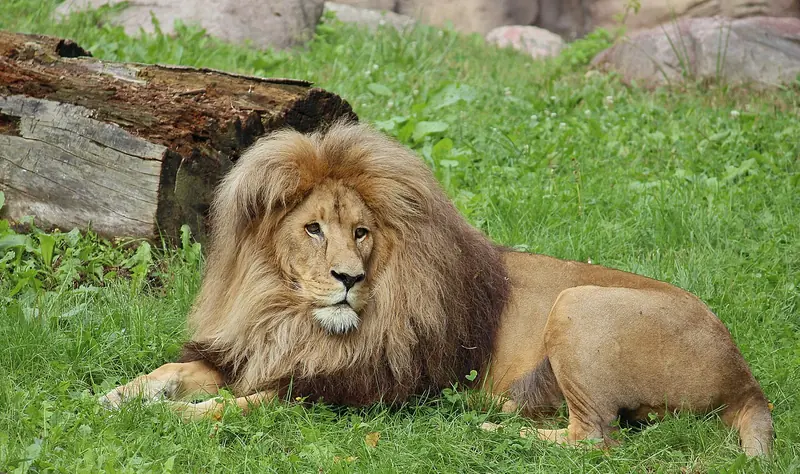 Photo Appaloosa, CC BY-SA 3.0, Wikimedia Commons
 Photo Frank Vincentz, CC BY-SA 3.0, Wikimedia Commons
 Photo NutzerAusBerlin, CC0, Wikimedia Commons
 Photo NutzerAusBerlin, CC0, Wikimedia Commons
 Photo Katie Chan, CC BY-SA 4.0, Wikimedia Commons
 Photo Proudly6, CC BY-SA 3.0, Wikimedia Commons
 Photo Michael Kranewitter, CC BY-SA 3.0, Wikimedia Commons
 Photo H. Zell, CC BY-SA 3.0, Wikimedia Commons
 Photo SchiDD, CC BY-SA 4.0, Wikimedia Commons