Photo Michael Kranewitter, CC BY-SA 3.0, Wikimedia Commons
Old townDresden, Saxony, Germany
Dresden: the Old Town from the Zwinger to the Frauenkirche: what to see, map and route
Dresden: the Old Town from the Zwinger to the Frauenkirche. In the Turi app, the same map shows your position, guides you from point to point and lets you tick off the places you’ve visited.
free entrymuseums and towers have separate tickets
The walk starts at Postplatz, served by tram lines 1, 2, 4, 8, 9, 11 and 12, and ends at the Kreuzkirche on the Altmarkt, from where you can walk back to Postplatz in a few minutes. Halfway along, in front of the cathedral, is the Theaterplatz stop for lines 4, 8 and 9. If you are already in the centre, Turi will guide you from the nearest point. The Zwinger courtyard is free and open daily from 8 to 19, and Brühl's Terrace and visits to the interior of the Frauenkirche are also free, on weekdays usually from 10 to 11.30 and from 13 to 17.30, with breaks for services. You need tickets for the museums in the Zwinger, the castle and the Albertinum, for the Frauenkirche dome and for the Kreuzkirche tower, and the Historic Green Vault is closed on Tuesdays and only admits visitors with timed tickets. From November to February the Frauenkirche dome is open only until 16, the terrace on the Hausmannsturm tower is open from April to October, and the water in the Nymphs' Bath only flows from May to October. Wide steps lead up to Brühl's Terrace from Schlossplatz, stairs and a steep ramp lead to the Frauenkirche dome, and over 250 steps lead up the Kreuzkirche tower. Public toilets are on Wallstraße next to the Postplatz stop and in the Palace of Culture, during the building's opening hours. Allow about 3 hours, not including museum visits.
At home, open the place in Turi and tap “Save for offline”: the map, descriptions and photos will work without signal.
Visit the farthest points first, while you still have energy.
Tick things off as you go, and by the exit you’ll know what’s left.
Dresden: Old Town in the Turi app
Live position, a route from point to point, descriptions to read and listen to. Free, no account, in 12 languages.
The same map as in the app. Tap a point to see its photo and description; in Turi you’ll see yourselves on it too.
1recommended, in route orderother pointsWCtoilets, food, tickets
Something not right? Report it in the app at that point.
Worth seeing
This walk takes you through Dresden's Old Town, which under Augustus the Strong and his son was the capital of Saxony and the residence of the kings of Poland. It starts at the Zwinger and leads past the Semper Opera House, the cathedral and the castle to Brühl's Terrace above the Elbe, then on to the Frauenkirche and Neumarkt. In February 1945 air raids destroyed almost the entire centre, so much of what you will see is careful reconstruction from recent decades. The route ends at the Kreuzkirche on the Altmarkt, the city's oldest market square.
Photo CEphoto, Uwe Aranas, CC BY-SA 3.0, Wikimedia Commons1
Attraction
Crown Gate (Kronentor)
The Crown Gate is the best-known view of the Zwinger. It stands on a section of the old city walls, and the only way to it across the moat was once a narrow wooden footbridge that could be quickly removed in case of attack. Today's bridge was recreated in the same form. On top of the green and gold onion dome, four Polish eagles hold up the Polish royal crown, because Augustus the Strong was Elector of Saxony and King of Poland. The gate was rebuilt after the war in 1951 and carefully restored between 2012 and 2016.
Photo Diego Delso, CC BY-SA 4.0, Wikimedia Commons2
Attraction
Zwinger courtyard
The name Zwinger means the strip of land between the inner and outer rings of the city walls. It was right here, between 1711 and 1728, that Augustus the Strong built a Baroque orangery and a stage for court festivities, surrounded by galleries and pavilions. It was designed by the architect Matthäus Daniel Pöppelmann, and the sculptures were made by Balthasar Permoser. In September 1719 the court celebrated the Festival of the Four Elements here. After the air raids of February 1945, the Zwinger had to be rebuilt over many years.
Photo Jörg Blobelt, CC BY-SA 4.0, Wikimedia Commons3
Building / monument
Old Masters Gallery
On the Theaterplatz side, the courtyard is closed off by the gallery building designed by Gottfried Semper. The foundation stone was laid in 1847, but Semper had to leave Dresden in 1849, so the building was completed by Karl Moritz Haenel, and the museum opened in 1855. Inside is the Old Masters Picture Gallery, whose most famous painting is Raphael's Sistine Madonna, bought in 1754. After renovation, the gallery reopened in 2020.
Photo Jörg Blobelt, CC BY-SA 4.0, Wikimedia Commons4
Building / monument
Semperoper and Theaterplatz
The first opera house here was built by Gottfried Semper between 1838 and 1841, but it burned down in 1869. The present building went up between 1871 and 1878 under the direction of his son Manfred. The first opera house saw the world premieres of Richard Wagner's The Flying Dutchman and Tannhäuser, and Dresden also hosted the premieres of Richard Strauss's Salome and Der Rosenkavalier. Destroyed in 1945, the opera house reopened on 13 February 1985, exactly 40 years after the air raid. Above the entrance, look at the panther quadriga with Dionysus and Ariadne, and in the middle of the square at the equestrian statue of King John from 1889.
Photo Bybbisch94, CC BY-SA 4.0, Wikimedia Commons5
Building / monument
Cathedral (Hofkirche)
The Cathedral of the Holy Trinity is the former Catholic court church and the largest church in Saxony. It was built between 1739 and 1755 by the Roman architect Gaetano Chiaveri for Elector Frederick Augustus the Second, who as King of Poland was Augustus the Third. There are 78 statues of saints on the facade and balustrades, and the tower is 86 metres high. The rulers of Saxony rest in the crypt, and the heart of Augustus the Strong lies there in a capsule. Look up at the covered passage over the lane that links the church with the castle.
Photo HasBS, CC BY-SA 4.0, Wikimedia Commons6
Attraction
Brühl's Terrace
From Schlossplatz, wide steps lead up to Brühl's Terrace, known as the Balcony of Europe. It stretches for about 500 metres above the Elbe and takes its name from the minister Heinrich von Brühl, who built a gallery, a library and a garden pavilion here. In 1814 the Russian governor Nikolai Repnin-Volkonsky opened it to the public, and that is when the steps were built. Beside them stand sculptures by Johannes Schilling depicting the four times of day: Morning, Noon, Evening and Night. Beneath the terrace, the casemates of the old fortifications have survived, and today they house the Dresden Fortress Museum.
Photo Steffen Prößdorf, CC BY 3.0, Wikimedia Commons7
Building / monument
Albertinum
The Albertinum grew out of an arsenal built between 1559 and 1563. Between 1884 and 1887 Carl Adolf Canzler converted it in the Neo-Renaissance style into a museum of sculpture, named after the then reigning King Albert. Today it houses the New Masters Gallery and the Sculpture Collection. After the 2002 flood, a flood-proof storage facility was built here, and in 2010 the museum reopened with a roofed-over courtyard. On the terrace by the corner of the building stands a monument to Gottfried Semper from 1892.
Photo Michael Kranewitter, CC BY-SA 3.0, Wikimedia Commons8
Building / monument
Frauenkirche
The Church of Our Lady was built between 1726 and 1743 to a design by George Bähr. Its sandstone dome, known as the Stone Bell, collapsed on the morning of 15 February 1945 after a fire caused by the air raids, and for decades the ruins stood as a memorial against war. Reconstruction lasted from 1994 to 2005, and on 30 October 2005 the church was consecrated again. The dark stones in the walls are over 3,500 original fragments from the ruins, and the golden cross on the dome was made by the London blacksmith Alan Smith, whose father took part in the bombing of Dresden as a pilot. The viewing terrace on the dome is 67 metres up.
Photo Jörg Blobelt, CC BY-SA 4.0, Wikimedia Commons9
Attraction
Neumarkt and Johanneum
Neumarkt was laid out in the 16th century, and its Baroque town houses were almost completely destroyed by the air raids of February 1945. From 2004 the quarters around the Frauenkirche were rebuilt, many facades following their old designs, and by the end of 2021 the square was almost complete. On the square stands a monument to Martin Luther from 1885, toppled in 1945 and put back up in the same spot. On the castle side stands the Johanneum from 1591, the former castle coach house and today the Transport Museum. In front of it is the Peace Fountain, commemorating the Saxon elector's part in the victorious Battle of Vienna.
Photo CEphoto, Uwe Aranas, CC BY-SA 3.0, Wikimedia Commons10
Attraction
Procession of Princes (Fürstenzug)
Along Augustusstraße stretches the Procession of Princes, a picture about 102 metres long. It shows 35 rulers of the House of Wettin, and together with the figures accompanying them, 94 people. Wilhelm Walther first created it in sgraffito between 1873 and 1876, and between 1904 and 1907 it was transferred onto about 23 thousand Meissen porcelain tiles. The porcelain withstood the fires of February 1945, and the picture survived almost untouched. Look out for Walther himself, who painted himself behind the procession of rulers.
Photo CEphoto, Uwe Aranas, CC BY-SA 3.0, Wikimedia Commons11
Building / monument
Dresden Castle and Green Vault
Dresden Castle was the seat of the rulers of Saxony, and it was first mentioned in 1289. From 1548 the Electors Maurice and Augustus expanded it into a splendid Renaissance residence, dominated by the hundred-metre Hausmannsturm tower with its viewing terrace. In February 1945 the castle burned down to its foundations, and reconstruction has been under way since 1986. In the west wing, between 1723 and 1729, Augustus the Strong created the Green Vault treasury, where about 3,000 jewels and works of the goldsmith's art stand on consoles in front of mirrored walls. The castle museums have their address on Taschenberg, on the south side of the building.
Photo Z thomas, CC BY-SA 4.0, Wikimedia Commons12
Building / monument
Palace of Culture (Kulturpalast)
The Palace of Culture, designed by Wolfgang Hänsch, opened in 1969. On its west wall, facing Schloßstraße, you will see the mosaic The Way of the Red Flag, 30 metres by 10.5 metres, made of coloured glass on concrete panels and a listed monument since 2001. Between 2013 and 2017 the building was remodelled: it now houses the concert hall of the Dresden Philharmonic with 1,800 seats, the central city library and the Herkuleskeule cabaret.
Photo Nightflyer, CC BY-SA 3.0, Wikimedia Commons13
Attraction
Altmarkt
The Altmarkt is Dresden's oldest market square, first mentioned in 1370. Since 1434 it has hosted the Striezelmarkt, one of the oldest Christmas markets in the world. The air raids of February 1945 destroyed almost all the buildings on the square, and the new frontages were put up in the 50s, in a style inspired by Dresden Baroque. In the paving you will find a metal plaque from 2005 commemorating the 6,865 victims of the air raids whose bodies were burned on this square.
Photo Achim Lammerts (Syntaxys), CC BY-SA 4.0, Wikimedia Commons14
Building / monument
Kreuzkirche
The Church of the Holy Cross has its roots in the 12th century and has been destroyed five times in its history. The present building went up after the destruction of the Seven Years' War: construction began in 1764, and the church was consecrated in 1792. It burned down in February 1945, and during the rebuilding from 1946 to 1955 the interior was given plain, austere plaster instead of its Neo-Baroque decoration. The tower is 92 metres high, and over 250 steps lead up to the viewing terrace at 54 metres. The famous Kreuzchor choir is linked with the church, and this is where the walk ends.
All points (30)
Grouped as in the map legend. A star marks recommended points.
Attraction 9
Crown Gate (Kronentor) ★The Crown Gate is the best-known view of the Zwinger. It stands on a section of the old city walls, and the only way to it across the moat was once a narrow wooden footbridge that could be quickly removed in case of attack. Today's bridge was recreated in the same form. On top of the green and gold onion dome, four Polish eagles hold up the Polish royal crown, because Augustus the Strong was Elector of Saxony and King of Poland. The gate was rebuilt after the war in 1951 and carefully restored between 2012 and 2016.
Zwinger courtyard ★The name Zwinger means the strip of land between the inner and outer rings of the city walls. It was right here, between 1711 and 1728, that Augustus the Strong built a Baroque orangery and a stage for court festivities, surrounded by galleries and pavilions. It was designed by the architect Matthäus Daniel Pöppelmann, and the sculptures were made by Balthasar Permoser. In September 1719 the court celebrated the Festival of the Four Elements here. After the air raids of February 1945, the Zwinger had to be rebuilt over many years.
Brühl's Terrace ★From Schlossplatz, wide steps lead up to Brühl's Terrace, known as the Balcony of Europe. It stretches for about 500 metres above the Elbe and takes its name from the minister Heinrich von Brühl, who built a gallery, a library and a garden pavilion here. In 1814 the Russian governor Nikolai Repnin-Volkonsky opened it to the public, and that is when the steps were built. Beside them stand sculptures by Johannes Schilling depicting the four times of day: Morning, Noon, Evening and Night. Beneath the terrace, the casemates of the old fortifications have survived, and today they house the Dresden Fortress Museum.
Neumarkt and Johanneum ★Neumarkt was laid out in the 16th century, and its Baroque town houses were almost completely destroyed by the air raids of February 1945. From 2004 the quarters around the Frauenkirche were rebuilt, many facades following their old designs, and by the end of 2021 the square was almost complete. On the square stands a monument to Martin Luther from 1885, toppled in 1945 and put back up in the same spot. On the castle side stands the Johanneum from 1591, the former castle coach house and today the Transport Museum. In front of it is the Peace Fountain, commemorating the Saxon elector's part in the victorious Battle of Vienna.
Procession of Princes (Fürstenzug) ★Along Augustusstraße stretches the Procession of Princes, a picture about 102 metres long. It shows 35 rulers of the House of Wettin, and together with the figures accompanying them, 94 people. Wilhelm Walther first created it in sgraffito between 1873 and 1876, and between 1904 and 1907 it was transferred onto about 23 thousand Meissen porcelain tiles. The porcelain withstood the fires of February 1945, and the picture survived almost untouched. Look out for Walther himself, who painted himself behind the procession of rulers.
Altmarkt ★The Altmarkt is Dresden's oldest market square, first mentioned in 1370. Since 1434 it has hosted the Striezelmarkt, one of the oldest Christmas markets in the world. The air raids of February 1945 destroyed almost all the buildings on the square, and the new frontages were put up in the 50s, in a style inspired by Dresden Baroque. In the paving you will find a metal plaque from 2005 commemorating the 6,865 victims of the air raids whose bodies were burned on this square.
Nymphs' Bath (Nymphenbad)Hidden behind the Rampart Pavilion is the Nymphs' Bath, a Baroque fountain made of sandstone from the Elbe Sandstone Mountains. It was built between 1712 and 1719 as one of the first parts of the Zwinger, and it survived the Second World War. Here the water cascades past groups of sculptures and figures on the balustrades, but it only flows from May to October.
Carillon Pavilion (Glockenspielpavillon)In the southern corner of the courtyard stands a pavilion completed in 1728. In 1933 a clock and a carillon of Meissen porcelain bells were hung in it, and after the war they were replaced with a set of 40 white bells. If you catch its tune, listen to how porcelain sounds.
Stable Yard (Stallhof)Through a gateway in the wall with the Procession of Princes you enter the Stable Yard, built between 1586 and 1591. Until the middle of the 18th century tournaments were held here, including tilting at the ring, and spectators watched from the arcades of the Long Gallery, which rest on 20 Tuscan columns. A reminder of the tournaments are two bronze columns that marked out the course. Also look at the octagonal stone horse trough from 1586 to 1588, where water flows from a ram's head. During Advent a medieval Christmas market is held here.
Building / monument 8
Old Masters Gallery ★On the Theaterplatz side, the courtyard is closed off by the gallery building designed by Gottfried Semper. The foundation stone was laid in 1847, but Semper had to leave Dresden in 1849, so the building was completed by Karl Moritz Haenel, and the museum opened in 1855. Inside is the Old Masters Picture Gallery, whose most famous painting is Raphael's Sistine Madonna, bought in 1754. After renovation, the gallery reopened in 2020.
Semperoper and Theaterplatz ★The first opera house here was built by Gottfried Semper between 1838 and 1841, but it burned down in 1869. The present building went up between 1871 and 1878 under the direction of his son Manfred. The first opera house saw the world premieres of Richard Wagner's The Flying Dutchman and Tannhäuser, and Dresden also hosted the premieres of Richard Strauss's Salome and Der Rosenkavalier. Destroyed in 1945, the opera house reopened on 13 February 1985, exactly 40 years after the air raid. Above the entrance, look at the panther quadriga with Dionysus and Ariadne, and in the middle of the square at the equestrian statue of King John from 1889.
Cathedral (Hofkirche) ★The Cathedral of the Holy Trinity is the former Catholic court church and the largest church in Saxony. It was built between 1739 and 1755 by the Roman architect Gaetano Chiaveri for Elector Frederick Augustus the Second, who as King of Poland was Augustus the Third. There are 78 statues of saints on the facade and balustrades, and the tower is 86 metres high. The rulers of Saxony rest in the crypt, and the heart of Augustus the Strong lies there in a capsule. Look up at the covered passage over the lane that links the church with the castle.
Albertinum ★The Albertinum grew out of an arsenal built between 1559 and 1563. Between 1884 and 1887 Carl Adolf Canzler converted it in the Neo-Renaissance style into a museum of sculpture, named after the then reigning King Albert. Today it houses the New Masters Gallery and the Sculpture Collection. After the 2002 flood, a flood-proof storage facility was built here, and in 2010 the museum reopened with a roofed-over courtyard. On the terrace by the corner of the building stands a monument to Gottfried Semper from 1892.
Frauenkirche ★The Church of Our Lady was built between 1726 and 1743 to a design by George Bähr. Its sandstone dome, known as the Stone Bell, collapsed on the morning of 15 February 1945 after a fire caused by the air raids, and for decades the ruins stood as a memorial against war. Reconstruction lasted from 1994 to 2005, and on 30 October 2005 the church was consecrated again. The dark stones in the walls are over 3,500 original fragments from the ruins, and the golden cross on the dome was made by the London blacksmith Alan Smith, whose father took part in the bombing of Dresden as a pilot. The viewing terrace on the dome is 67 metres up.
Dresden Castle and Green Vault ★Dresden Castle was the seat of the rulers of Saxony, and it was first mentioned in 1289. From 1548 the Electors Maurice and Augustus expanded it into a splendid Renaissance residence, dominated by the hundred-metre Hausmannsturm tower with its viewing terrace. In February 1945 the castle burned down to its foundations, and reconstruction has been under way since 1986. In the west wing, between 1723 and 1729, Augustus the Strong created the Green Vault treasury, where about 3,000 jewels and works of the goldsmith's art stand on consoles in front of mirrored walls. The castle museums have their address on Taschenberg, on the south side of the building.
Palace of Culture (Kulturpalast) ★The Palace of Culture, designed by Wolfgang Hänsch, opened in 1969. On its west wall, facing Schloßstraße, you will see the mosaic The Way of the Red Flag, 30 metres by 10.5 metres, made of coloured glass on concrete panels and a listed monument since 2001. Between 2013 and 2017 the building was remodelled: it now houses the concert hall of the Dresden Philharmonic with 1,800 seats, the central city library and the Herkuleskeule cabaret.
Kreuzkirche ★The Church of the Holy Cross has its roots in the 12th century and has been destroyed five times in its history. The present building went up after the destruction of the Seven Years' War: construction began in 1764, and the church was consecrated in 1792. It burned down in February 1945, and during the rebuilding from 1946 to 1955 the interior was given plain, austere plaster instead of its Neo-Baroque decoration. The tower is 92 metres high, and over 250 steps lead up to the viewing terrace at 54 metres. The famous Kreuzchor choir is linked with the church, and this is where the walk ends.
Toilets / tickets / parking 13
Start of the walk at PostplatzThe walk starts at Postplatz, one of Dresden's most important transport hubs, served by tram lines 1, 2, 4, 8, 9, 11 and 12. Opposite you can see the Zwinger moat and the Crown Gate, through which you will enter the Zwinger. The route then leads past the opera house, the cathedral and the castle to Brühl's Terrace, then to the Frauenkirche, and ends at the Kreuzkirche on the Altmarkt.

 Photo Michael Kranewitter, CC BY-SA 3.0, Wikimedia Commons

 Photo CEphoto, Uwe Aranas, CC BY-SA 3.0, Wikimedia Commons1
 Photo Diego Delso, CC BY-SA 4.0, Wikimedia Commons
 Photo Jörg Blobelt, CC BY-SA 4.0, Wikimedia Commons
 Photo Jörg Blobelt, CC BY-SA 4.0, Wikimedia Commons
 Photo Bybbisch94, CC BY-SA 4.0, Wikimedia Commons
 Photo HasBS, CC BY-SA 4.0, Wikimedia Commons
 Photo Steffen Prößdorf, CC BY 3.0, Wikimedia Commons
 Photo Jörg Blobelt, CC BY-SA 4.0, Wikimedia Commons
 Photo CEphoto, Uwe Aranas, CC BY-SA 3.0, Wikimedia Commons
 Photo CEphoto, Uwe Aranas, CC BY-SA 3.0, Wikimedia Commons
 Photo Z thomas, CC BY-SA 4.0, Wikimedia Commons
 Photo Nightflyer, CC BY-SA 3.0, Wikimedia Commons
 Photo Achim Lammerts (Syntaxys), CC BY-SA 4.0, Wikimedia Commons
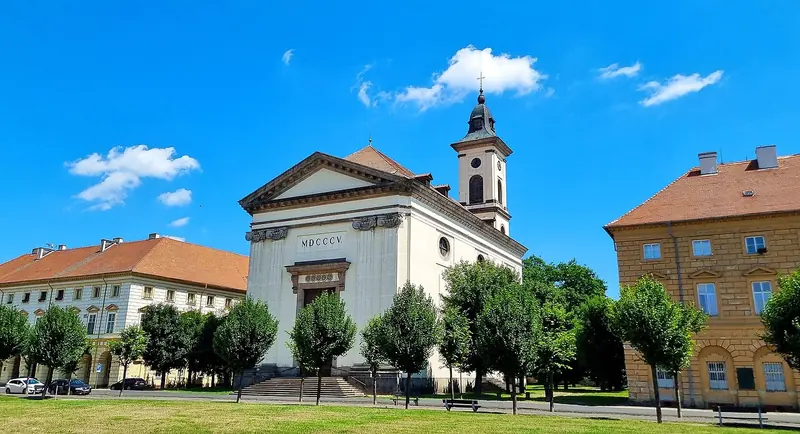 Photo Ondřej Žváček, CC BY-SA 4.0, Wikimedia Commons
 Photo Fiver, der Hellseher, CC BY-SA 4.0, Wikimedia Commons
 Photo Frank Vincentz, CC BY-SA 3.0, Wikimedia Commons