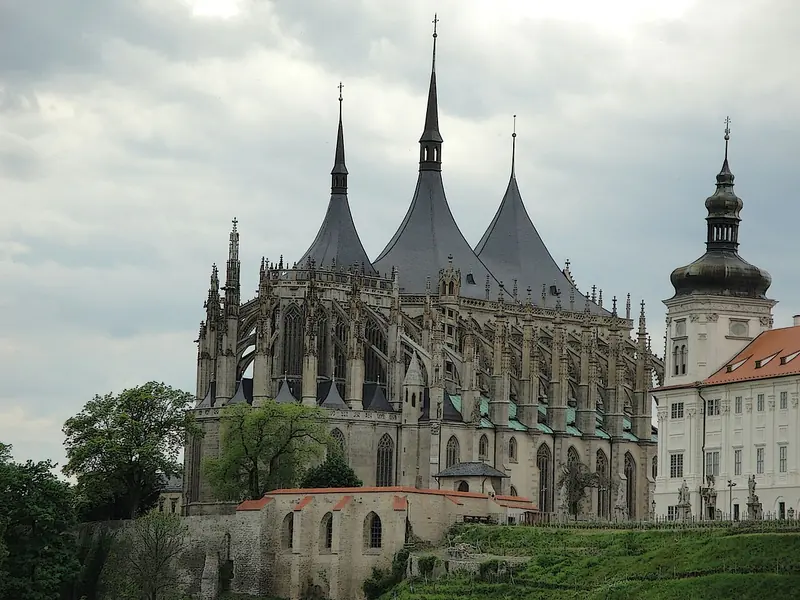
Photo Tiia Monto, CC BY-SA 4.0, Wikimedia Commons
ZooPrague, Prague, Czechia

Prague Zoo with children: what to see, map and route

Prague Zoo. In the Turi app, the same map shows your position, guides you from point to point and lets you tick off the places you’ve visited.

19points to see
10on the recommended route
approx. 5 hvisiting with children

Before you go

approx. 5 hat an easy pace, with breaks
10toilets on the map
nonebring your own food
2playgrounds
The main entrance is on U Trojského zámku street, next to Troja Château. The zoo lies on a hillside, so your walk leads from the bottom upwards; you can ride the chairlift up to the rocks. It is worth setting aside a whole day for everything.
  • At home, open the place in Turi and tap “Save for offline”: the map, descriptions and photos will work without signal.
  • Visit the farthest points first, while you still have energy.
  • Tick things off as you go, and by the exit you’ll know what’s left.

Prague Zoo in the Turi app

Live position, a route from point to point, descriptions to read and listen to. Free, no account, in 12 languages.

Get it for Android

Map of the place

The same map as in the app. Tap a point to see its photo and description; in Turi you’ll see yourselves on it too.

Map: Prague Zoo
1recommended, in route orderother pointsWCtoilets, food, tickets

Map: OpenStreetMap (ODbL) and BDOT10k GUGiK, checked against aerial photos. Descriptions and photos: Turi and Wikimedia Commons. Something not right? Report it in the app at that point.

Worth seeing

Prague Zoo in the Troja district, opened in 1931, is considered one of the best in the world. On 58 hectares on a slope above the Vltava live several thousand animals, from gorillas in a recreated Cameroonian forest, through elephants and Tasmanian devils, to the only gharials in Europe.

Darwin's CraterPhoto nieznany autor, CC BY-SA 3.0, Wikimedia Commons1
Animals

Darwin's Crater

This exhibit of Australian animals, especially those of Tasmania, opened in 2020 on almost 4,600 square metres. The main attraction is the Tasmanian devils, a species endangered in the wild, brought over from Tasmania. Around 20 species live here, and you can enter the kangaroo enclosure and walk among them.

Big catsPhoto Matěj Baťha, CC BY-SA 3.0, Wikimedia Commons2
Animals

Big cats

Next to the Carnivore and Reptile Pavilion are the big cat enclosures. They prefer to lie in the shade, so it is best to come in the morning or at feeding time, when they are most active. Snakes and other reptiles live in the pavilion itself.

Giant salamandersPhoto Petr Hamerník, CC BY-SA 4.0, Wikimedia Commons3
Animals

Giant salamanders

Opened in 2014, the pavilion is home to more than thirty Chinese giant salamanders, the largest amphibians in the world, critically endangered in the wild. They can grow to over a metre long. The pavilion refers to Karel Čapek's novel “War with the Newts”, which was published in Prague in 1936.

Chambal: gharialsPhoto Vojtěch Hála , edited by kaʁstn Disk / Cat (color…, CC BY-SA 3.0, Wikimedia Commons4
Animals

Chambal: gharials

The pavilion, named after the Chambal River in India, is home to gharials, crocodiles with a very narrow, long snout that they use to catch fish. Prague Zoo brought them here in 2008 and is the only zoo in Europe that keeps them. In the wild, gharials are critically endangered.

Fur sealsPhoto Karelj, CC BY-SA 3.0, Wikimedia Commons5
Animals

Fur seals

Beside the fur seal pool there is a grandstand from which you can watch the daily training sessions with the keepers. During the great flood of 2002, a male called Gaston swam out of the flooded zoo and travelled along the Vltava and the Elbe all the way to Germany. He was caught, but died of exhaustion on the way back. There is a statue of him in the zoo.

Indonesian JunglePhoto Welikeanimls, CC BY-SA 4.0, Wikimedia Commons6
Animals

Indonesian Jungle

Opened in 2004, the pavilion recreates the Indonesian rainforest. In the warm, humid interior, tropical plants grow, water flows, and among them live animals from that part of the world: orangutans, birds, fish and reptiles. The biggest attention-grabbers are the Komodo dragons, the largest lizards in the world.

Przewalski's horsesPhoto MAKY.OREL, CC BY-SA 4.0, Wikimedia Commons7
Animals

Przewalski's horses

For decades, Prague Zoo has been working to save Przewalski's horses, the last wild horses in the world, which have completely died out in the wild. Since 1959 it has kept their world studbook, and since 2011 it has been flying horses to Mongolia, where they return to the wild.

Elephant ValleyPhoto Tiia Monto, CC BY-SA 4.0, Wikimedia Commons8
Animals

Elephant Valley

The zoo's largest exhibit was built in 2013 for Indian elephants. Together the enclosures cover 7,500 square metres, with bathing pools and soft ground. This is where Sita was born, the first baby elephant born in Prague. The elephant pavilion and its surroundings are inspired by India.

Giraffes and the African enclosurePhoto Хомелка, CC BY-SA 3.0, Wikimedia Commons9
Animals

Giraffes and the African enclosure

In the large enclosure, giraffes live together with other animals of the African savannah. In winter and at night they shelter in the African House. From the terrace by the enclosure you can see them up close, roughly at head height.

Dja Reserve: gorillasPhoto MAKY.OREL, CC BY-SA 4.0, Wikimedia Commons10
Animals

Dja Reserve: gorillas

The gorilla pavilion opened in 2022 at a cost of around 300 million crowns. It covers more than 12 thousand square metres and recreates the rainforest of the Dja Reserve in Cameroon. Lowland gorillas live here together with guereza monkeys, and the pavilion is also home to other animals from the same forest.

All points (30)

Grouped as in the map legend. A star marks recommended points.

Animals 16
Darwin's Crater ★This exhibit of Australian animals, especially those of Tasmania, opened in 2020 on almost 4,600 square metres. The main attraction is the Tasmanian devils, a species endangered in the wild, brought over from Tasmania. Around 20 species live here, and you can enter the kangaroo enclosure and walk among them.
Big cats ★Next to the Carnivore and Reptile Pavilion are the big cat enclosures. They prefer to lie in the shade, so it is best to come in the morning or at feeding time, when they are most active. Snakes and other reptiles live in the pavilion itself.
Giant salamanders ★Opened in 2014, the pavilion is home to more than thirty Chinese giant salamanders, the largest amphibians in the world, critically endangered in the wild. They can grow to over a metre long. The pavilion refers to Karel Čapek's novel “War with the Newts”, which was published in Prague in 1936.
Chambal: gharials ★The pavilion, named after the Chambal River in India, is home to gharials, crocodiles with a very narrow, long snout that they use to catch fish. Prague Zoo brought them here in 2008 and is the only zoo in Europe that keeps them. In the wild, gharials are critically endangered.
Fur seals ★Beside the fur seal pool there is a grandstand from which you can watch the daily training sessions with the keepers. During the great flood of 2002, a male called Gaston swam out of the flooded zoo and travelled along the Vltava and the Elbe all the way to Germany. He was caught, but died of exhaustion on the way back. There is a statue of him in the zoo.
Indonesian Jungle ★Opened in 2004, the pavilion recreates the Indonesian rainforest. In the warm, humid interior, tropical plants grow, water flows, and among them live animals from that part of the world: orangutans, birds, fish and reptiles. The biggest attention-grabbers are the Komodo dragons, the largest lizards in the world.
Przewalski's horses ★For decades, Prague Zoo has been working to save Przewalski's horses, the last wild horses in the world, which have completely died out in the wild. Since 1959 it has kept their world studbook, and since 2011 it has been flying horses to Mongolia, where they return to the wild.
Elephant Valley ★The zoo's largest exhibit was built in 2013 for Indian elephants. Together the enclosures cover 7,500 square metres, with bathing pools and soft ground. This is where Sita was born, the first baby elephant born in Prague. The elephant pavilion and its surroundings are inspired by India.
Giraffes and the African enclosure ★In the large enclosure, giraffes live together with other animals of the African savannah. In winter and at night they shelter in the African House. From the terrace by the enclosure you can see them up close, roughly at head height.
Dja Reserve: gorillas ★The gorilla pavilion opened in 2022 at a cost of around 300 million crowns. It covers more than 12 thousand square metres and recreates the rainforest of the Dja Reserve in Cameroon. Lowland gorillas live here together with guereza monkeys, and the pavilion is also home to other animals from the same forest.
Rock MassifMountain animals live on the natural rocks above the Vltava valley. They climb the steep ledges without the slightest effort. From here there is also a lovely view of the lower part of the zoo.
Bird WetlandsSeveral connected enclosures with water and reeds for waterbirds and waders. The birds feed calmly in the shallows, while visitors watch them from footbridges and paths above the water.
Giant Tortoise PavilionLarge tortoises live in the pavilion. Nearby stands a sign marking the level of the Vltava during the floods of 2002 and 2013: the lower part of the zoo was under water at the time, and in 2002 more than a hundred animals died. After the floods, many pavilions were rebuilt higher up the slope.
PenguinsThe penguin pavilion stands right next to the fur seal pool, in the lower part of the zoo. Through the glass you can see the penguins swimming underwater, far more nimbly than they walk on land.
Hippopotamus PavilionHippopotamuses live in the Africa Up Close section. Through the glass of the pool you can see these heavy animals floating lightly in the water and walking along the bottom.
PlainsLarge hoofed animals occupy the spacious enclosures on the ridge of the zoo. This is a quieter part of the zoo, good for a rest with a view of the meadows.
Playground 2
Bororo ReserveA large children's playground has been set up in the former elephant pavilion. Children climb on structures inspired by African nature, while parents can take a short rest halfway through the visit.
Children's ZooIn the lower part of the zoo there is a pen with domestic animals that children can see up close. It is a good place for a break for the little ones.
Attraction 1
ChairliftThe chairlift has been running since the 70s of the last century and carries visitors from the lower part of the zoo up to the rocky ridge. The ride takes about two minutes, and from the top you get a good view of the lower enclosures. You can also walk up along a path.
Toilets / tickets / parking 11
Public toilet
Public toilet
Public toilet
Public toilet
Public toilet
Public toilet
Public toilet
Public toilet
Public toilet
Public toilet
Main entranceThe zoo lies in Troja, on a slope above the Vltava, so the route leads from the lower part upwards and back again. You can take the chairlift up the steep section. The zoo covers 58 hectares and is home to several thousand animals of more than six hundred species, so plan a whole day and definitely wear comfortable shoes.
Prague ZooGet Turi