Old townKutná Hora, Central Bohemian Region, Czechia
Kutná Hora and St Barbara's: what to see, map and route
Old Town and St Barbara's Cathedral in Kutná Hora. In the Turi app, the same map shows your position, guides you from point to point and lets you tick off the places you’ve visited.
free entrymuseums and towers have separate tickets
The walk starts at the tourist information on Palackého náměstí, and the recommended route ends at St Barbara's Cathedral, about a 10-minute walk from the start. If you are already in the centre, Turi will guide you from the nearest point. The old town is hilly and the streets are cobbled. Walking around the town is free; tickets are needed for St Barbara's Cathedral, the Italian Court and the museums. The Bone Chapel in Sedlec is about 3 km from the centre and is not on this route. There are toilets by Palackého náměstí, by the Italian Court, in the Breüer gardens and by St Barbara's Cathedral.
At home, open the place in Turi and tap “Save for offline”: the map, descriptions and photos will work without signal.
Visit the farthest points first, while you still have energy.
Tick things off as you go, and by the exit you’ll know what’s left.
Kutná Hora and St Barbara's in the Turi app
Live position, a route from point to point, descriptions to read and listen to. Free, no account, in 12 languages.
The same map as in the app. Tap a point to see its photo and description; in Turi you’ll see yourselves on it too.
1recommended, in route orderother pointsWCtoilets, food, tickets
Map: OpenStreetMap (ODbL). Descriptions and photos: Turi and Wikimedia Commons. Something not right? Report it in the app at that point.
Worth seeing
Kutná Hora grew rich on silver: in the Middle Ages it was one of the wealthiest towns of the Kingdom of Bohemia, and its historic centre is on the UNESCO list. The walk leads from the royal mint in the Italian Court and St James Church through the old town lanes with the plague column, the Gothic Stone House and the Stone Fountain, to Barborská Street with its gallery of saints and St Barbara's Cathedral, which the townspeople built as a rival to the cathedral in Prague.
Photo Ondřej Kořínek, CC BY-SA 3.0, Wikimedia Commons1
Building / monument
Italian Court, the royal mint
The royal palace with its mint was founded before 1300 by King Wenceslas II. Silver Prague groschen and later thalers were struck here, because thanks to its silver mines Kutná Hora was one of the most important towns of the kingdom. The palace was enlarged around 1400 for Wenceslas IV and at the end of the fifteenth century for Vladislaus II Jagiellon. Tradition links the mint with the Decree of Kutná Hora of 18 January 1409, which gave the Czechs the upper hand at Prague University. After the mint closed in the eighteenth century the building fell into decay, and it got its neo-Gothic look during the restoration of 1893-1899.
Photo Ondřej Kořínek, CC BY-SA 3.0, Wikimedia Commons2
Building / monument
St James Church
The Gothic church was built from the first half of the fourteenth century into the fifteenth, partly by the Parler workshop. You will recognise it by the two west towers: the northern one is 80 metres tall, and the southern one was never finished. The building was paid for by patrician families, minters and mint workers. Since 1995 it has been on the UNESCO list together with the historic centre of Kutná Hora.
Photo Fotograf ondra, CC BY-SA 3.0, Wikimedia Commons3
Attraction
Plague column
The Baroque column is 16.6 metres tall and stands in Šultysova Street. It was made by the Jesuit sculptor František Baugut in 1713-1715 in memory of the last great plague in Bohemia, which in 1713 killed 43 people in Kutná Hora. The Immaculate Virgin stands at the top, saints who protect against plague are below, and at the base there are figures of miners with shields, because the town lived from its silver mines.
Photo Palickap, CC BY-SA 4.0, Wikimedia Commons4
Building / monument
Stone House
A late Gothic burgher's house with a richly carved triangular gable and a stone oriel above the gateway. It was built in 1485-1499 by the burgher Prokop Kroupa, who was ennobled in 1499, hence the knights on the gable. The stonework was done by master Brikcius Gauske of Görlitz, who also worked on the town hall in Wrocław. Today it houses part of the Czech Museum of Silver.
Photo Petr1888, CC BY-SA 3.0, Wikimedia Commons5
Attraction
Stone Fountain
The twelve-sided late Gothic fountain on Rejskovo náměstí was built in 1493-1495, probably to a design by master Brikcius Gauske. It was paid for by Jan Smíšek of Vrchoviště, the owner of the Hrádek. Water was precious here: it was brought into the town through a wooden pipeline several kilometres long. The fountain served as a drinking water reservoir until 1890.
Photo Hadonos, CC BY-SA 3.0, Wikimedia Commons6
Building / monument
Hrádek
The Gothic manor on a terrace above the Vrchlice valley was first mentioned in 1312. At the beginning of the fifteenth century the royal judge Václav of Donín rebuilt it as a Gothic residence, and around 1500 it became a patrician palace. In the seventeenth century it housed a Jesuit school, and since 1996 it has been home to the Czech Museum of Silver. The tour of the old mine below the museum is underground, so it is not part of the Turi route.
Photo Ondřej Kořínek, CC BY-SA 3.0, Wikimedia Commons7
Attraction
Jesuit College and gallery of saints
The Baroque Jesuit College was built in 1667-1750 to a design by the Italian architect Giovanni Domenico Orsi, outside the old walls, between the Hrádek and St Barbara's Cathedral. Along the viewing terrace in front of the college stand thirteen eighteenth-century groups of saints: twelve were made by František Baugut in 1703-1716, and the statue of St John of Nepomuk was added after 1740. From the terrace you can see the Vrchlice valley and the whole town.
Photo Keete 37, CC BY-SA 3.0, Wikimedia Commons8
Building / monument
St Barbara's Cathedral
The five-aisled Gothic church was built by the townspeople at their own expense as a rival to the cathedral in Prague, and it is dedicated to St Barbara, the patron saint of miners. Work began in 1388 under the Parler workshop and was halted by the Hussite Wars. Later Matěj Rejsek worked here, completing the net vault of the choir in 1499, and Benedikt Rejt, who gave the nave its present form. Work stopped in 1558, and the church was closed off to the west with only a temporary wall. Since 1995 it has been on the UNESCO list.
All points (15)
Grouped as in the map legend. A star marks recommended points.
Building / monument 7
Italian Court, the royal mint ★The royal palace with its mint was founded before 1300 by King Wenceslas II. Silver Prague groschen and later thalers were struck here, because thanks to its silver mines Kutná Hora was one of the most important towns of the kingdom. The palace was enlarged around 1400 for Wenceslas IV and at the end of the fifteenth century for Vladislaus II Jagiellon. Tradition links the mint with the Decree of Kutná Hora of 18 January 1409, which gave the Czechs the upper hand at Prague University. After the mint closed in the eighteenth century the building fell into decay, and it got its neo-Gothic look during the restoration of 1893-1899.
St James Church ★The Gothic church was built from the first half of the fourteenth century into the fifteenth, partly by the Parler workshop. You will recognise it by the two west towers: the northern one is 80 metres tall, and the southern one was never finished. The building was paid for by patrician families, minters and mint workers. Since 1995 it has been on the UNESCO list together with the historic centre of Kutná Hora.
Stone House ★A late Gothic burgher's house with a richly carved triangular gable and a stone oriel above the gateway. It was built in 1485-1499 by the burgher Prokop Kroupa, who was ennobled in 1499, hence the knights on the gable. The stonework was done by master Brikcius Gauske of Görlitz, who also worked on the town hall in Wrocław. Today it houses part of the Czech Museum of Silver.
Hrádek ★The Gothic manor on a terrace above the Vrchlice valley was first mentioned in 1312. At the beginning of the fifteenth century the royal judge Václav of Donín rebuilt it as a Gothic residence, and around 1500 it became a patrician palace. In the seventeenth century it housed a Jesuit school, and since 1996 it has been home to the Czech Museum of Silver. The tour of the old mine below the museum is underground, so it is not part of the Turi route.
St Barbara's Cathedral ★The five-aisled Gothic church was built by the townspeople at their own expense as a rival to the cathedral in Prague, and it is dedicated to St Barbara, the patron saint of miners. Work began in 1388 under the Parler workshop and was halted by the Hussite Wars. Later Matěj Rejsek worked here, completing the net vault of the choir in 1499, and Benedikt Rejt, who gave the nave its present form. Work stopped in 1558, and the church was closed off to the west with only a temporary wall. Since 1995 it has been on the UNESCO list.
St John of Nepomuk ChurchThe Baroque church stands a few steps from the Stone Fountain. It was built after the canonisation of John of Nepomuk, the new patron saint of Bohemia: in 1731 the councillor Josef Khun gave the town the plot where his house had stood before it burned down in 1726. The design chosen was by František Maxmilián Kaňka, an architect who was then working for the Kutná Hora Jesuits.
Church of Our Lady Na NámětiThis Gothic church stands on the eastern edge of the old town, a few minutes from Palackého náměstí and off the main route. It was probably founded before 1357 on the site of an older miners' chapel and, together with St James, is one of the oldest churches in Kutná Hora. It was modelled on St James, but in a much simpler form. There was already a clock on the tower in the fifteenth century.
Attraction 3
Plague column ★The Baroque column is 16.6 metres tall and stands in Šultysova Street. It was made by the Jesuit sculptor František Baugut in 1713-1715 in memory of the last great plague in Bohemia, which in 1713 killed 43 people in Kutná Hora. The Immaculate Virgin stands at the top, saints who protect against plague are below, and at the base there are figures of miners with shields, because the town lived from its silver mines.
Stone Fountain ★The twelve-sided late Gothic fountain on Rejskovo náměstí was built in 1493-1495, probably to a design by master Brikcius Gauske. It was paid for by Jan Smíšek of Vrchoviště, the owner of the Hrádek. Water was precious here: it was brought into the town through a wooden pipeline several kilometres long. The fountain served as a drinking water reservoir until 1890.
Jesuit College and gallery of saints ★The Baroque Jesuit College was built in 1667-1750 to a design by the Italian architect Giovanni Domenico Orsi, outside the old walls, between the Hrádek and St Barbara's Cathedral. Along the viewing terrace in front of the college stand thirteen eighteenth-century groups of saints: twelve were made by František Baugut in 1703-1716, and the statue of St John of Nepomuk was added after 1740. From the terrace you can see the Vrchlice valley and the whole town.
Toilets / tickets / parking 5
Tourist information on Palackého náměstíThe walk starts at the tourist information on Palackého náměstí. The route leads to the royal mint in the Italian Court and St James Church, through the old town lanes past the plague column, the Gothic Stone House and the Stone Fountain, and then along Barborská Street with its gallery of saints to St Barbara's Cathedral.

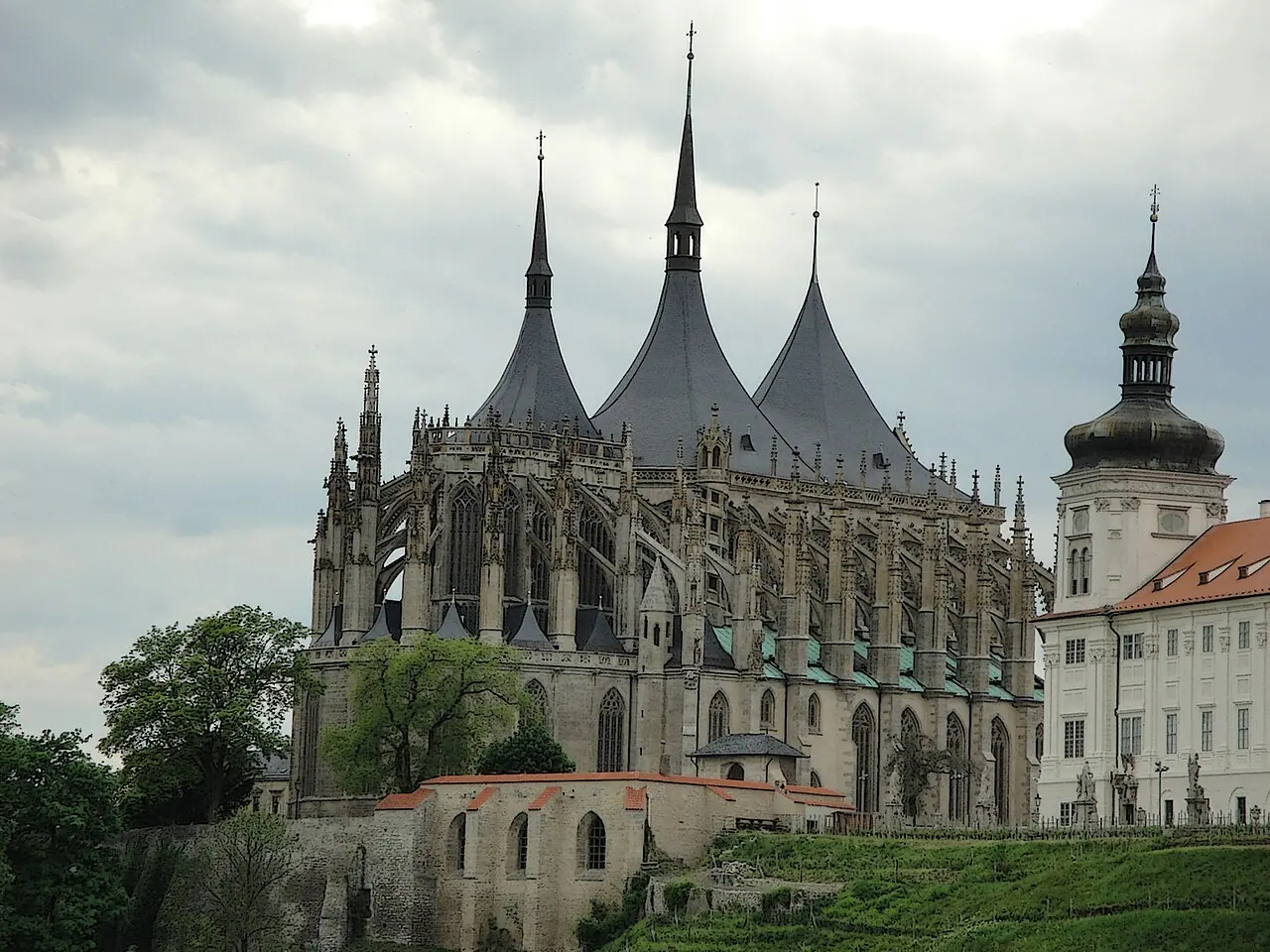 Photo Keete 37, CC BY-SA 3.0, Wikimedia Commons

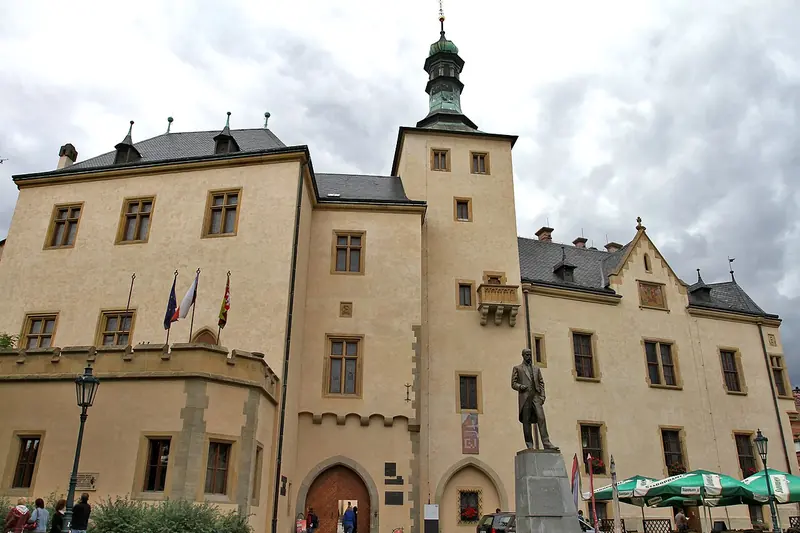 Photo Ondřej Kořínek, CC BY-SA 3.0, Wikimedia Commons1
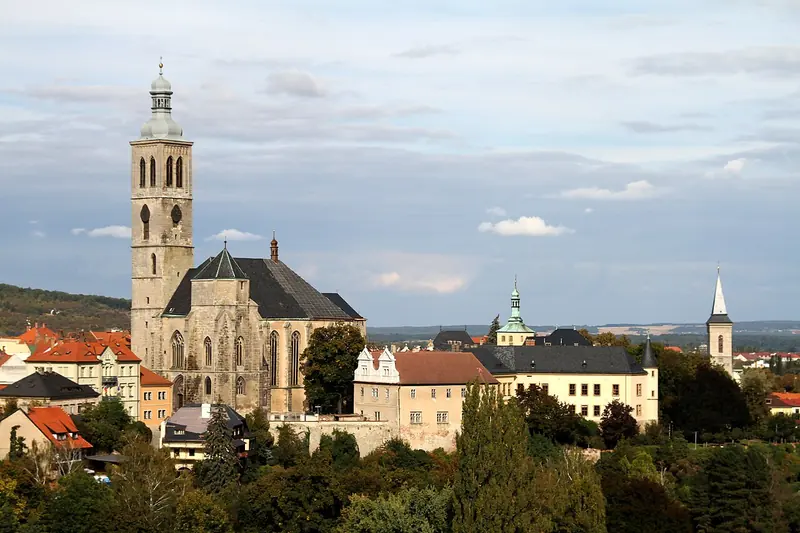 Photo Ondřej Kořínek, CC BY-SA 3.0, Wikimedia Commons
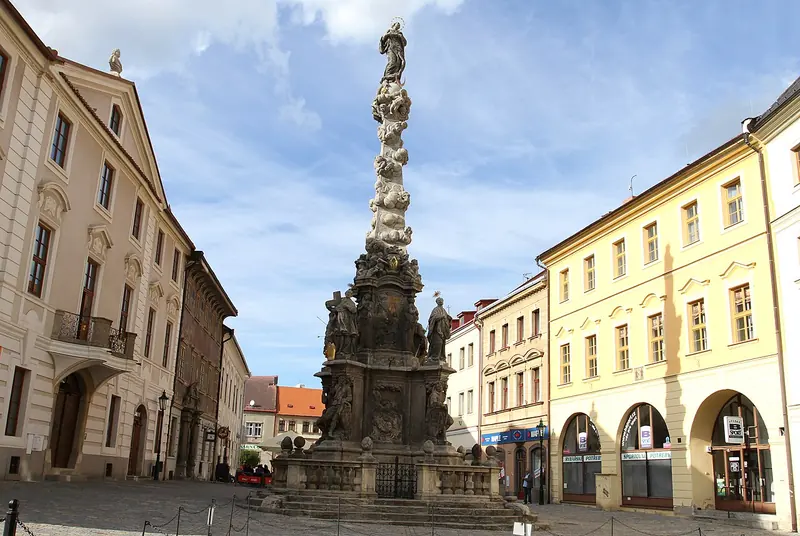 Photo Fotograf ondra, CC BY-SA 3.0, Wikimedia Commons
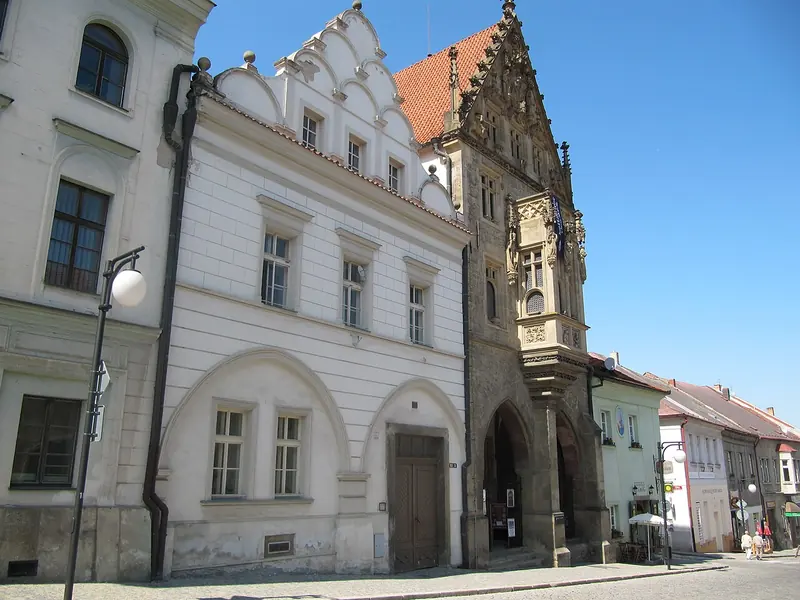 Photo Palickap, CC BY-SA 4.0, Wikimedia Commons
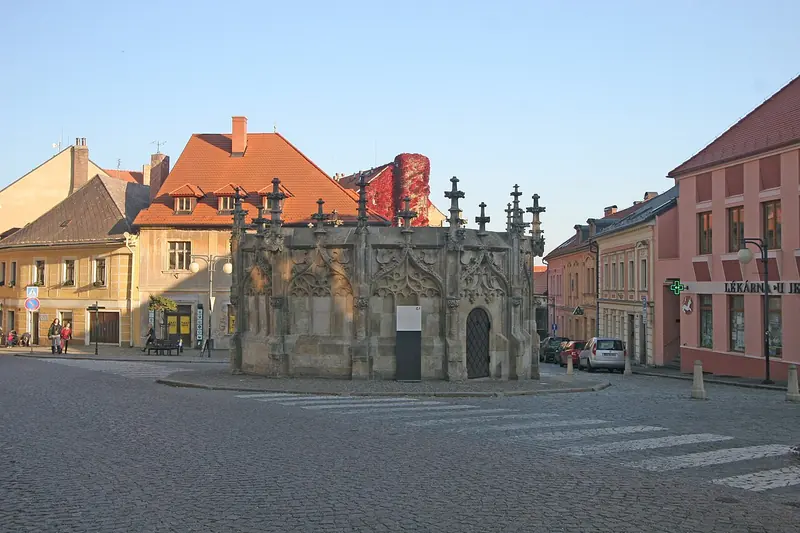 Photo Petr1888, CC BY-SA 3.0, Wikimedia Commons
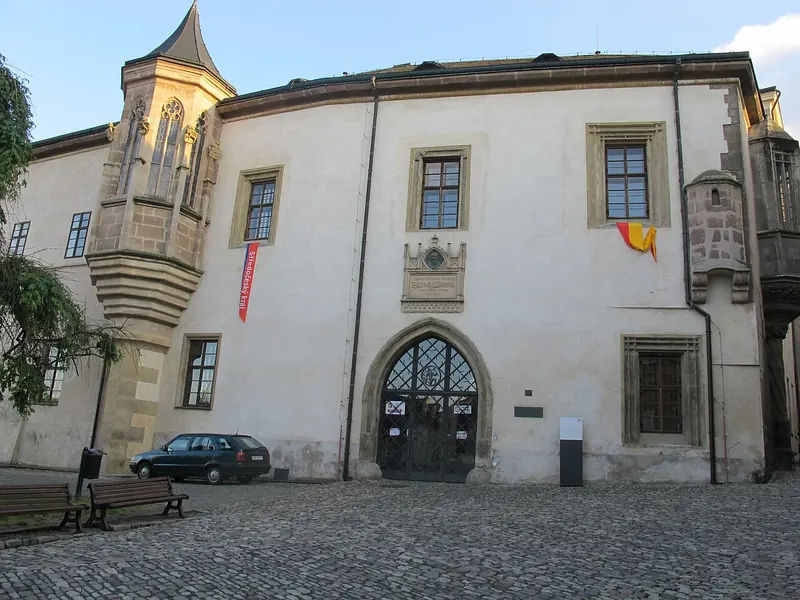 Photo Hadonos, CC BY-SA 3.0, Wikimedia Commons
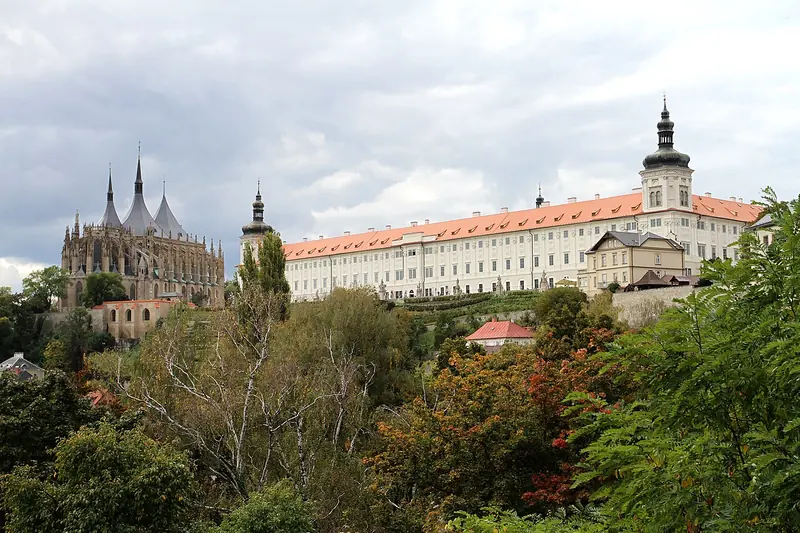 Photo Ondřej Kořínek, CC BY-SA 3.0, Wikimedia Commons
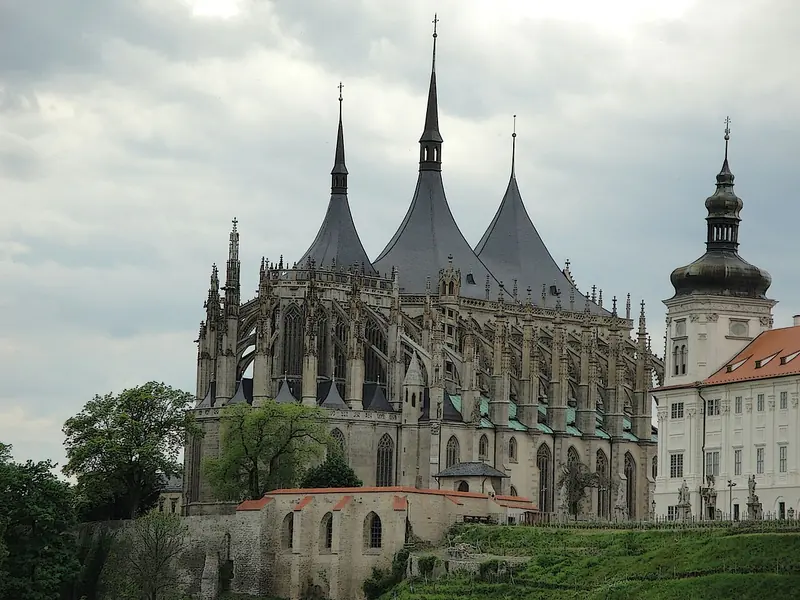 Photo Keete 37, CC BY-SA 3.0, Wikimedia Commons
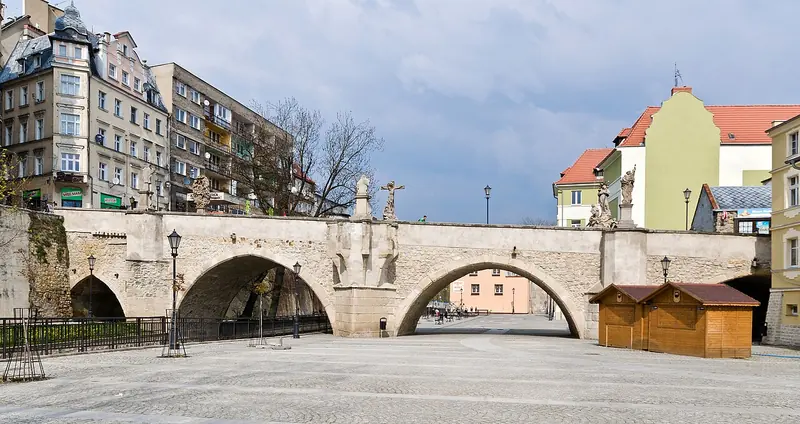 Photo Jacek Halicki, CC BY-SA 3.0 pl, Wikimedia Commons
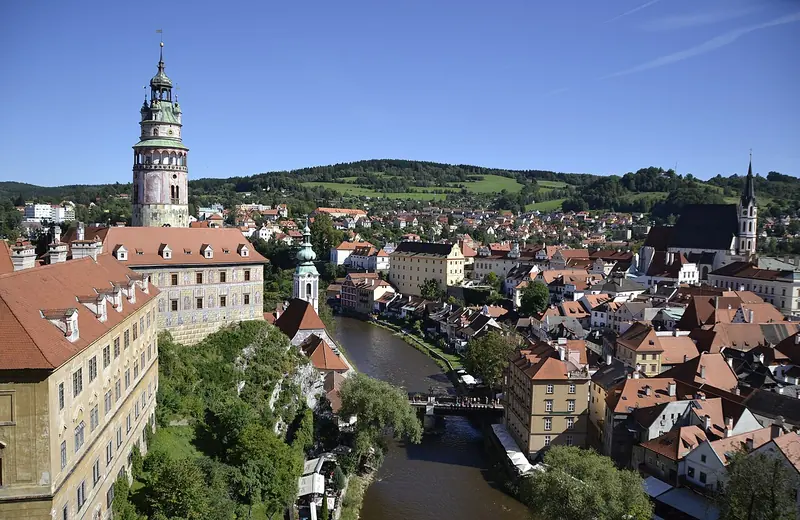 Photo High Contrast, CC BY 3.0 de, Wikimedia Commons
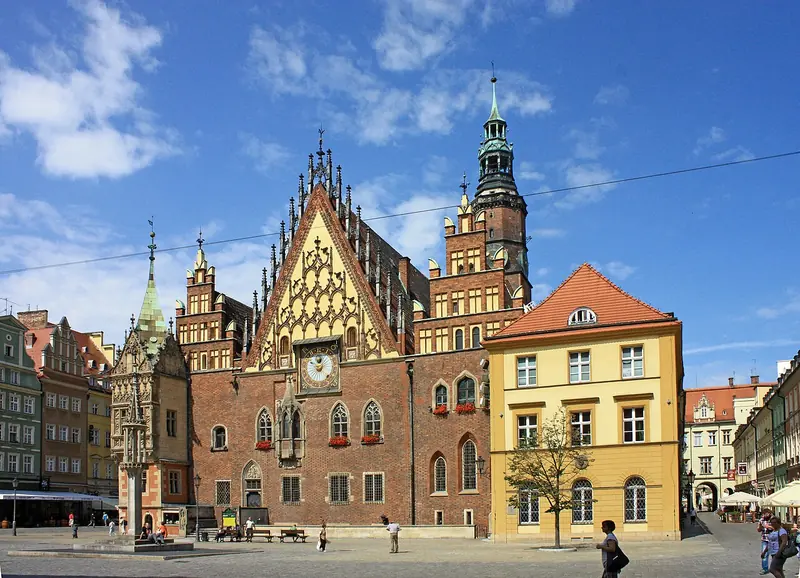 Photo Dawid Galus, CC BY-SA 3.0 pl, Wikimedia Commons