Photo High Contrast, CC BY 3.0 de, Wikimedia Commons
Old townČeský Krumlov, South Bohemian Region, Czechia
Old Town and Castle in Český Krumlov: what to see, map and route
Old Town and Castle in Český Krumlov. In the Turi app, the same map shows your position, guides you from point to point and lets you tick off the places you’ve visited.
free entrymuseums and towers have separate tickets
The walk starts at the tourist information on Náměstí Svornosti, and the recommended route ends in the castle garden, about a 15-minute walk from the square. If you are already in the centre, Turi will guide you from the nearest point. There is a climb up to the castle and plenty of cobblestones in the old town. Walking around the town and the castle courtyards is free; tickets are needed for the tower, the castle interiors and the Baroque theatre. There are toilets by the square, in Latrán, at the castle and in the castle garden.
At home, open the place in Turi and tap “Save for offline”: the map, descriptions and photos will work without signal.
Visit the farthest points first, while you still have energy.
Tick things off as you go, and by the exit you’ll know what’s left.
Old Town and Castle in Český Krumlov in the Turi app
Live position, a route from point to point, descriptions to read and listen to. Free, no account, in 12 languages.
The same map as in the app. Tap a point to see its photo and description; in Turi you’ll see yourselves on it too.
1recommended, in route orderother pointsWCtoilets, food, tickets
Map: OpenStreetMap (ODbL). Descriptions and photos: Turi and Wikimedia Commons. Something not right? Report it in the app at that point.
Worth seeing
Český Krumlov lies in a tight bend of the Vltava, below the second largest castle in Bohemia. The whole historic centre is on the UNESCO list. The walk leads from the square with the plague column to the Gothic St Vitus Church, over the bridge to Latrán and up to the castle: past the moat where bears have lived for centuries, through the successive courtyards and over the Cloak Bridge to the Baroque garden with its revolving auditorium.
Photo Txllxt TxllxT, CC BY-SA 4.0, Wikimedia Commons1
Attraction
Náměstí Svornosti and the plague column
This is the heart of the old town, which is wrapped in a bend of the Vltava and has been on the UNESCO list since 1992. The name Krumlov comes from the German Krumme Aue, meaning crooked meadow. On the square stands a Renaissance town hall from the second half of the sixteenth century, bearing the arms of the town, the Kingdom of Bohemia and the Eggenberg and Schwarzenberg families. The plague column from 1716 is the work of the Baroque sculptor Matěj Václav Jäckel and was paid for by Princess Marie Ernestina of Eggenberg. The fountain was added in the nineteenth century.
Photo Alexander Migl, CC BY-SA 4.0, Wikimedia Commons2
Building / monument
St Vitus Church
The late Gothic church was built in 1407-1438 on the site of a church founded in 1309. It was the main church of the Rosenberg estates, and its vault was meant to follow the model of St Vitus Cathedral in Prague. Since 1995 it has been a national cultural monument. From the viewpoint next to the church you can see the bend in the Vltava and the castle towering over the town.
Photo Petr Kadlec, CC BY-SA 4.0, Wikimedia Commons3
Attraction
Lazebnický Bridge
The bridge links the Old Town with the Latrán quarter below the castle. The present bridge dates from the 1830s: in 1830 ice floes badly damaged the wooden footbridge that stood here before. In the middle of the bridge stand a statue of St John of Nepomuk and a Crucifixion, and its name comes from the old bathhouse in the house Latrán No. 1. From the bridge you get a good view of the castle tower.
Photo Rosa-Maria Rinkl, CC BY-SA 4.0, Wikimedia Commons4
Attraction
Bear moat
The Rosenbergs kept bears from the sixteenth century to underline their claimed kinship with the Roman Orsini family (orso is Italian for bear). Bears have lived in the moat between the first and second courtyards since at least the early eighteenth century and, with breaks, still live here today. On Christmas Eve the town holds Bear Christmas: children hang treats on a Christmas tree in the moat, and then the bears are let out.
Photo Jerzy Strzelecki, CC BY-SA 3.0, Wikimedia Commons5
Building / monument
Castle tower and second courtyard
The tower stands on the oldest part of the castle, the so-called Hrádek. Its lower part dates from the thirteenth century, and the Renaissance top with paintings was added in 1580. A tower warden once lived in it, who in summer blew the Krumlov fanfare every hour and announced the weather with coloured flags. The fanfare still sounds from the tower every three hours from nine in the morning. In the second courtyard you will see Renaissance paintings on the façades and a stone fountain from 1641. There is a fee to climb the tower.
Photo Scotch Mist, CC BY-SA 4.0, Wikimedia Commons6
Building / monument
Upper Castle
The Upper Castle was built in the first half of the fourteenth century by Peter of Rosenberg on a narrow rocky ridge, and today it surrounds the third and fourth courtyards. The whole castle covers more than 6 hectares and is the second largest castle complex in Bohemia after Prague Castle. It was the seat of the Rosenbergs, then the Eggenbergs and, from 1719, the Schwarzenbergs. The interiors can be seen on guided tours.
Photo Ray Swi-hymn from Sijhih-Taipei, Taiwan, CC BY-SA 2.0, Wikimedia Commons7
Attraction
Cloak Bridge
The bridge spans a deep moat cut into the rock. It links the Upper Castle with the Baroque theatre, the fifth courtyard and the castle garden. It has three tiers of arches, an open walkway with statues of saints and, above it, covered corridors through which the princes walked from the palace to the theatre and the gardens. It was built in stages in the seventeenth and eighteenth centuries and got its Baroque form under Prince Joseph I Adam of Schwarzenberg. The statues on the parapet are copies; the originals are in the castle lapidarium.
Photo VitVit, CC BY-SA 4.0, Wikimedia Commons8
Building / monument
Baroque theatre and fifth courtyard
The castle Baroque theatre is one of the best preserved Baroque theatres in the world. The first theatre was set up here under the Eggenbergs in 1682, and the present building from 1761-1762 was built by Joseph I Adam of Schwarzenberg. Hundreds of sets, costumes and props survive, together with the original stage machinery. Since 1997 the theatre can be seen on a separate guided tour.
Photo Scotch Mist, CC BY-SA 4.0, Wikimedia Commons9
Attraction
Castle garden and cascade fountain
The castle garden was laid out in the second half of the sixteenth century. It is 700 metres long and about 10 hectares in size, and it is divided into a French and an English part. In the French part stands a cascade fountain from the mid-eighteenth century with rich sculptural decoration. Under the Eggenbergs and Schwarzenbergs the garden was given a Baroque layout.
Photo Jerzy Strzelecki, CC BY-SA 3.0, Wikimedia Commons10
Attraction
Bellarie and the revolving auditorium
Bellarie is a summer pavilion in the English part of the garden; the name comes from the Italian word bello, beautiful. The first, early Baroque pavilion was built under Johann Christian of Eggenberg at the end of the seventeenth century and was decorated with frescoes in the mid-eighteenth century. Opposite is the revolving auditorium of an open-air theatre, in use since 1958: the audience turns with it towards the successive scenes in the garden. It is the most visited open-air theatre in the Czech Republic.
All points (18)
Grouped as in the map legend. A star marks recommended points.
Attraction 7
Náměstí Svornosti and the plague column ★This is the heart of the old town, which is wrapped in a bend of the Vltava and has been on the UNESCO list since 1992. The name Krumlov comes from the German Krumme Aue, meaning crooked meadow. On the square stands a Renaissance town hall from the second half of the sixteenth century, bearing the arms of the town, the Kingdom of Bohemia and the Eggenberg and Schwarzenberg families. The plague column from 1716 is the work of the Baroque sculptor Matěj Václav Jäckel and was paid for by Princess Marie Ernestina of Eggenberg. The fountain was added in the nineteenth century.
Lazebnický Bridge ★The bridge links the Old Town with the Latrán quarter below the castle. The present bridge dates from the 1830s: in 1830 ice floes badly damaged the wooden footbridge that stood here before. In the middle of the bridge stand a statue of St John of Nepomuk and a Crucifixion, and its name comes from the old bathhouse in the house Latrán No. 1. From the bridge you get a good view of the castle tower.
Bear moat ★The Rosenbergs kept bears from the sixteenth century to underline their claimed kinship with the Roman Orsini family (orso is Italian for bear). Bears have lived in the moat between the first and second courtyards since at least the early eighteenth century and, with breaks, still live here today. On Christmas Eve the town holds Bear Christmas: children hang treats on a Christmas tree in the moat, and then the bears are let out.
Cloak Bridge ★The bridge spans a deep moat cut into the rock. It links the Upper Castle with the Baroque theatre, the fifth courtyard and the castle garden. It has three tiers of arches, an open walkway with statues of saints and, above it, covered corridors through which the princes walked from the palace to the theatre and the gardens. It was built in stages in the seventeenth and eighteenth centuries and got its Baroque form under Prince Joseph I Adam of Schwarzenberg. The statues on the parapet are copies; the originals are in the castle lapidarium.
Castle garden and cascade fountain ★The castle garden was laid out in the second half of the sixteenth century. It is 700 metres long and about 10 hectares in size, and it is divided into a French and an English part. In the French part stands a cascade fountain from the mid-eighteenth century with rich sculptural decoration. Under the Eggenbergs and Schwarzenbergs the garden was given a Baroque layout.
Bellarie and the revolving auditorium ★Bellarie is a summer pavilion in the English part of the garden; the name comes from the Italian word bello, beautiful. The first, early Baroque pavilion was built under Johann Christian of Eggenberg at the end of the seventeenth century and was decorated with frescoes in the mid-eighteenth century. Opposite is the revolving auditorium of an open-air theatre, in use since 1958: the audience turns with it towards the successive scenes in the garden. It is the most visited open-air theatre in the Czech Republic.
Budějovice GateThe only surviving town gate and also the youngest: it was built in 1598-1602 on a rocky spur above the Polečnice stream. Petr Vok of Rosenberg had it built and gave it to the town in return for a promise to maintain it forever. The town once had nine main gates. Together with the former St Elizabeth Hospital it forms the northern entrance to the town.
Building / monument 6
St Vitus Church ★The late Gothic church was built in 1407-1438 on the site of a church founded in 1309. It was the main church of the Rosenberg estates, and its vault was meant to follow the model of St Vitus Cathedral in Prague. Since 1995 it has been a national cultural monument. From the viewpoint next to the church you can see the bend in the Vltava and the castle towering over the town.
Castle tower and second courtyard ★The tower stands on the oldest part of the castle, the so-called Hrádek. Its lower part dates from the thirteenth century, and the Renaissance top with paintings was added in 1580. A tower warden once lived in it, who in summer blew the Krumlov fanfare every hour and announced the weather with coloured flags. The fanfare still sounds from the tower every three hours from nine in the morning. In the second courtyard you will see Renaissance paintings on the façades and a stone fountain from 1641. There is a fee to climb the tower.
Upper Castle ★The Upper Castle was built in the first half of the fourteenth century by Peter of Rosenberg on a narrow rocky ridge, and today it surrounds the third and fourth courtyards. The whole castle covers more than 6 hectares and is the second largest castle complex in Bohemia after Prague Castle. It was the seat of the Rosenbergs, then the Eggenbergs and, from 1719, the Schwarzenbergs. The interiors can be seen on guided tours.
Baroque theatre and fifth courtyard ★The castle Baroque theatre is one of the best preserved Baroque theatres in the world. The first theatre was set up here under the Eggenbergs in 1682, and the present building from 1761-1762 was built by Joseph I Adam of Schwarzenberg. Hundreds of sets, costumes and props survive, together with the original stage machinery. Since 1997 the theatre can be seen on a separate guided tour.
SynagogueThe synagogue stands in the Plešivec suburb, a few minutes from the square and off the main route. It was built in 1909 in the neo-Romanesque style with Art Nouveau touches and with a reinforced concrete structure, then a novelty. Jews lived in Krumlov as early as the fourteenth century, but in 1494 they were expelled from the town and only came back in the nineteenth century. Today the synagogue hosts exhibitions and concerts.
Minorite MonasteryA unique group of three monasteries in Latrán: Minorite friars, Poor Clares and Beguines. It was founded in 1350 by Kateřina of Rosenberg together with her sons, and the first friars arrived in 1357. The Church of Corpus Christi and the Virgin Mary served the monastery. Today the complex is looked after by the Knights of the Cross with the Red Star, and there are exhibitions inside.
Toilets / tickets / parking 5
Tourist information on the main squareThe walk starts at the tourist information on Náměstí Svornosti. The route goes round the square, stops below St Vitus Church with a view of the bend in the Vltava, crosses the bridge to the Latrán quarter and climbs to the castle: past the bear moat, through the successive courtyards and over the Cloak Bridge to the castle garden.

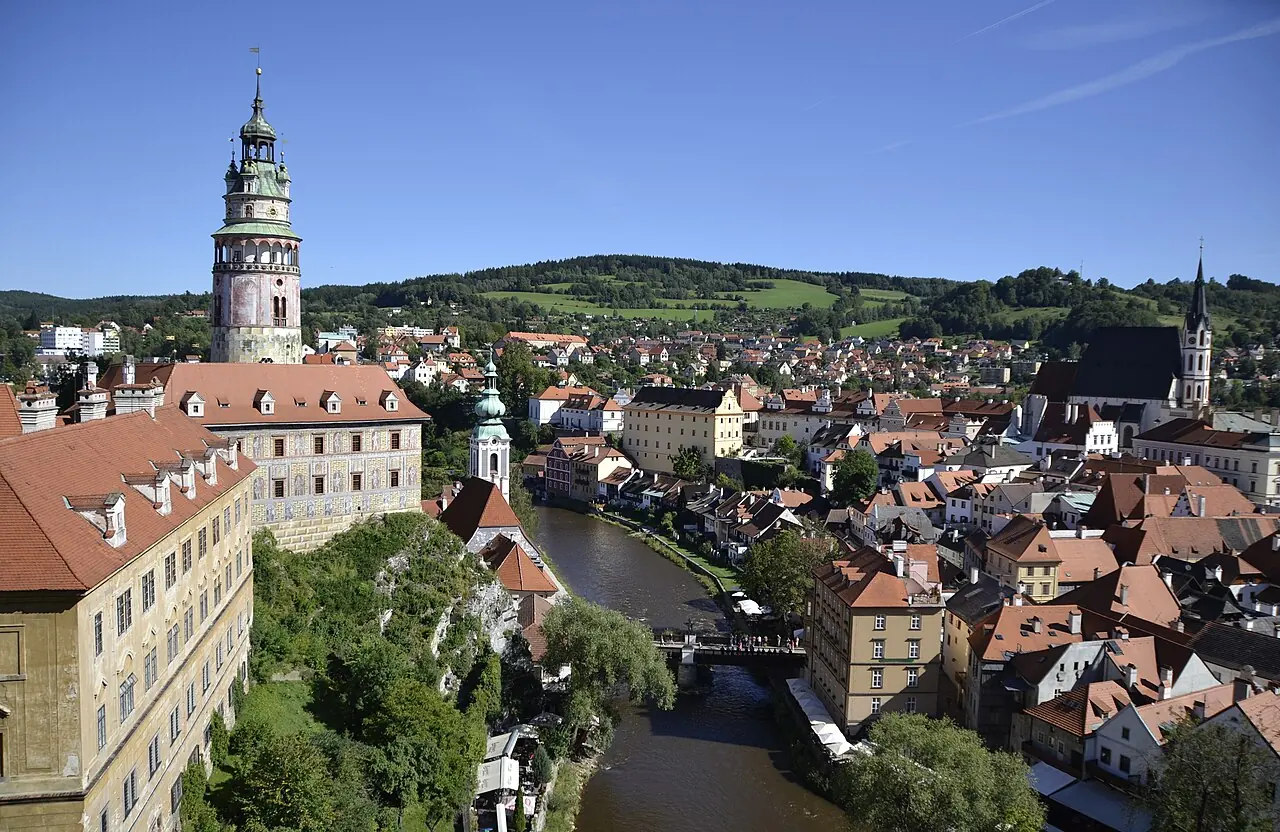 Photo High Contrast, CC BY 3.0 de, Wikimedia Commons

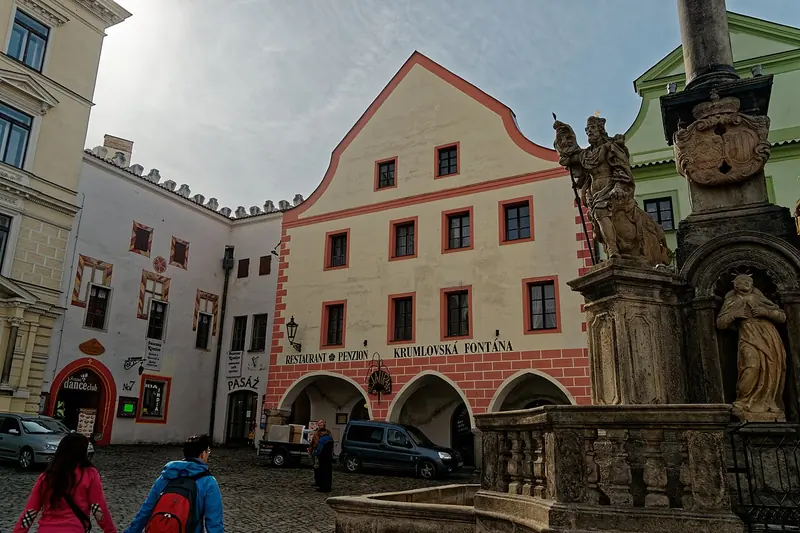 Photo Txllxt TxllxT, CC BY-SA 4.0, Wikimedia Commons1
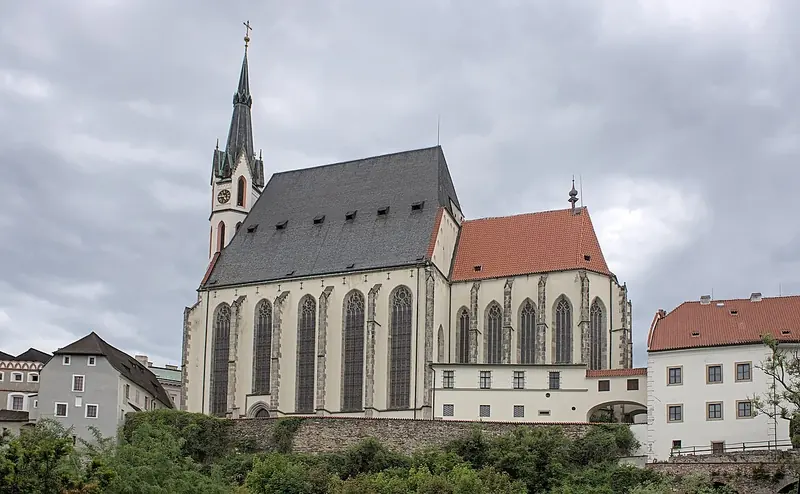 Photo Alexander Migl, CC BY-SA 4.0, Wikimedia Commons
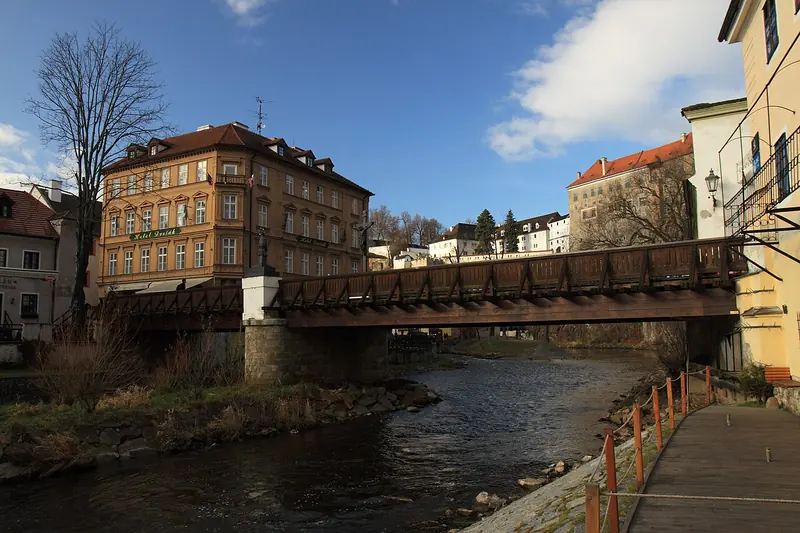 Photo Petr Kadlec, CC BY-SA 4.0, Wikimedia Commons
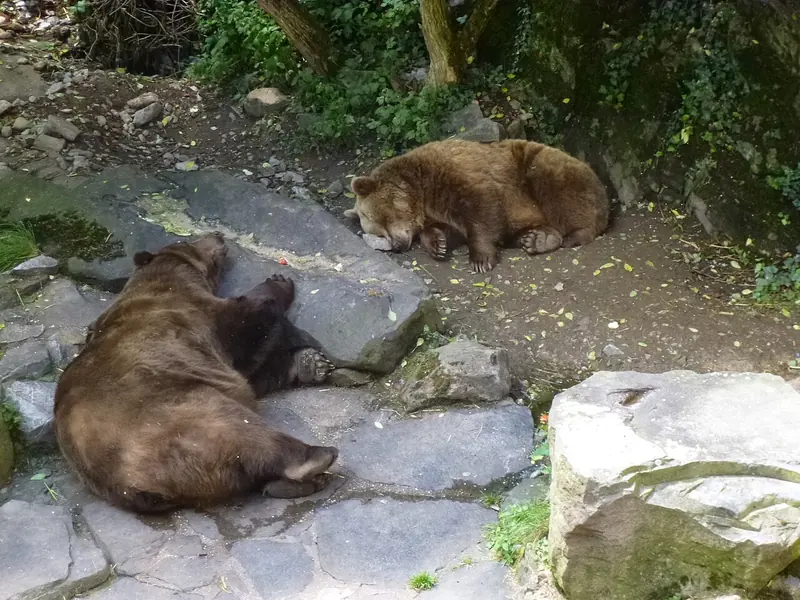 Photo Rosa-Maria Rinkl, CC BY-SA 4.0, Wikimedia Commons
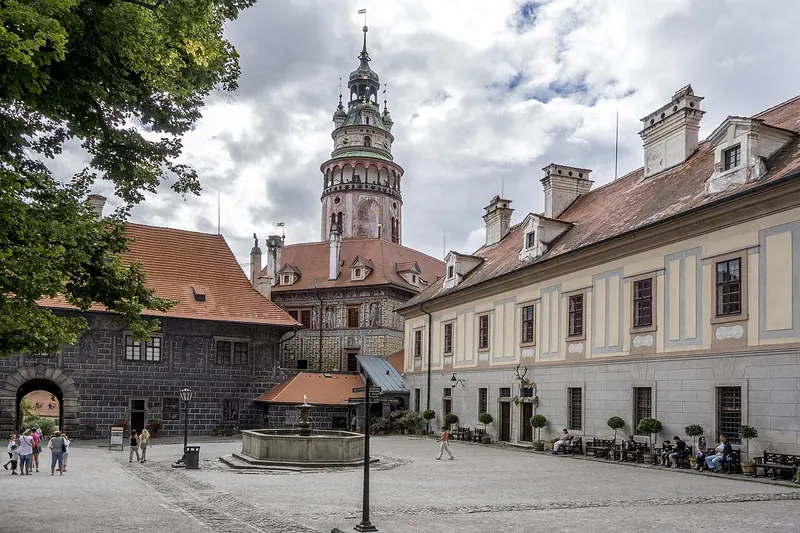 Photo Jerzy Strzelecki, CC BY-SA 3.0, Wikimedia Commons
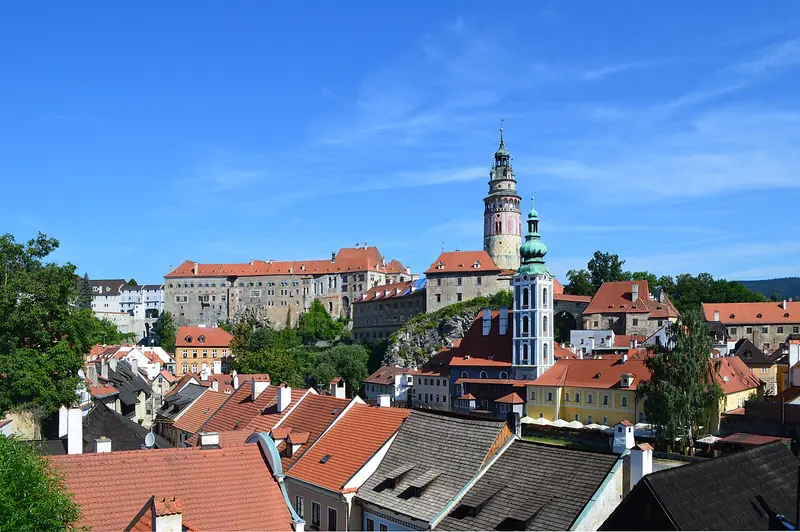 Photo Scotch Mist, CC BY-SA 4.0, Wikimedia Commons
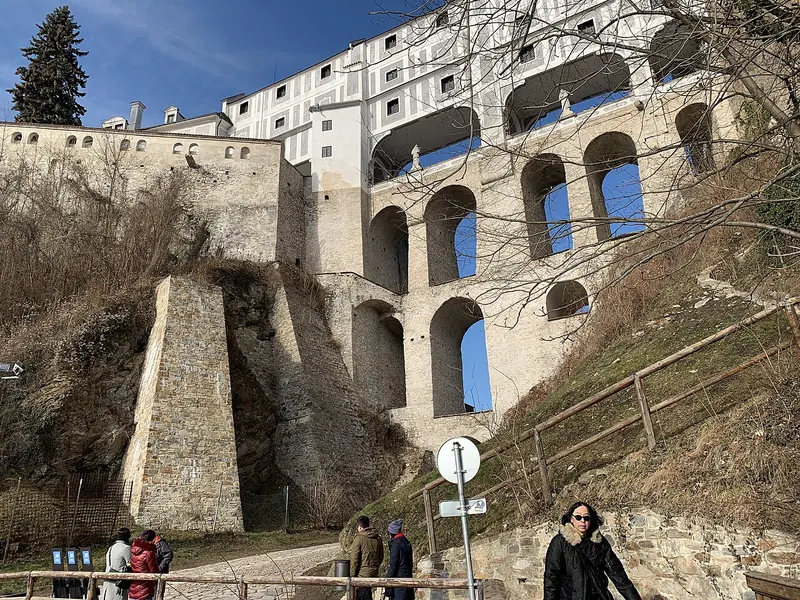 Photo Ray Swi-hymn from Sijhih-Taipei, Taiwan, CC BY-SA 2.0, Wikimedia Commons
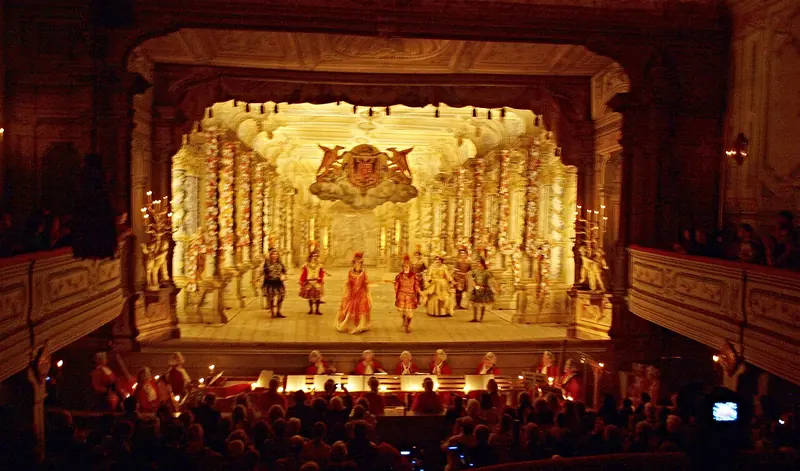 Photo VitVit, CC BY-SA 4.0, Wikimedia Commons
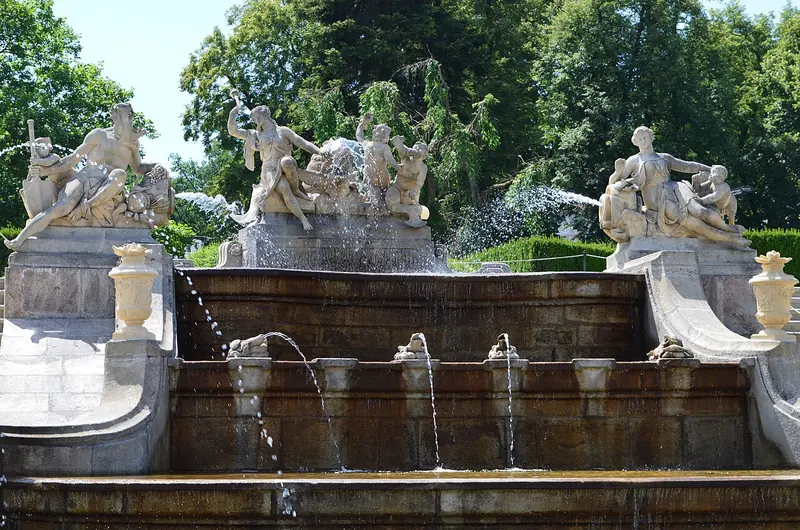 Photo Scotch Mist, CC BY-SA 4.0, Wikimedia Commons
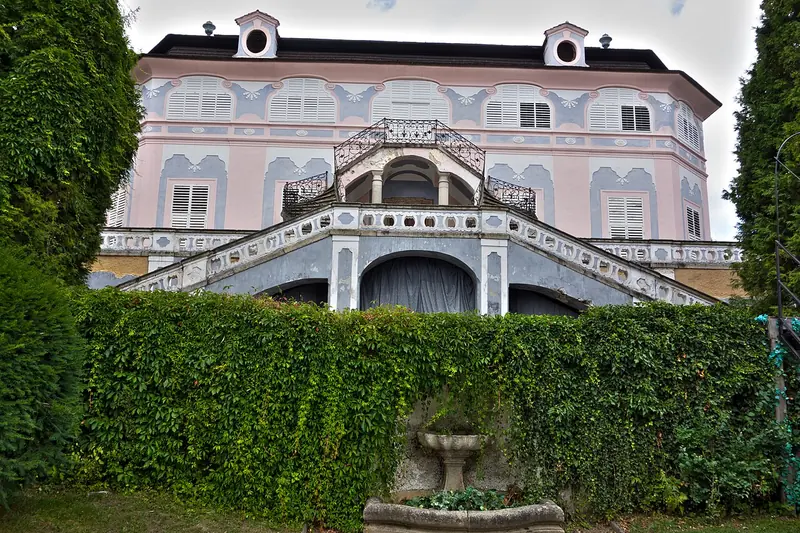 Photo Jerzy Strzelecki, CC BY-SA 3.0, Wikimedia Commons
 Photo Keete 37, CC BY-SA 3.0, Wikimedia Commons
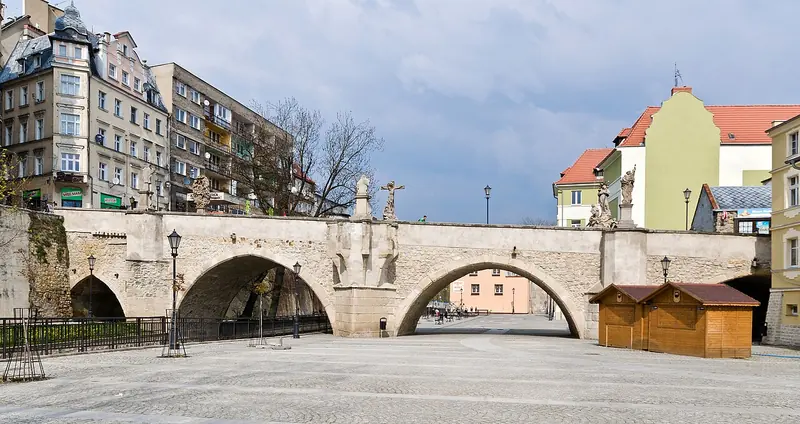 Photo Jacek Halicki, CC BY-SA 3.0 pl, Wikimedia Commons
 Photo Agnieszka Kwiecień, Nova, CC BY-SA 4.0, Wikimedia Commons