 Photo Fry72, Karel Frydrýšek, CC BY-SA 4.0, Wikimedia Commons1
Entrance
Most of the buildings were moved here from all over Lithuania to save them from destruction. The museum was built on the site of the former village of Pieveliai.

 Photo Fry72, Karel Frydrýšek, CC BY-SA 4.0, Wikimedia Commons
Lithuanian Museum of Ethnography in Rumšiškės. In the Turi app, the same map shows your position, guides you from point to point and lets you tick off the places you’ve visited.
Live position, a route from point to point, descriptions to read and listen to. Free, no account, in 12 languages.
Get it for AndroidThe same map as in the app. Tap a point to see its photo and description; in Turi you’ll see yourselves on it too.

Something not right? Report it in the app at that point.
One of the largest open-air museums in Europe lies on the Kaunas Reservoir, by the motorway from Vilnius to Kaunas. The museum was founded in 1966 and has welcomed visitors since 1974. On 195 hectares stand 149 relocated and reconstructed buildings from the 18th to the 20th century, arranged by region: Aukštaitija, Samogitia, Dzūkija, Suvalkija and Lithuania Minor, with a small town in the middle. Until 2023 the museum was called the Lithuanian Museum of Folk Life.
Photo Fry72, Karel Frydrýšek, CC BY-SA 4.0, Wikimedia Commons1Most of the buildings were moved here from all over Lithuania to save them from destruction. The museum was built on the site of the former village of Pieveliai.
Photo Fry72, Karel Frydrýšek, CC BY-SA 4.0, Wikimedia Commons2The heart of the open-air museum is the market square of a small town from the turn of the nineteenth and twentieth centuries, surrounded by little houses, shops and workshops. There is an inn, a fire station and a tea house, and during folk festivals the square turns into a fair. From mid-October to the end of March the interiors of the town's houses and workshops are closed.
 Photo Zairon, CC BY-SA 4.0, Wikimedia Commons3
In the past, children of different ages often learned together in a single room of a village school. Take a look at the desks, the blackboard and the inkwells, and then compare them with your own school. From mid-October to the end of March the school is closed and you can only see it from the outside.
 Photo Zairon, CC BY-SA 4.0, Wikimedia Commons4
The Samogitian village has six farmsteads scattered without any order, as was once the way in this region. There is a windmill and a roadside inn, and at the museum you can meet Samogitian Žemaitukas horses. The Samogitian house from 1856 is one of the museum's most valuable historic buildings. From mid-October to the end of March the interiors of the farmsteads are closed, and you can only see the buildings from the outside.
 Photo Vilensija, CC BY-SA 4.0, Wikimedia Commons5
From the 15-metre tower you can see the wide Kaunas Reservoir.
 Photo Zairon, CC BY-SA 4.0, Wikimedia Commons6
The Dzūkians lived among the forests and made their living from them, and this part of the museum has four farmsteads. Dzūkija is a land of sandy soils, pine forests, mushrooms and berries. From mid-October to the end of March the interiors of the farmsteads are closed, and you can only see the buildings from the outside.
 Photo Zairon, CC BY-SA 4.0, Wikimedia Commons7
Aukštaitija is a large section of the museum: a village along a single street and several separate farms. Here you will see windmills, roadside crosses and a wooden, octagonal cemetery chapel from Račkiškė, and the exhibitions tell the story of weddings, herbs and festivals. From mid-October to the end of March the interiors of the farmsteads are closed, and you can only see the buildings from the outside.
Grouped as in the map legend. A star marks recommended points.
 Photo Lietuvos zoologijos sodas, CC BY-SA 4.0, Wikimedia Commons
13 points · approx. 3 h visit
The Lithuanian Zoological Garden opened in Kaunas on 1 July 1938 on the initiative of the zoologist Tadas Ivanauskas. It lies in the Ąžuolynas oak grove and covers almost 16 hectares. After a two-year…
See the map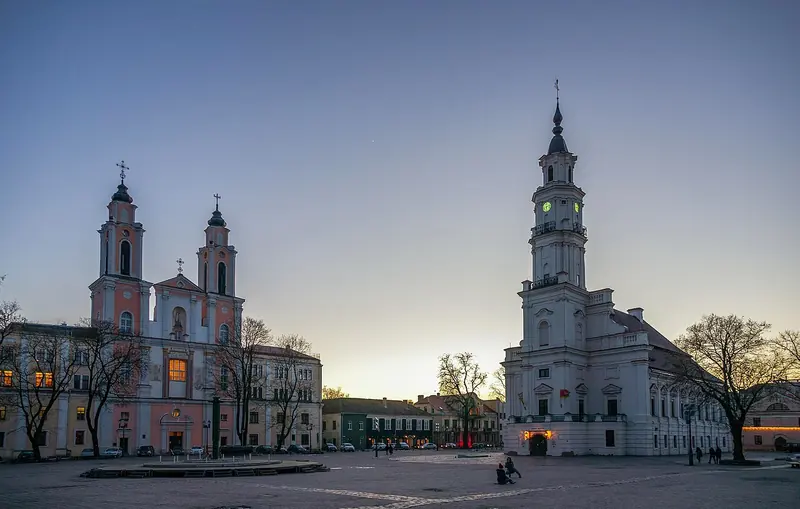 Photo Guillaume Speurt, CC BY-SA 2.0, Wikimedia Commons
7 points · approx. 2 h 30 min visit
Kaunas Old Town lies where the Nemunas and the Neris meet, next to the ruins of a fourteenth-century castle. Its heart is Town Hall Square with its white town hall, and around it stand…
See the map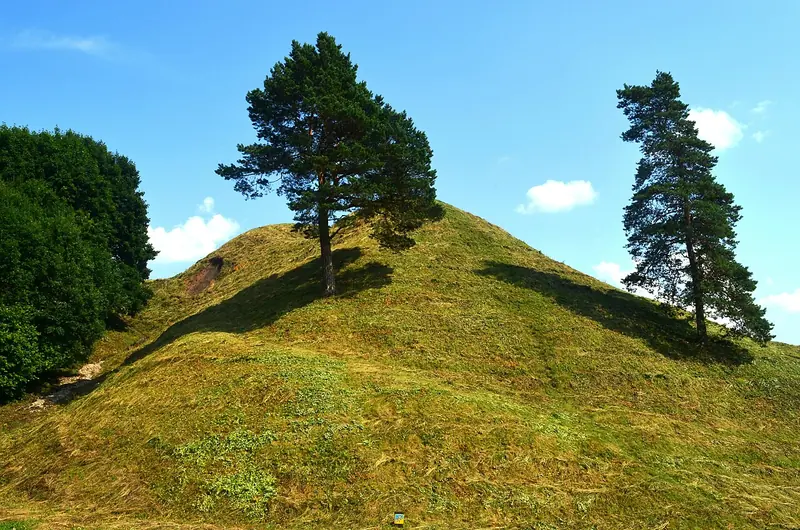 Photo Hugo.arg, Public domain, Wikimedia Commons
4 points · approx. 2 h visit
Kernavė on the River Neris was the medieval capital of the Grand Duchy of Lithuania. The five hillforts above the Pajauta Valley form a group of defensive hillforts unique in Lithuania. A cultural reserve…
See the mapMay we count visits with Google Analytics? More