Photo Guillaume Speurt, CC BY-SA 2.0, Wikimedia Commons
Old townKaunas, Kaunas County, Lithuania

Kaunas: what to see, map and route

Kaunas Old Town. In the Turi app, the same map shows your position, guides you from point to point and lets you tick off the places you’ve visited.

7points to see
5on the recommended route
approx. 2 h 30 minvisiting

Before you go

approx. 2 h 30 minat an easy pace, with breaks
1toilets on the map
free entrymuseums and towers have separate tickets
The walk starts at the castle, leads across Town Hall Square and ends by the Nemunas at the Church of Vytautas the Great. The main street of the Old Town is the cobbled Vilnius Street, which continues on to Freedom Avenue. Plan for about two and a half hours.
  • At home, open the place in Turi and tap “Save for offline”: the map, descriptions and photos will work without signal.
  • Visit the farthest points first, while you still have energy.
  • Tick things off as you go, and by the exit you’ll know what’s left.

Kaunas in the Turi app

Live position, a route from point to point, descriptions to read and listen to. Free, no account, in 12 languages.

Get it for Android

Map of the place

The same map as in the app. Tap a point to see its photo and description; in Turi you’ll see yourselves on it too.

Map: Kaunas
1recommended, in route orderother pointsWCtoilets, food, tickets

Something not right? Report it in the app at that point.

Worth seeing

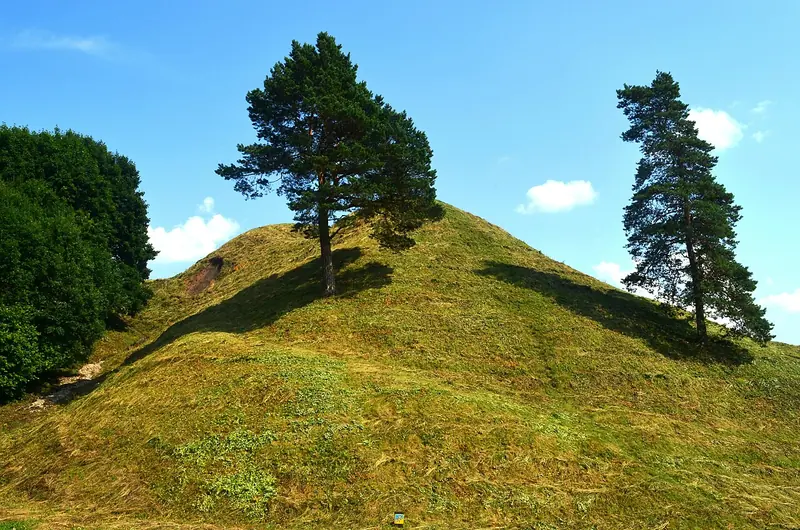
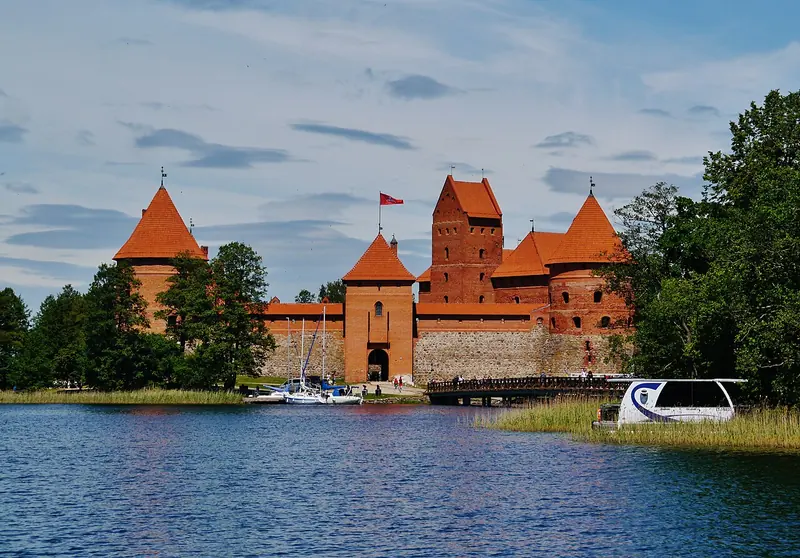
Kaunas Old Town lies where the Nemunas and the Neris meet, next to the ruins of a 14th-century castle. Its heart is Town Hall Square with its white town hall, and around it stand Gothic churches, Perkūnas House and the largest Catholic church in Lithuania.

CastlePhoto Pudelek (Marcin Szala), CC BY-SA 3.0, Wikimedia Commons1
Attraction

Castle

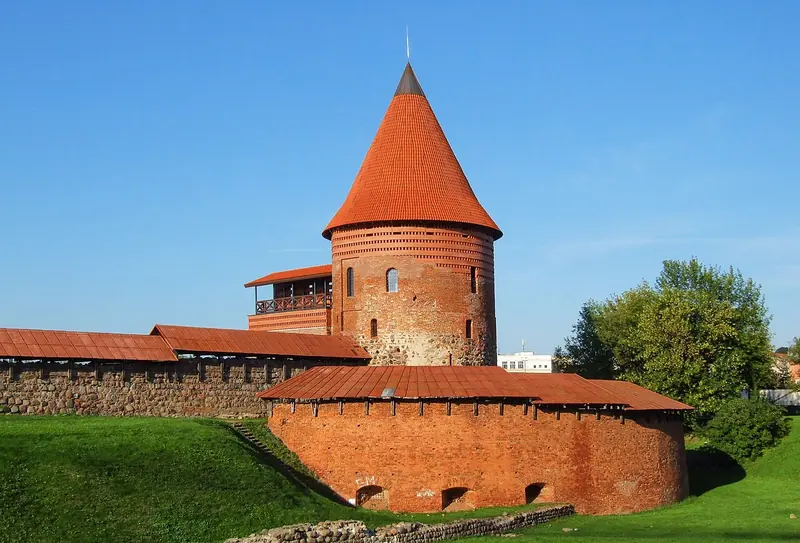
The first stone castle was built here in the second half of the 14th century as one of the strongholds protecting Vilnius and Trakai from the Teutonic Knights. In 1362 the Teutonic Knights captured it after a three-week siege using catapults and siege towers. The castle stands where the Neris flows into the Nemunas, and the surviving part houses a museum.

Town Hall, or the White SwanPhoto Miesto muziejus, CC BY-SA 4.0, Wikimedia Commons2
Attraction

Town Hall, or the White Swan

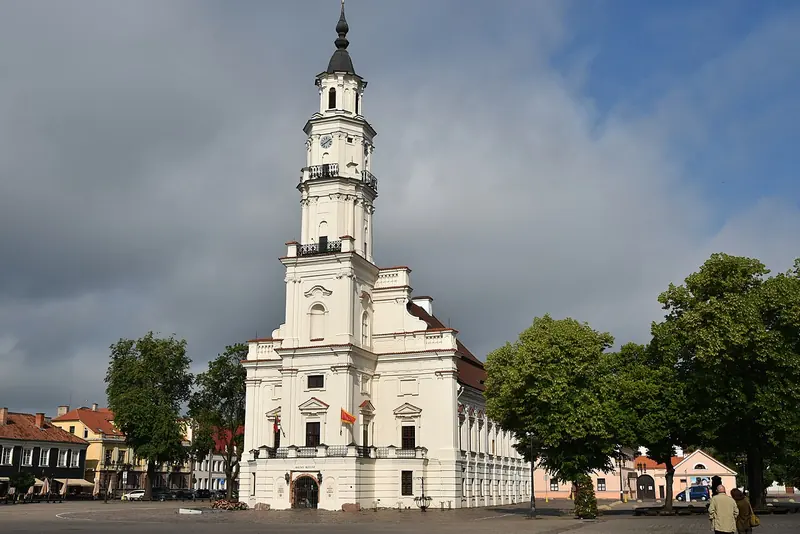
The people of Kaunas call their town hall the White Swan. It was built in 1542 as a low house without a tower, and today, with its tower, it is 53 metres tall. Over the years it has housed an Orthodox church, the tsar's residence, a theatre and the city authorities. Today it is home to a ceramics museum.

Cathedral of Saints Peter and PaulPhoto Zairon, CC BY-SA 4.0, Wikimedia Commons3
Attraction

Cathedral of Saints Peter and Paul

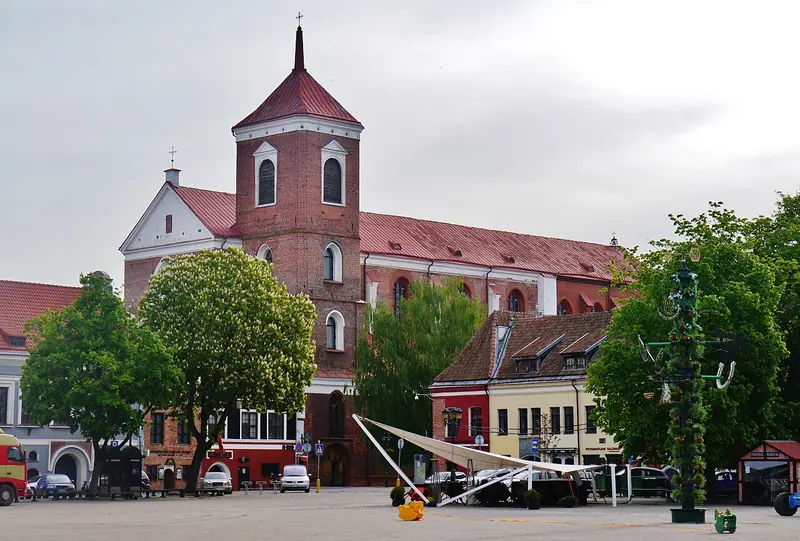
This is the largest Catholic church in Lithuania and the only Gothic church in the country built as a basilica. Construction began in 1413, and the church is 84 metres long. The high altar from 1755 depicts the Crucifixion surrounded by the twelve apostles. By the outer wall is the grave of the poet Maironis.

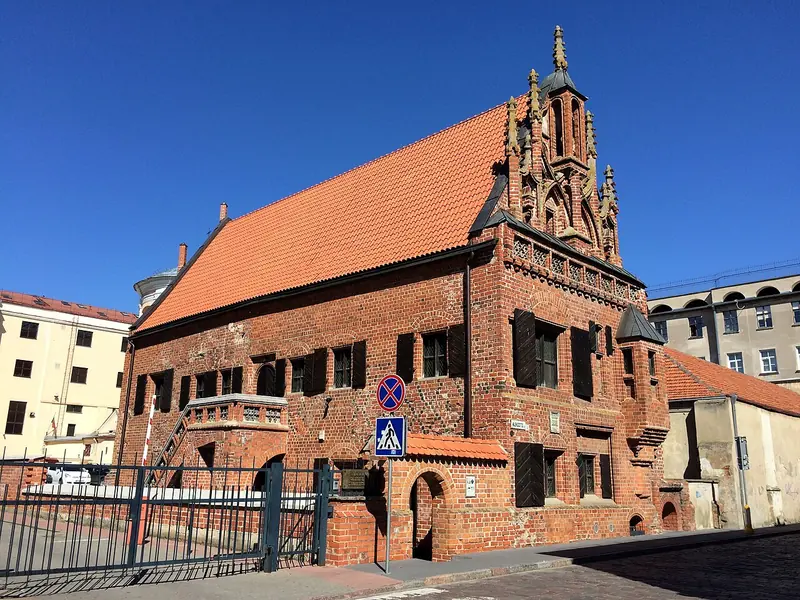
Perkūnas HousePhoto Aidas U., CC BY 3.0, Wikimedia Commons4
Attraction

Perkūnas House

This Gothic town house from the early 16th century was most likely the seat of Hanseatic merchants from Gdańsk. In the 19th century it housed a theatre, which Adam Mickiewicz used to attend.

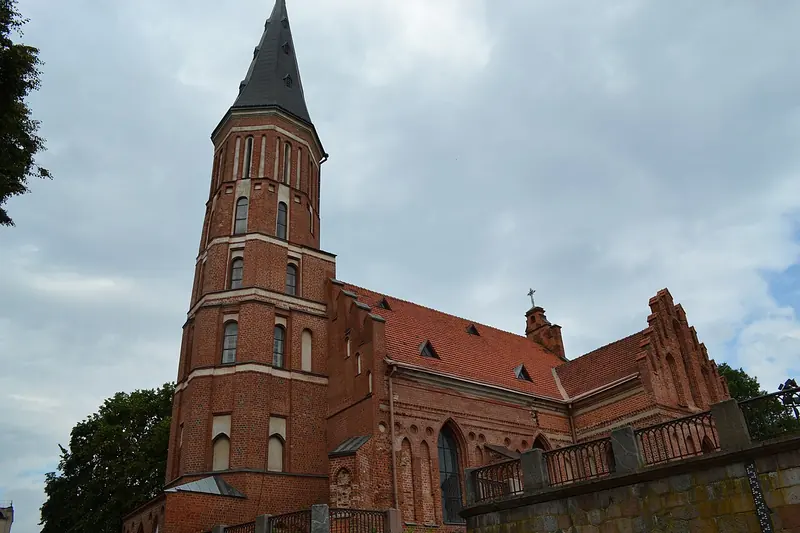
Church of Vytautas the GreatPhoto Katy AM, CC BY-SA 3.0, Wikimedia Commons5
Attraction

Church of Vytautas the Great

The oldest church in Kaunas stands right on the Nemunas. According to tradition, Grand Duke Vytautas founded it around 1400 as a votive offering for his life being spared after the defeat on the Vorskla. It is the only Gothic church in Lithuania with a cross-shaped plan.

All points (8)

Grouped as in the map legend. A star marks recommended points.

Attraction 7
Castle ★The first stone castle was built here in the second half of the 14th century as one of the strongholds protecting Vilnius and Trakai from the Teutonic Knights. In 1362 the Teutonic Knights captured it after a three-week siege using catapults and siege towers. The castle stands where the Neris flows into the Nemunas, and the surviving part houses a museum.
Town Hall, or the White Swan ★The people of Kaunas call their town hall the White Swan. It was built in 1542 as a low house without a tower, and today, with its tower, it is 53 metres tall. Over the years it has housed an Orthodox church, the tsar's residence, a theatre and the city authorities. Today it is home to a ceramics museum.
Cathedral of Saints Peter and Paul ★This is the largest Catholic church in Lithuania and the only Gothic church in the country built as a basilica. Construction began in 1413, and the church is 84 metres long. The high altar from 1755 depicts the Crucifixion surrounded by the twelve apostles. By the outer wall is the grave of the poet Maironis.
Perkūnas House ★This Gothic town house from the early 16th century was most likely the seat of Hanseatic merchants from Gdańsk. In the 19th century it housed a theatre, which Adam Mickiewicz used to attend.
Church of Vytautas the Great ★The oldest church in Kaunas stands right on the Nemunas. According to tradition, Grand Duke Vytautas founded it around 1400 as a votive offering for his life being spared after the defeat on the Vorskla. It is the only Gothic church in Lithuania with a cross-shaped plan.
Saint George's ChurchThe Bernardine church and monastery were built at the turn of the 15th and 16th centuries, and the church is one of the oldest surviving churches in Kaunas. It was probably designed by Michael Enkinger from Gdańsk. After a fire in 1624 and damage in 1655, it was given Baroque altars and a pulpit.
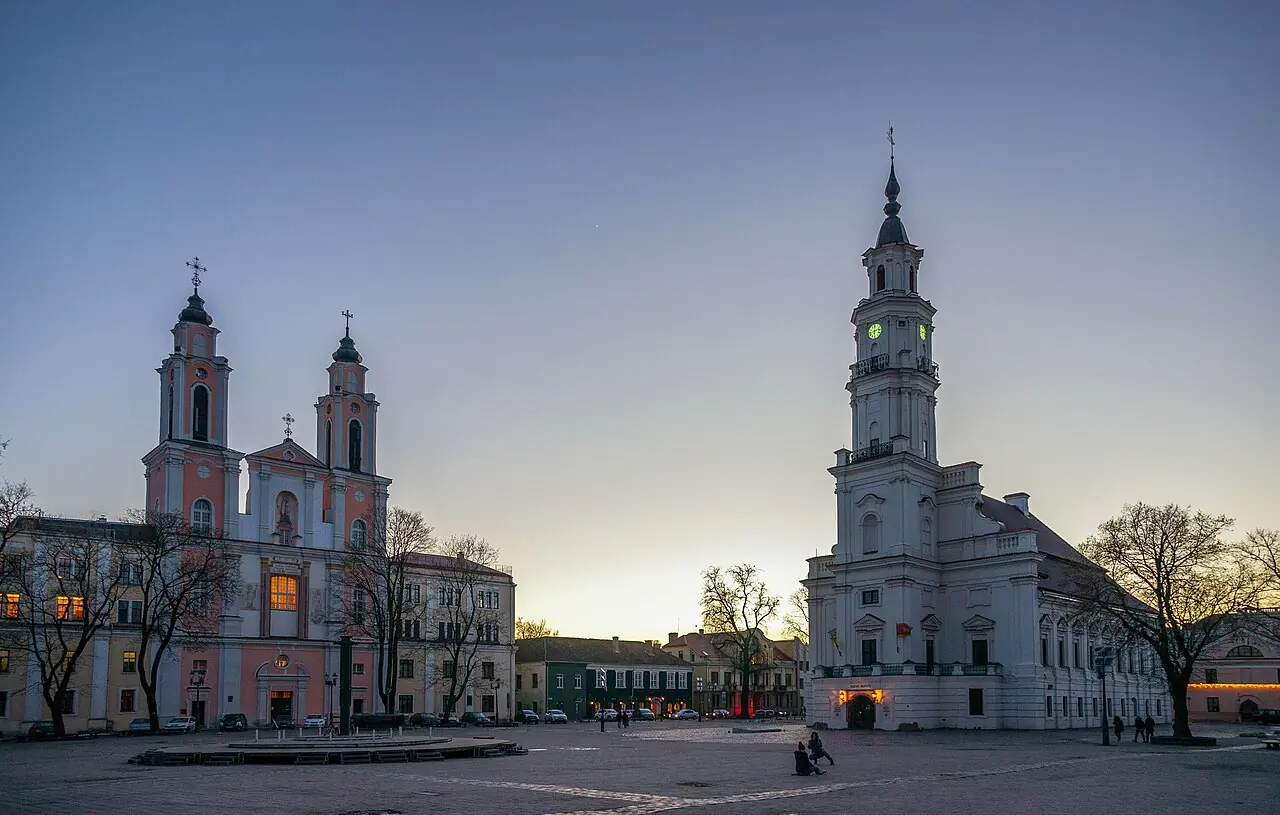
Church of Saint Francis XavierThis Jesuit church with two towers closes off the south side of Town Hall Square. It was built from 1666 to 1720, and the towers were completed in 1725. In the 19th century the tsarist authorities turned it into an Orthodox church, and the Jesuits only returned to it in 1924.
Toilets / tickets / parking 1
Public toilet
KaunasGet Turi