Photo Krzysztof Popławski, CC BY 4.0, Wikimedia Commons
Old townŁódź, Łódź region, Poland

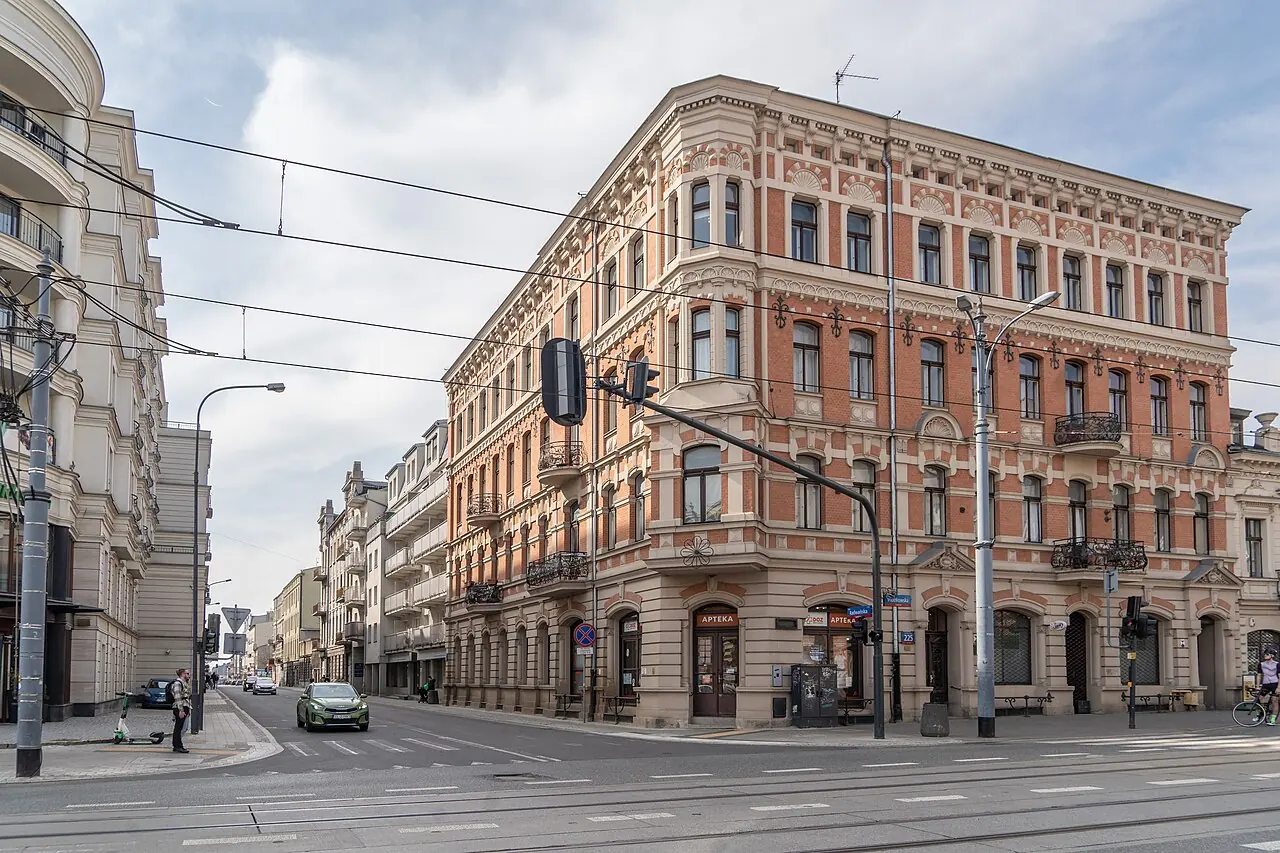
Piotrkowska Street in Łódź: what to see, map and route

Łódź: Manufaktura and Piotrkowska Street. In the Turi app, the same map shows your position, guides you from point to point and lets you tick off the places you’ve visited.

18points to see
11on the recommended route
approx. 3 h 25 minvisiting

Before you go

approx. 3 h 25 minat an easy pace, with breaks
3toilets on the map
free entrymuseums and towers have separate tickets
The walk starts at Manufaktura. The recommended route ends at the Piotrkowska Centrum stop, where trams leave in every direction. The full route continues for more than a kilometre, to the cathedral and the White Factory: this stretch of Piotrkowska is an ordinary street with cars, so keep to the pavement. If you are already on Piotrkowska, Turi will guide you from the nearest point. The route is flat and easy for pushchairs all the way. Piotrkowska is a pedestrian street, but bikes and rickshaws use it, so keep an eye on little ones. Walking is free. Tickets are needed for the Museum of the City of Łódź in the Poznański Palace, the Factory Museum and the Dętka sewer, which is open in season, among others. More fairytale figures are scattered around Łódź; that is a separate trail called Fairytale Łódź. Toilets can be found in Manufaktura, among other places.
  • At home, open the place in Turi and tap “Save for offline”: the map, descriptions and photos will work without signal.
  • Visit the farthest points first, while you still have energy.
  • Tick things off as you go, and by the exit you’ll know what’s left.

Piotrkowska Street in Łódź in the Turi app

Live position, a route from point to point, descriptions to read and listen to. Free, no account, in 12 languages.

Get it for Android

Map of the place

The same map as in the app. Tap a point to see its photo and description; in Turi you’ll see yourselves on it too.

Map: Piotrkowska Street in Łódź
1recommended, in route orderother pointsWCtoilets, food, tickets

Map: OpenStreetMap (ODbL). Descriptions and photos: Turi and Wikimedia Commons. Something not right? Report it in the app at that point.

Worth seeing

Łódź grew out of cotton: in the 19th century a small town turned into a city of factories and palaces within a few decades. The walk starts at Manufaktura, the former factory of Izrael Poznański, and leads to Wolności Square, where Piotrkowska begins, one of the longest shopping streets in Europe. Along the way you will join the industrialists at their table, play with Rubinstein, look for Teddy Floppy-Ear and rub Tuwim's nose. The recommended route ends at the steel unicorn, while the full route continues south to the cathedral and Geyer's White Factory.

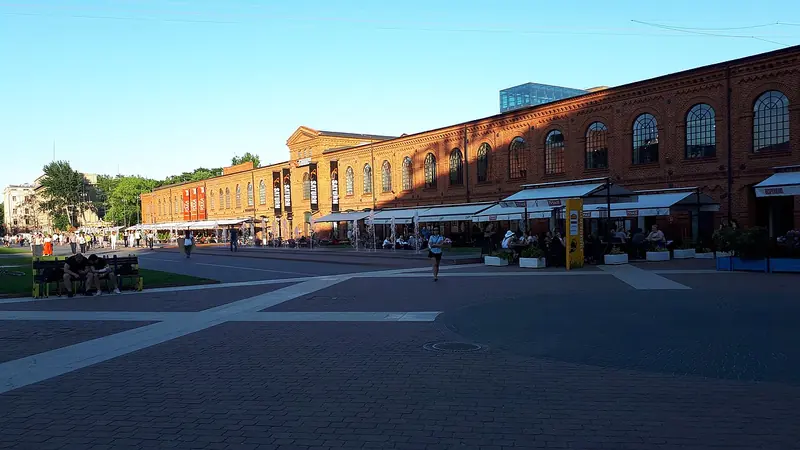
ManufakturaPhoto Rakoon, CC0, Wikimedia Commons1
Attraction

Manufaktura

The brick buildings around the big square are the former cotton factory of Izrael Poznański, one of the richest industrialists in Łódź. Thousands of people worked here, and the machines stopped only in 1997. After renovation, a shopping, culture and entertainment centre opened here in 2006. Look up: the red-brick walls with turrets look like a castle. The Factory Museum tells the story of work at the looms.

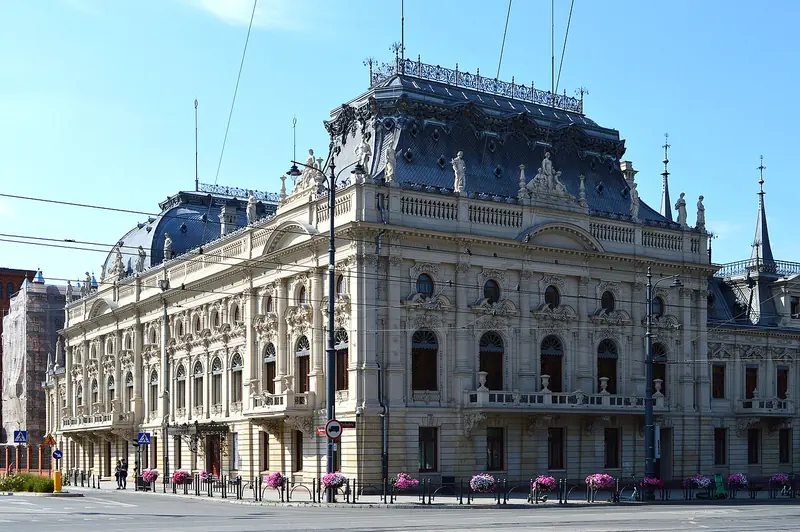
Poznański PalacePhoto Scotch Mist, CC BY-SA 4.0, Wikimedia Commons2
Building / monument

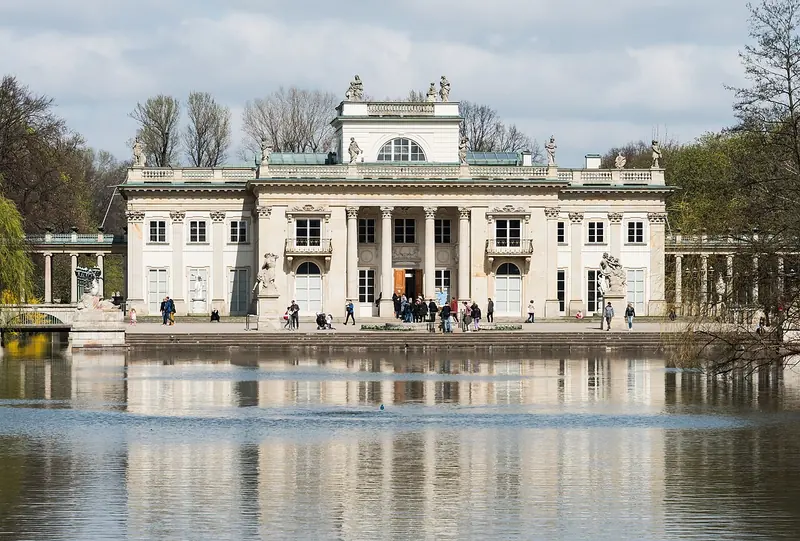
Poznański Palace

The largest industrialist's palace in Poland, known as the Louvre of Łódź. Izrael Poznański built it right next to his factory so he could keep an eye on the work. The story goes that when the architect asked him which style he wanted, he answered: all of them, I can afford it. The palace was one of the first in Łódź to have electricity. Today it houses the Museum of the City of Łódź, and there is a garden at the back.

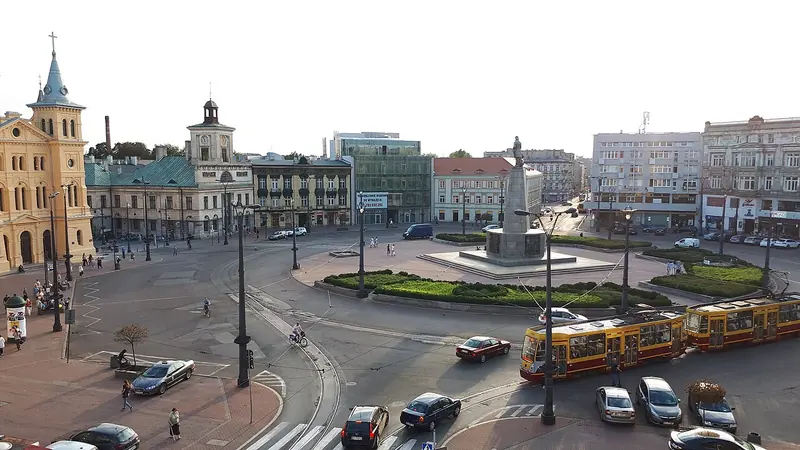
Wolności SquarePhoto Rakoon, CC0, Wikimedia Commons3
Attraction

Wolności Square

This is where Piotrkowska Street begins. The square was laid out in 1823 as the market of a new clothmakers' settlement and given the rare shape of an octagon. In the middle stands the monument to Tadeusz Kościuszko. On the square you will see the old town hall and a church, which have guarded the mouth of the street like two gates for two hundred years. From here Piotrkowska runs south as straight as a ruler.

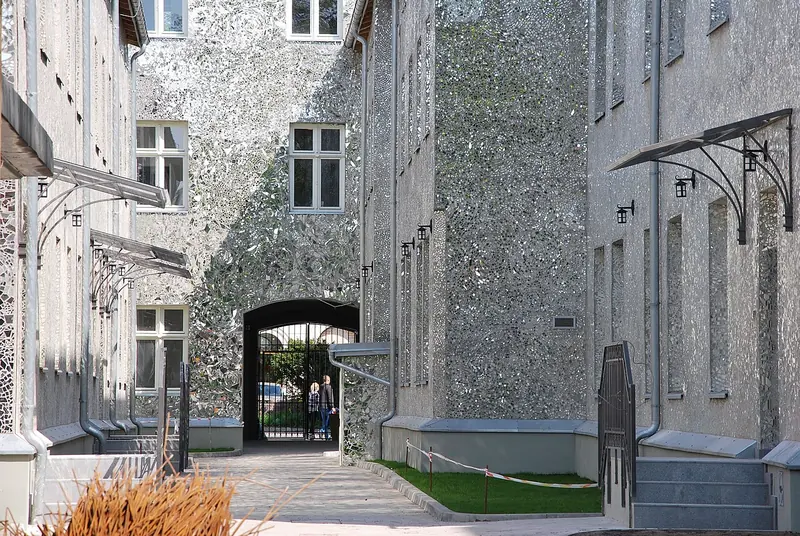
Rose PassagePhoto Zorro2212, CC BY-SA 4.0, Wikimedia Commons4
Attraction

Rose Passage

Step through the gateway at 3 Piotrkowska Street. The walls of the whole courtyard are covered with thousands of pieces of mirror arranged in shapes that resemble roses. The artist Joanna Rajkowska designed them in 2014, and the name comes from her daughter's name. On a sunny day the courtyard sparkles and reflects the sky, and every step changes what you see in the mirrors. Look for your own reflection.

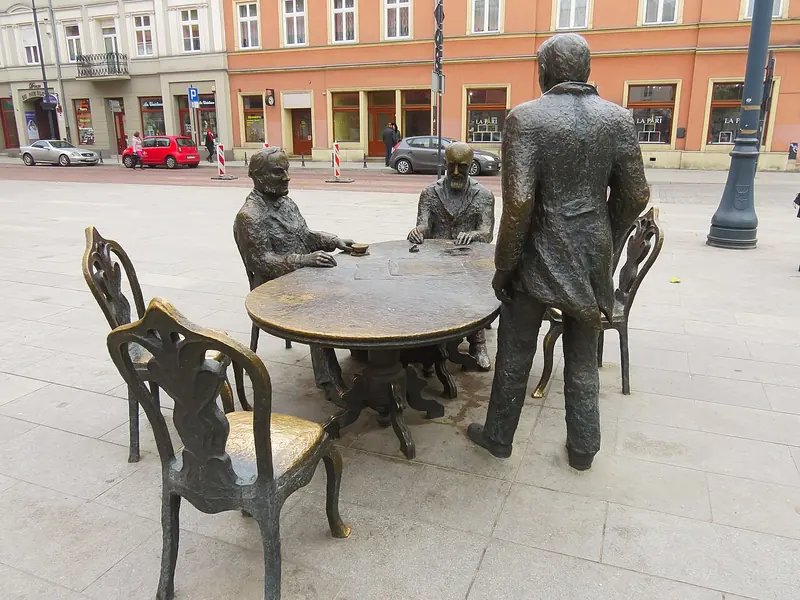
The Three Industrialists' TablePhoto Аимаина хикари, CC0, Wikimedia Commons5
Attraction

The Three Industrialists' Table

At a bronze table the three kings of cotton have met: Izrael Poznański and Karol Scheibler are seated, while Henryk Grohman stands beside them. Their factories turned Łódź into one of the largest textile cities in Europe. The monument has stood here since 2002 and belongs to the Gallery of Great Citizens of Łódź, sculptures you can sit down next to. Stand at the table beside Grohman and join the factory owners.

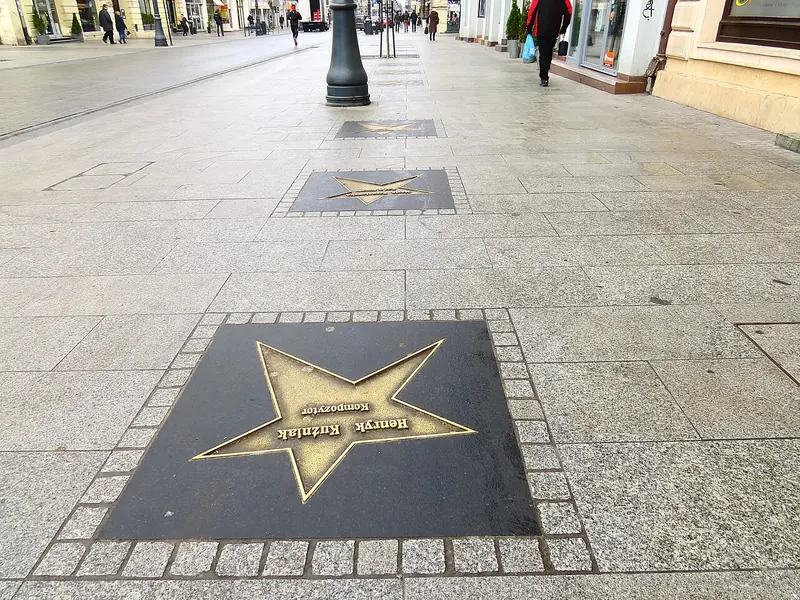
Walk of FamePhoto Аимаина хикари, CC0, Wikimedia Commons6
Attraction

Walk of Fame

Look down: brass stars with the names of people from Polish cinema are set into the pavement. Łódź is a city of film, home to a famous film school. The actor Jan Machulski came up with the idea in 1996, modelled on the one in Hollywood, and the first star was laid two years later. Directors and cinematographers are on one side of the street, actors on the other. Look for names you know.

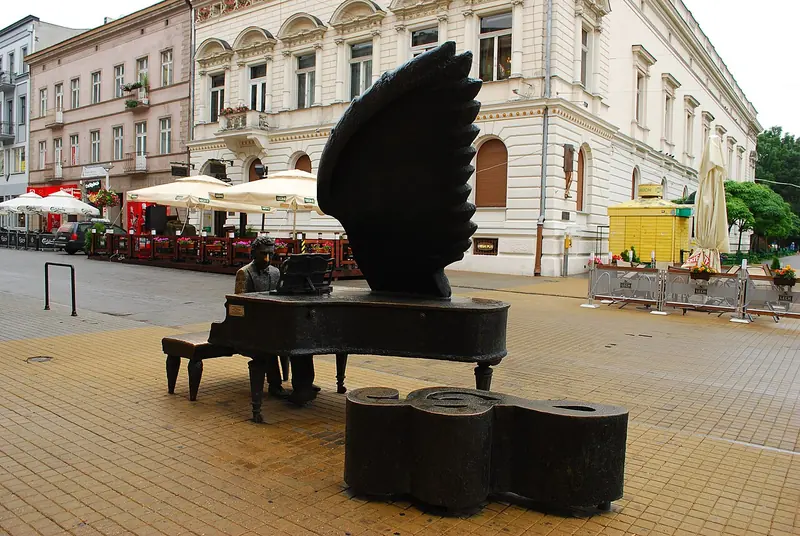
Rubinstein's PianoPhoto Andrei Stroe, CC BY-SA 3.0 pl, Wikimedia Commons7
Attraction

Rubinstein's Piano

At a bronze piano sits Artur Rubinstein, one of the greatest pianists of the 20th century. He was born in Łódź and lived in the house at 78 Piotrkowska Street, in front of which the monument stands. The raised lid of the instrument looks like a spread wing. The monument was unveiled in 2000. Stand beside him and pretend you are playing a duet.

Teddy Floppy-EarPhoto Kasarian, Public domain, Wikimedia Commons8
Attraction

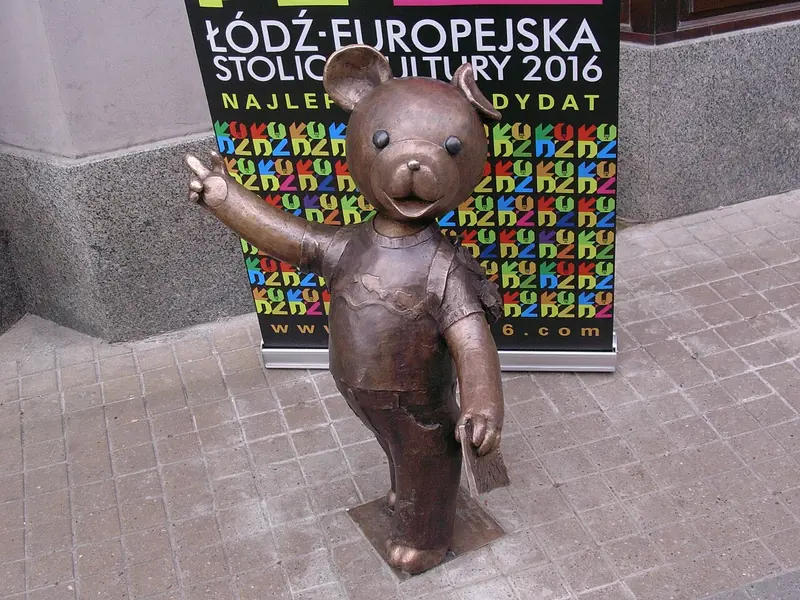
Teddy Floppy-Ear

The little bear with one floppy ear is the hero of a bedtime cartoon made in the Se-ma-for studio in Łódź. His figure starts the family trail called Fairytale Łódź: bronze characters from children's films stand around the city, including Filemon the cat, Pik-Pok the penguin and Plastuś. The bear is waving hello, so wave back. How many fairytale figures can you find in Łódź?

Tuwim's BenchPhoto Fallaner, CC BY-SA 4.0, Wikimedia Commons9
Attraction

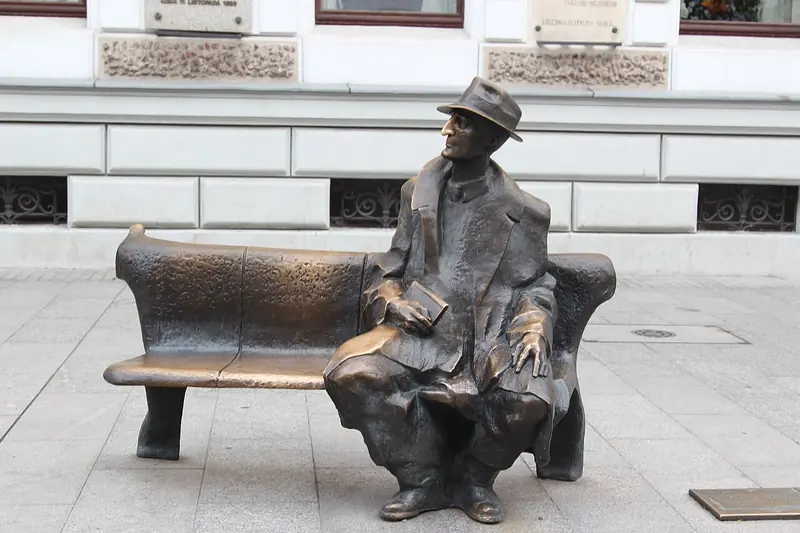
Tuwim's Bench

On a bench in front of the Heinzl Palace, where the city's mayor has his office, sits Julian Tuwim. The poet was born in Łódź and wrote children's classics such as The Locomotive. He looks as if he were listening to someone sitting next to him, and the seat is free. Tuwim's nose shines because, according to a city legend, rubbing it brings good luck. The sculpture has been here since 1999.

OFF PiotrkowskaPhoto Zorro2212, CC BY-SA 4.0, Wikimedia Commons10
Attraction

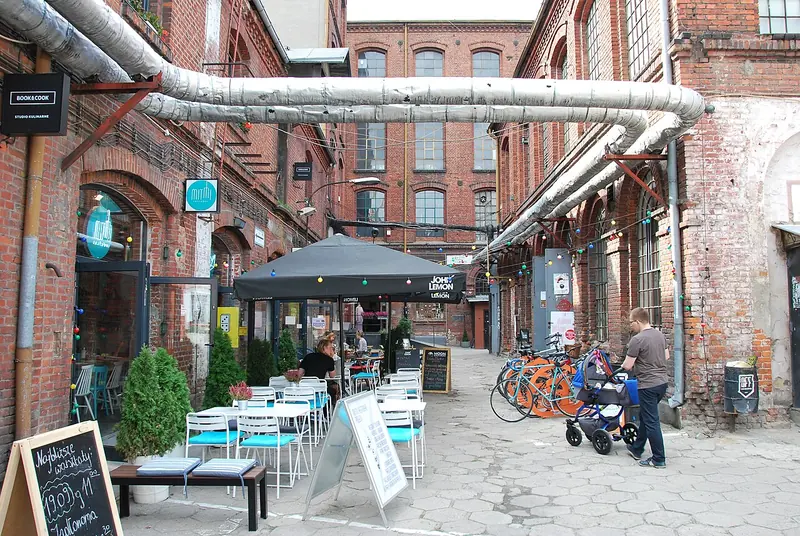
OFF Piotrkowska

Behind the gate at number 138/140 hides the former cotton spinning and weaving mill of Franciszek Ramisch. Instead of machines, the brick halls now hold designers' studios, shops, clubs and restaurants. In 2014 readers of National Geographic Traveler magazine chose it as one of the seven new wonders of Poland. It is a good stop for food and a rest.

The UnicornPhoto Zorro2212, CC BY-SA 4.0, Wikimedia Commons11
Attraction

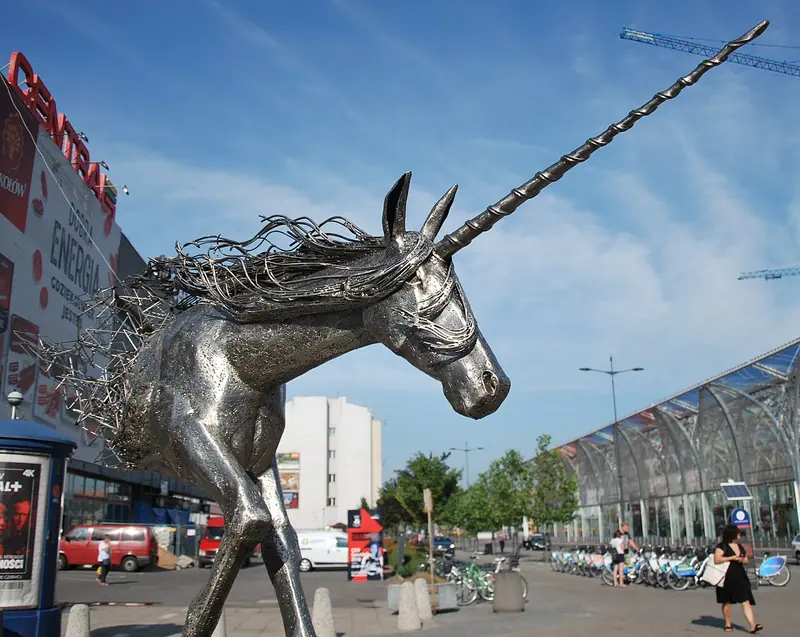
The Unicorn

By the big tram stop a steel unicorn awaits, looking as if it were dissolving into fine lines as it runs. The sculpture is four metres long. The people of Łódź nicknamed the stop's colourful roof the unicorn stable from the very start, so in the end it got a real resident. The recommended route ends here, and trams leave for every part of the city. The full route continues for more than a kilometre along Piotrkowska, to the cathedral and the White Factory.

All points (23)

Grouped as in the map legend. A star marks recommended points.

Attraction 14
Manufaktura ★The brick buildings around the big square are the former cotton factory of Izrael Poznański, one of the richest industrialists in Łódź. Thousands of people worked here, and the machines stopped only in 1997. After renovation, a shopping, culture and entertainment centre opened here in 2006. Look up: the red-brick walls with turrets look like a castle. The Factory Museum tells the story of work at the looms.
Wolności Square ★This is where Piotrkowska Street begins. The square was laid out in 1823 as the market of a new clothmakers' settlement and given the rare shape of an octagon. In the middle stands the monument to Tadeusz Kościuszko. On the square you will see the old town hall and a church, which have guarded the mouth of the street like two gates for two hundred years. From here Piotrkowska runs south as straight as a ruler.
Rose Passage ★Step through the gateway at 3 Piotrkowska Street. The walls of the whole courtyard are covered with thousands of pieces of mirror arranged in shapes that resemble roses. The artist Joanna Rajkowska designed them in 2014, and the name comes from her daughter's name. On a sunny day the courtyard sparkles and reflects the sky, and every step changes what you see in the mirrors. Look for your own reflection.
The Three Industrialists' Table ★At a bronze table the three kings of cotton have met: Izrael Poznański and Karol Scheibler are seated, while Henryk Grohman stands beside them. Their factories turned Łódź into one of the largest textile cities in Europe. The monument has stood here since 2002 and belongs to the Gallery of Great Citizens of Łódź, sculptures you can sit down next to. Stand at the table beside Grohman and join the factory owners.
Walk of Fame ★Look down: brass stars with the names of people from Polish cinema are set into the pavement. Łódź is a city of film, home to a famous film school. The actor Jan Machulski came up with the idea in 1996, modelled on the one in Hollywood, and the first star was laid two years later. Directors and cinematographers are on one side of the street, actors on the other. Look for names you know.
Rubinstein's Piano ★At a bronze piano sits Artur Rubinstein, one of the greatest pianists of the 20th century. He was born in Łódź and lived in the house at 78 Piotrkowska Street, in front of which the monument stands. The raised lid of the instrument looks like a spread wing. The monument was unveiled in 2000. Stand beside him and pretend you are playing a duet.
Teddy Floppy-Ear ★The little bear with one floppy ear is the hero of a bedtime cartoon made in the Se-ma-for studio in Łódź. His figure starts the family trail called Fairytale Łódź: bronze characters from children's films stand around the city, including Filemon the cat, Pik-Pok the penguin and Plastuś. The bear is waving hello, so wave back. How many fairytale figures can you find in Łódź?
Tuwim's Bench ★On a bench in front of the Heinzl Palace, where the city's mayor has his office, sits Julian Tuwim. The poet was born in Łódź and wrote children's classics such as The Locomotive. He looks as if he were listening to someone sitting next to him, and the seat is free. Tuwim's nose shines because, according to a city legend, rubbing it brings good luck. The sculpture has been here since 1999.
OFF Piotrkowska ★Behind the gate at number 138/140 hides the former cotton spinning and weaving mill of Franciszek Ramisch. Instead of machines, the brick halls now hold designers' studios, shops, clubs and restaurants. In 2014 readers of National Geographic Traveler magazine chose it as one of the seven new wonders of Poland. It is a good stop for food and a rest.
The Unicorn ★By the big tram stop a steel unicorn awaits, looking as if it were dissolving into fine lines as it runs. The sculpture is four metres long. The people of Łódź nicknamed the stop's colourful roof the unicorn stable from the very start, so in the end it got a real resident. The recommended route ends here, and trams leave for every part of the city. The full route continues for more than a kilometre along Piotrkowska, to the cathedral and the White Factory.
The Dętka sewerUnder Wolności Square hides a brick tunnel shaped like a bicycle inner tube. It is a tank from 1926 that stored water for flushing the city's sewers. It is 142 metres long and just under two metres high, so adults walk through slightly stooped. Today it is a branch of the Museum of the City of Łódź, open in season. The entrance is through a modest round pavilion on the square.
The LamplighterOn a ladder leaning against a street lamp stands an electrician with a light bulb in his hand. The monument was unveiled in 2007 for the centenary of the first power plant in Łódź. The lamplighter has no name: he stands for everyone who looked after the street lights. The tool bag lying beside him is a bench you can sit on.
Reymont's TrunkOn a travelling trunk sits Władysław Reymont with a notebook in his hand. The writer described the Łódź of factories and fortunes in his novel The Promised Land, and in 1924 he received the Nobel Prize. The bronze monument weighs 300 kilograms and has stood in front of the Kindermann Palace since 2001. Sit beside him on the trunk and peek at the writer's notes.
Jaracz's SeatIn a row of theatre seats sits Stefan Jaracz, a great actor and founder of the Ateneum theatre in Warsaw, after whom one of the theatres in Łódź is named. He holds a script and looks ahead as if he were watching a rehearsal. The seats beside him are free, so you can join him and watch the show, which is the street itself. The monument has been here since 2006.
Building / monument 4
Poznański Palace ★The largest industrialist's palace in Poland, known as the Louvre of Łódź. Izrael Poznański built it right next to his factory so he could keep an eye on the work. The story goes that when the architect asked him which style he wanted, he answered: all of them, I can afford it. The palace was one of the first in Łódź to have electricity. Today it houses the Museum of the City of Łódź, and there is a garden at the back.
Cathedral of St Stanislaus KostkaThe tallest building in Łódź is not a skyscraper but a church: the cathedral tower rises more than 104 metres. It was built between 1901 and 1912 of pale yellow brick that was never plastered, modelled on the famous minster in Ulm, Germany. It has been a cathedral since 1920. The Zygmunt bell, cast in 1911, was taken away by the Germans in 1943. Since 2011 the cathedral has had its successor, the Heart of Łódź. During the war the occupiers looted the church and grew mushrooms in its crypt. In May 1971 a fire destroyed the roof.
St Matthew's ChurchThis church was built by the Lutherans of Łódź, who were very numerous in the factory city. Construction took a long time, from 1909 to 1928. The design by the local architect Johannes Wende was revised by Franz Schwechten, a well-known architect from Berlin. Inside hangs a huge chandelier with more than two hundred little lights, and the clocks on the tower show the time in three directions. Concerts with free admission are held here.
Geyer's White FactoryThis is one of the first great factories of Łódź. Ludwik Geyer began building it in 1835 and had it plastered white, which is why it still stands out from the later red-brick mills. At the end of 1838 the first steam engine in Łódź started working here, and the first factory chimney rose over the town. Two years later about 600 people worked here. Today the White Factory houses the Central Museum of Textiles, and right next to it stand wooden houses from old Łódź. The full route ends here.
Toilets / tickets / parking 5
Wolności Square, the start of PiotrkowskaWolności Square is the easiest place to start the walk: trams and buses stop here, and Piotrkowska begins right beside it. Manufaktura and the Poznański Palace are about ten minutes' walk in the other direction, along Ogrodowa Street.
Public toilet
Public toilet
Public toilet
Entrance to ManufakturaManufaktura is a handy place to start: it has a large car park, tram and bus stops and toilets. From here it is about a ten-minute walk to Wolności Square and Piotrkowska Street.
Piotrkowska Street in ŁódźGet Turi