Photo Scotch Mist, CC BY-SA 4.0, Wikimedia Commons
Old townTelč, Vysočina Region, Czechia
Telč Square and Castle: what to see, map and route
Telč Square and Castle. In the Turi app, the same map shows your position, guides you from point to point and lets you tick off the places you’ve visited.
free entrymuseums and towers have separate tickets
The walk starts at the tourist information centre in the town hall on the square. The recommended route ends at the castle, a few minutes' walk from the start, while the full route also goes down to Štěpnický Pond and into the castle park. If you are already in the centre, Turi will guide you from the nearest point. Walking around the town is free; tickets are needed for the castle, which is visited on a guided tour, and for the tower of Saint James's Church. There are toilets on the square, at the castle and by the castle park.
At home, open the place in Turi and tap “Save for offline”: the map, descriptions and photos will work without signal.
Visit the farthest points first, while you still have energy.
Tick things off as you go, and by the exit you’ll know what’s left.
Telč: square and castle in the Turi app
Live position, a route from point to point, descriptions to read and listen to. Free, no account, in 12 languages.
The same map as in the app. Tap a point to see its photo and description; in Turi you’ll see yourselves on it too.
1recommended, in route orderother pointsWCtoilets, food, tickets
Map: OpenStreetMap (ODbL). Descriptions and photos: Turi and Wikimedia Commons. Something not right? Report it in the app at that point.
Worth seeing
Telč is a small town in Moravia with one of the most beautiful squares in Europe: the long square is lined with Renaissance and Baroque houses with tall gables and arcades, and the whole historic centre has been on the UNESCO list since 1992. The walk leads from the town hall along the houses to the Marian Column and the Romanesque tower of the Holy Spirit, down to Štěpnický Pond, and then across the square to the Jesuit church, Saint James's Church and the Renaissance castle of Zachariáš z Hradce with its garden and park by Ulický Pond.
Photo GFreihalter, CC BY-SA 3.0, Wikimedia Commons1
Building / monument
Town Hall
The town hall was first mentioned in 1443. In 1499 it was destroyed by an explosion, and in 1530 by a fire. The building has had its present Renaissance appearance since 1574. It was designed by the Italian builder Baldassare Maggi, who also worked on rebuilding the castle for Zachariáš z Hradce. Notice the battlemented attic and the arcades on the ground floor, just like those of the neighbouring houses.
Photo Harold, CC BY-SA 3.0, Wikimedia Commons2
Attraction
Zachariáš z Hradce Square
The long square lined with tall-gabled, arcaded houses is the heart of Telč and the reason why the historic centre has been on the UNESCO list since 1992. In the 16th century the lord of Telč, Zachariáš z Hradce, had the Gothic houses rebuilt in Renaissance style, with arcades and decorated façades. Later some of the gables were given Baroque shapes, so every house is a little different. Walk under the arcades on both sides and compare the colours and decorations of the façades.
Photo GFreihalter, CC BY-SA 3.0, Wikimedia Commons3
Attraction
Marian Column
The Baroque plague column with a statue of Mary at the top was erected in 1716-1720. The money, a thousand florins, was left in the will of a townswoman, Zuzana Hodová, and the column was made by the sculptor David Lipart from nearby Brtnice. On the pedestal stand the saints John of Nepomuk, James, Francis Xavier, Roch, Sebastian, the guardian angel, Rosalia and Mary Magdalene. Next to the column is one of the two fountains on the square.
Photo Brichad1, CC BY-SA 4.0, Wikimedia Commons4
Building / monument
Tower and Church of the Holy Spirit
The massive Romanesque tower, 49 metres high, is the oldest surviving building in Telč. It was probably built in the second quarter of the 13th century next to the church of the former ducal court. In the second half of the 15th century the church itself was replaced by a Gothic one, which still stands today. Today it belongs to Protestants, the Evangelical Church of Czech Brethren.
Photo Bjalek Michal, CC BY-SA 3.0, Wikimedia Commons5
Building / monument
Church of the Name of Jesus
This early Baroque church with two towers belonged to the Jesuit college, which takes up a large part of the western end of the square. At first the Jesuits prayed in nearby Saint James's Church, and they built their own church in 1663-1667. The work was led by the Italian Stefano Perti. The twin towers are now one of the symbols of the square.
Photo Eliška Jindříšková, CC BY-SA 4.0, Wikimedia Commons6
Building / monument
Saint James's Church
The Gothic parish church was mentioned as early as the 14th century, and it gained its present two-aisled form in the middle of the 15th century, together with its tower, 50 metres high. You can visit the tower: from its gallery you can see the whole square and the ponds. In 1737 the church was connected to the castle by a covered corridor, so that the lords could go to services without stepping out into the street.
Photo Harold, CC BY-SA 3.0, Wikimedia Commons7
Building / monument
Telč Castle
In the 14th century a Gothic water castle stood here. In the 16th century Zachariáš z Hradce rebuilt it into a magnificent Renaissance residence, financed among other things by silver from the mines. In 1561 the North Palace with the Golden Hall, the most beautiful interior of the castle, was completed. By 1580 Baldassare Maggi had given the whole its final shape, linking the palaces with arcaded galleries. The interiors are visited on a guided tour, with several routes to choose from.
All points (13)
Grouped as in the map legend. A star marks recommended points.
Building / monument 5
Town Hall ★The town hall was first mentioned in 1443. In 1499 it was destroyed by an explosion, and in 1530 by a fire. The building has had its present Renaissance appearance since 1574. It was designed by the Italian builder Baldassare Maggi, who also worked on rebuilding the castle for Zachariáš z Hradce. Notice the battlemented attic and the arcades on the ground floor, just like those of the neighbouring houses.
Tower and Church of the Holy Spirit ★The massive Romanesque tower, 49 metres high, is the oldest surviving building in Telč. It was probably built in the second quarter of the 13th century next to the church of the former ducal court. In the second half of the 15th century the church itself was replaced by a Gothic one, which still stands today. Today it belongs to Protestants, the Evangelical Church of Czech Brethren.
Church of the Name of Jesus ★This early Baroque church with two towers belonged to the Jesuit college, which takes up a large part of the western end of the square. At first the Jesuits prayed in nearby Saint James's Church, and they built their own church in 1663-1667. The work was led by the Italian Stefano Perti. The twin towers are now one of the symbols of the square.
Saint James's Church ★The Gothic parish church was mentioned as early as the 14th century, and it gained its present two-aisled form in the middle of the 15th century, together with its tower, 50 metres high. You can visit the tower: from its gallery you can see the whole square and the ponds. In 1737 the church was connected to the castle by a covered corridor, so that the lords could go to services without stepping out into the street.
Telč Castle ★In the 14th century a Gothic water castle stood here. In the 16th century Zachariáš z Hradce rebuilt it into a magnificent Renaissance residence, financed among other things by silver from the mines. In 1561 the North Palace with the Golden Hall, the most beautiful interior of the castle, was completed. By 1580 Baldassare Maggi had given the whole its final shape, linking the palaces with arcaded galleries. The interiors are visited on a guided tour, with several routes to choose from.
Attraction 4
Zachariáš z Hradce Square ★The long square lined with tall-gabled, arcaded houses is the heart of Telč and the reason why the historic centre has been on the UNESCO list since 1992. In the 16th century the lord of Telč, Zachariáš z Hradce, had the Gothic houses rebuilt in Renaissance style, with arcades and decorated façades. Later some of the gables were given Baroque shapes, so every house is a little different. Walk under the arcades on both sides and compare the colours and decorations of the façades.
Marian Column ★The Baroque plague column with a statue of Mary at the top was erected in 1716-1720. The money, a thousand florins, was left in the will of a townswoman, Zuzana Hodová, and the column was made by the sculptor David Lipart from nearby Brtnice. On the pedestal stand the saints John of Nepomuk, James, Francis Xavier, Roch, Sebastian, the guardian angel, Rosalia and Mary Magdalene. Next to the column is one of the two fountains on the square.
Ponds around the old townMedieval Telč was hemmed in on all sides by three ponds, Ulický, Štěpnický and Staroměstský, and the old town was also enclosed by walls. That is why the centre is so compact. Zachariáš z Hradce developed fish farming here, which brought the town good years. From the dyke by Štěpnický Pond you can see the town's skyline with its towers reflected in the water.
Castle garden and parkThe castle garden was created as early as the 70s of the 16th century and is one of the oldest architectural gardens in the Czech Republic. On two sides it is surrounded by arcades, whose niches once held busts of rulers. Behind the castle, the park stretches along Ulický Pond. In the 19th century an Empire-style greenhouse was built in it, and in 1848 it was looked after by the gardener Benedikt Roezl, who later described new species of orchids from Central America.
Toilets / tickets / parking 4
Tourist information in the town hallThe walk starts at the tourist information centre in the Renaissance town hall on the square. The route leads along the arcaded houses to the Marian Column and the oldest tower in town by the Church of the Holy Spirit, down to Štěpnický Pond, and then across the whole square to the Jesuit church, Saint James's Church and the Renaissance castle with its garden and park.

 Photo Scotch Mist, CC BY-SA 4.0, Wikimedia Commons

 Photo GFreihalter, CC BY-SA 3.0, Wikimedia Commons1
 Photo Harold, CC BY-SA 3.0, Wikimedia Commons
 Photo GFreihalter, CC BY-SA 3.0, Wikimedia Commons
 Photo Brichad1, CC BY-SA 4.0, Wikimedia Commons
 Photo Bjalek Michal, CC BY-SA 3.0, Wikimedia Commons
 Photo Eliška Jindříšková, CC BY-SA 4.0, Wikimedia Commons
 Photo Harold, CC BY-SA 3.0, Wikimedia Commons
 Photo Josef Kreuz (PEPan), CC BY-SA 4.0, Wikimedia Commons
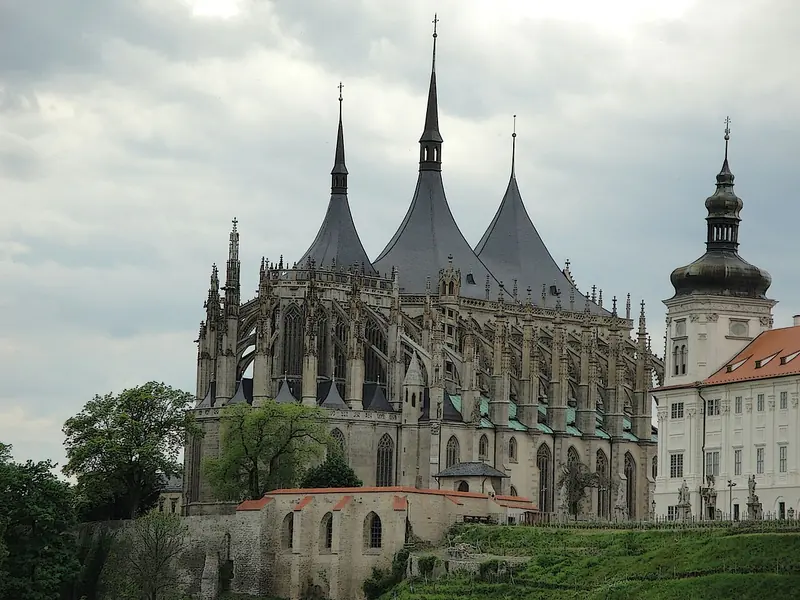 Photo Keete 37, CC BY-SA 3.0, Wikimedia Commons
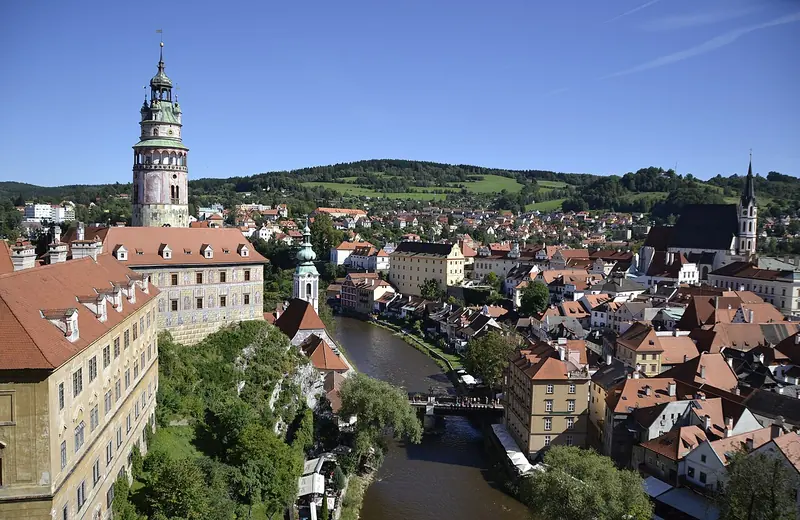 Photo High Contrast, CC BY 3.0 de, Wikimedia Commons