Photo Pudelek (Marcin Szala), CC BY-SA 3.0, Wikimedia Commons
CastleSigulda, Sigulda Municipality, Latvia
Turaida: what to see, map and route
Turaida Castle in Sigulda. In the Turi app, the same map shows your position, guides you from point to point and lets you tick off the places you’ve visited.
The walk starts at the entrance and ticket office on Turaidas Street and ends at the castle, from where you can go further down to Gutmanis Cave. From Riga you can take the train to Sigulda station, and from Sigulda bus station take bus number 12 or a bus towards Krimulda or Inciems to the Turaida stop. Admission to the reserve is charged: an adult ticket costs 9 euros, a family ticket for 2 adults and at least 2 children under 18 costs 19 euros, and children under school age get in free. Parking at the reserve is also charged, paid at the ticket office or in the Mobilly app. From May to September the reserve grounds are open from 9:00 to 20:00, in October from 9:00 to 19:00, and from November to April from 10:00 to 17:00. The indoor exhibitions are open from 10:00 to 18:00, and you can buy tickets for them no later than 30 minutes before closing. The reserve is open every day, with no closing days. The grounds are hilly, stairs lead up the castle tower, and the wooden steps down to the river can be slippery after rain. If you are already in the reserve, Turi will guide you from the nearest point. Allow about two and a half hours, not counting the exhibitions.
At home, open the place in Turi and tap “Save for offline”: the map, descriptions and photos will work without signal.
Visit the farthest points first, while you still have energy.
Tick things off as you go, and by the exit you’ll know what’s left.
Turaida in the Turi app
Live position, a route from point to point, descriptions to read and listen to. Free, no account, in 12 languages.
The same map as in the app. Tap a point to see its photo and description; in Turi you’ll see yourselves on it too.
1recommended, in route orderother pointsWCtoilets, food, tickets
Something not right? Report it in the app at that point.
Worth seeing
Turaida Museum Reserve lies on the high bank of the Gauja river valley, in Gauja National Park, 5 kilometres from the centre of Sigulda. Towering over the whole area is the red castle, whose construction began in 1214 on the site of a wooden Liv hillfort. Next to it stand a wooden church from 1750, the grave of the legendary Rose of Turaida, Folk Song Hill with its stone sculptures and the buildings of the former manor. The reserve was founded in 1988, and in 2022 its historic centre received the European Heritage Label.
Photo Sixsparni, CC BY-SA 4.0, Wikimedia Commons1
Building / monument
Turaida Manor farmstead
Turaida Manor grew out of the castle's farm, and the first records of it come from the Polish surveys of 1582 and 1590. In 1652 it was bought by Gotthard Wilhelm von Budberg for 21 thousand thalers, and later it belonged to the Campenhausen and Stahl von Holstein families. More than 20 farm buildings survive here, some of them over 200 years old. In the wooden steward's house from around 1810 you will see how the manor steward lived, and in the smithy you can watch a blacksmith at work.
Photo Sixsparni, CC BY-SA 4.0, Wikimedia Commons2
Attraction
Song Garden
The Song Garden was created next to Folk Song Hill when there was no longer room there for large gatherings. The turning point was the international folklore festival Baltica in 1988, held in Latvia for the first time. Folklore festivals are still held here every year.
Photo Avi1111 dr. avishai teicher, CC BY-SA 3.0, Wikimedia Commons3
Attraction
Folk Song Hill (Dainu kalns)
Dainu kalns is a sculpture park dedicated to Latvian folk songs, the dainas. The idea came from Anna Jurkāne, the project was led by the sculptor Indulis Ranka, and hundreds of people from all over Latvia helped to build it. Today more than 26 stone sculptures stand on the hill. The park was opened on 7 July 1985 for the 150th anniversary of the birth of Krišjānis Barons, who collected Latvian folk songs. In the years 1986-1991 people gathered here to sing, and the hill became a symbol of the Singing Revolution. Take a closer look at the sculptures: they draw on images and values from Latvian folk songs.
Photo Avi1111dr . avishai teicher, CC BY-SA 3.0, Wikimedia Commons4
Attraction
Father of Song
This stone sculpture is called Dziesmas tēvs, meaning Father of Song. During the Baltica festival in 1988, still in Soviet times, the Latvian flag was raised right next to it. The hill lies on the site of a former settlement of the Livs, a people whose language belongs to the Finno-Ugric family. The Livs lived on the lower reaches of the Gauja river as early as the end of the 12th century.
Photo Kenny McFly, CC BY-SA 3.0, Wikimedia Commons5
Attraction
Grave of the Rose of Turaida
Under a linden tree more than 100 years old stands the memorial to Maija, known as the Rose of Turaida. According to legend, in 1601 the castle clerk found a baby in the arms of her dead mother after a battle and brought the girl up. Maija was to marry Viktor, the gardener at Sigulda Castle, but in 1620 she was lured to Gutmanis Cave by Adam Jakubowski, who wanted to force her into marriage. Maija chose death rather than break her faith: she gave him a scarf that supposedly protected against blows and told him to test it on her. To this day newlyweds bring flowers here, asking for the same faithful love.
Photo Avi1111 dr. avishai teicher, CC BY-SA 3.0, Wikimedia Commons6
Building / monument
Wooden church
Turaida Church was consecrated on 28 January 1750 and is one of the oldest wooden churches in Latvia. It was built by local craftsmen and peasants when Daniel Merkel was the pastor. At the beginning of the 21st century it was restored using traditional methods, including insulation made of birch bark. Around it lies an old churchyard, in use since the 13th century, where the dead were buried until 1772, when Empress Catherine the Great forbade it.
Photo Zairon, CC BY-SA 4.0, Wikimedia Commons7
Attraction
North gate and outer bailey
On the north side the castle was defended by a 15th century outer bailey: a gate between two towers, a moat and a drawbridge. Behind the gate was a narrow passage with stone walls, in which an attacker who had forced the gate was trapped. At the beginning of the 16th century a cannon tower was added here, with the largest diameter in the whole castle. In the 17th century the towers were pulled down, and today you can see their excavated foundations and the partly rebuilt large tower.
Photo PIERRE ANDRE LECLERCQ, CC BY-SA 4.0, Wikimedia Commons8
Attraction
Castle courtyard
Construction of the masonry castle began in 1214 on the orders of Bishop Albert of Riga, on the site of a wooden Liv hillfort. The red brick castle belonged to the Archbishops of Riga and was both a fortress and the economic centre of the area. In 1776 it was destroyed by a great fire, and the defensive buildings were never rebuilt. Since the 50s of the 20th century the castle has been restored, and today it is the medieval castle in the Baltic states most thoroughly studied by archaeologists.
Photo Zairon, CC BY-SA 4.0, Wikimedia Commons9
Building / monument
Main tower
The castle's tallest tower is more than 38 metres high to the top of the roof and has 5 storeys. The old entrance to the tower was as much as 9.5 metres above the ground, at the level of the third storey. The upper part of the tower was rebuilt in the 50s of the 20th century, while the viewing terrace was set up as early as 1936. From the top you will see the Gauja river valley, which is 70-80 metres deep here.
Photo Pudelek (Marcin Szala), CC BY-SA 3.0, Wikimedia Commons10
Building / monument
Semicircular tower
The semicircular tower by the west wall was built in the 15th century. Its cellar once held a prison, and today inside you will see a dungeon and an exhibition about the castle guard and the oldest firearms. The outer walls of the tower were restored in 1970-1974.
Photo Pudelek (Marcin Szala), CC BY-SA 3.0, Wikimedia Commons11
Building / monument
South building
The tower-like south building was erected at the end of the 13th century to guard the entrance to the courtyard from the south. It was rebuilt in 1980-1982, and inside there are exhibitions about its history and about old heating stoves. On the second floor the study of a 16th century Archbishop of Riga has been recreated. From here it is a short way to the edge of the Gauja valley, where the recommended route ends.
All points (15)
Grouped as in the map legend. A star marks recommended points.
Building / monument 6
Turaida Manor farmstead ★Turaida Manor grew out of the castle's farm, and the first records of it come from the Polish surveys of 1582 and 1590. In 1652 it was bought by Gotthard Wilhelm von Budberg for 21 thousand thalers, and later it belonged to the Campenhausen and Stahl von Holstein families. More than 20 farm buildings survive here, some of them over 200 years old. In the wooden steward's house from around 1810 you will see how the manor steward lived, and in the smithy you can watch a blacksmith at work.
Wooden church ★Turaida Church was consecrated on 28 January 1750 and is one of the oldest wooden churches in Latvia. It was built by local craftsmen and peasants when Daniel Merkel was the pastor. At the beginning of the 21st century it was restored using traditional methods, including insulation made of birch bark. Around it lies an old churchyard, in use since the 13th century, where the dead were buried until 1772, when Empress Catherine the Great forbade it.
Main tower ★The castle's tallest tower is more than 38 metres high to the top of the roof and has 5 storeys. The old entrance to the tower was as much as 9.5 metres above the ground, at the level of the third storey. The upper part of the tower was rebuilt in the 50s of the 20th century, while the viewing terrace was set up as early as 1936. From the top you will see the Gauja river valley, which is 70-80 metres deep here.
Semicircular tower ★The semicircular tower by the west wall was built in the 15th century. Its cellar once held a prison, and today inside you will see a dungeon and an exhibition about the castle guard and the oldest firearms. The outer walls of the tower were restored in 1970-1974.
South building ★The tower-like south building was erected at the end of the 13th century to guard the entrance to the courtyard from the south. It was rebuilt in 1980-1982, and inside there are exhibitions about its history and about old heating stoves. On the second floor the study of a 16th century Archbishop of Riga has been recreated. From here it is a short way to the edge of the Gauja valley, where the recommended route ends.
Exhibitions in the castleExhibitions in the castle buildings are open every day. In the cellar of the building by the west wall, built in the 15th century, you will learn the history of the castle's construction, and on the upper floors the times when the castle belonged to the Archbishopric of Riga. After the fire of 1776 a wooden house was built next to the main tower, and it was only pulled down in 1953.
Attraction 6
Song Garden ★The Song Garden was created next to Folk Song Hill when there was no longer room there for large gatherings. The turning point was the international folklore festival Baltica in 1988, held in Latvia for the first time. Folklore festivals are still held here every year.
Folk Song Hill (Dainu kalns) ★Dainu kalns is a sculpture park dedicated to Latvian folk songs, the dainas. The idea came from Anna Jurkāne, the project was led by the sculptor Indulis Ranka, and hundreds of people from all over Latvia helped to build it. Today more than 26 stone sculptures stand on the hill. The park was opened on 7 July 1985 for the 150th anniversary of the birth of Krišjānis Barons, who collected Latvian folk songs. In the years 1986-1991 people gathered here to sing, and the hill became a symbol of the Singing Revolution. Take a closer look at the sculptures: they draw on images and values from Latvian folk songs.
Father of Song ★This stone sculpture is called Dziesmas tēvs, meaning Father of Song. During the Baltica festival in 1988, still in Soviet times, the Latvian flag was raised right next to it. The hill lies on the site of a former settlement of the Livs, a people whose language belongs to the Finno-Ugric family. The Livs lived on the lower reaches of the Gauja river as early as the end of the 12th century.
Grave of the Rose of Turaida ★Under a linden tree more than 100 years old stands the memorial to Maija, known as the Rose of Turaida. According to legend, in 1601 the castle clerk found a baby in the arms of her dead mother after a battle and brought the girl up. Maija was to marry Viktor, the gardener at Sigulda Castle, but in 1620 she was lured to Gutmanis Cave by Adam Jakubowski, who wanted to force her into marriage. Maija chose death rather than break her faith: she gave him a scarf that supposedly protected against blows and told him to test it on her. To this day newlyweds bring flowers here, asking for the same faithful love.
North gate and outer bailey ★On the north side the castle was defended by a 15th century outer bailey: a gate between two towers, a moat and a drawbridge. Behind the gate was a narrow passage with stone walls, in which an attacker who had forced the gate was trapped. At the beginning of the 16th century a cannon tower was added here, with the largest diameter in the whole castle. In the 17th century the towers were pulled down, and today you can see their excavated foundations and the partly rebuilt large tower.
Castle courtyard ★Construction of the masonry castle began in 1214 on the orders of Bishop Albert of Riga, on the site of a wooden Liv hillfort. The red brick castle belonged to the Archbishops of Riga and was both a fortress and the economic centre of the area. In 1776 it was destroyed by a great fire, and the defensive buildings were never rebuilt. Since the 50s of the 20th century the castle has been restored, and today it is the medieval castle in the Baltic states most thoroughly studied by archaeologists.
Toilets / tickets / parking 3
Public toilet
Public toilet
Entrance and ticket officeThe walk starts at the entrance to the reserve on Turaidas Street, where you can buy your ticket. The reserve protects more than 40 hectares: a hillfort, a medieval castle, a church with a churchyard, a former manor, a park, ponds and old roads. The route leads first to the manor, then across Folk Song Hill and past the church all the way to the castle.

 Photo Pudelek (Marcin Szala), CC BY-SA 3.0, Wikimedia Commons

 Photo Sixsparni, CC BY-SA 4.0, Wikimedia Commons1
 Photo Sixsparni, CC BY-SA 4.0, Wikimedia Commons
 Photo Avi1111 dr. avishai teicher, CC BY-SA 3.0, Wikimedia Commons
 Photo Avi1111dr . avishai teicher, CC BY-SA 3.0, Wikimedia Commons
 Photo Kenny McFly, CC BY-SA 3.0, Wikimedia Commons
 Photo Avi1111 dr. avishai teicher, CC BY-SA 3.0, Wikimedia Commons
 Photo Zairon, CC BY-SA 4.0, Wikimedia Commons
 Photo PIERRE ANDRE LECLERCQ, CC BY-SA 4.0, Wikimedia Commons
 Photo Zairon, CC BY-SA 4.0, Wikimedia Commons
 Photo Pudelek (Marcin Szala), CC BY-SA 3.0, Wikimedia Commons
 Photo Diego Delso, CC BY-SA 3.0, Wikimedia Commons
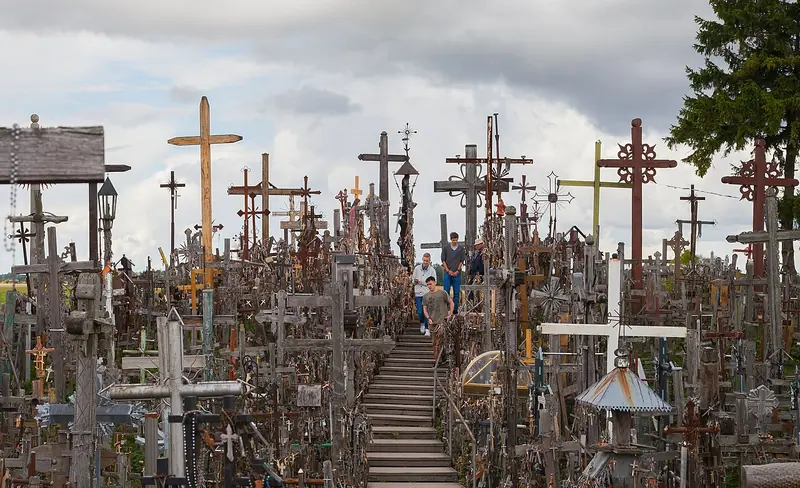 Photo Diego Delso, CC BY-SA 3.0, Wikimedia Commons
 Photo A.Palu, CC BY-SA 3.0 ee, Wikimedia Commons